The Industrial Role of Fiber-Reinforced Polymer Emissions Control Infrastructure
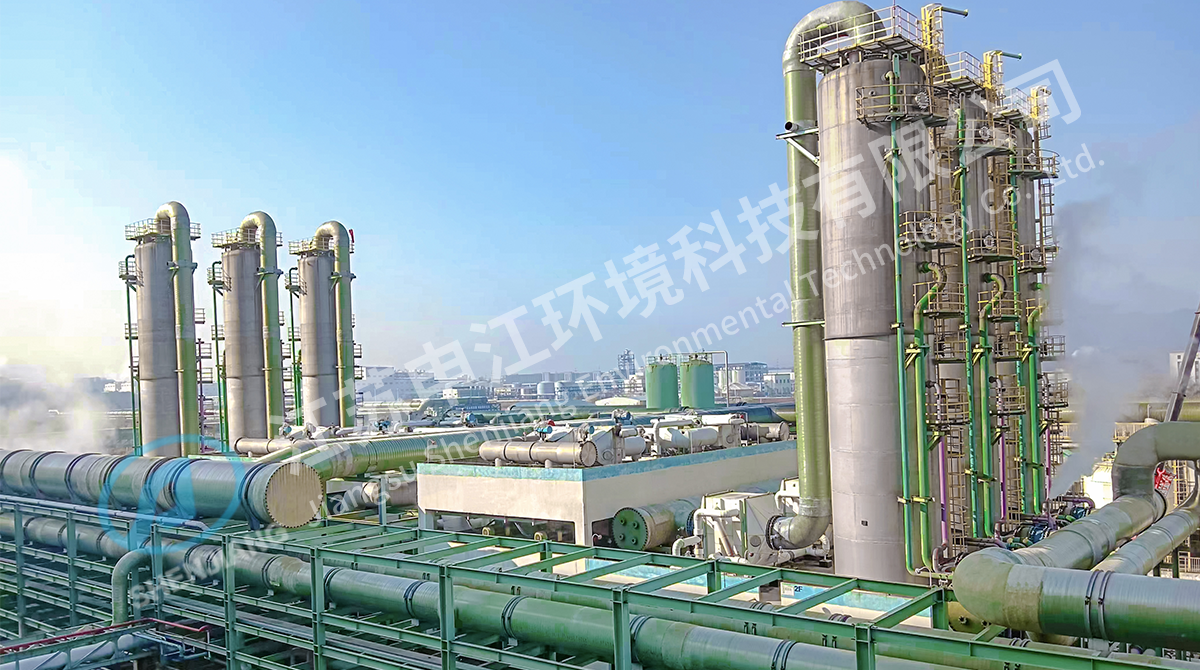
FRP desulfurization equipments represent highly specialized, corrosion-resistant industrial systems fabricated from Fiber-Reinforced Polymer composites designed to remove sulfur dioxide and other acidic contaminants from industrial flue gas streams. Unlike legacy steel alloys or rubber-lined vessels, which suffer from severe pitting, chemical degradation, and structural stress cracking when exposed to hot, acidic scrubbing slurries, modern FRP systems utilize advanced vinyl ester resin matrices and structural glass fiber reinforcement to achieve complete corrosion immunity. By operating continuously under aggressive hydrostatic, chemical, and thermal loads, these composite systems maintain long-term environmental compliance, reduce mechanical down-time, and lower the lifetime capital costs of heavy industrial processing plants.
Industrial power generation, petrochemical refining, metallurgical smelting, and waste-to-energy processes generate enormous volumes of sulfurous exhaust gases that must undergo Flue Gas Desulfurization (FGD) before atmospheric discharge. The environment inside a chemical scrubbing tower is incredibly harsh, combining dilute sulfuric and sulfurous acids, high concentrations of abrasive chloride ions, oxidizers, and suspended limestone particles. Within this punishing chemical environment, selecting a robust FRP platform ensures that critical emissions control components can run for decades without catastrophic wall breaches or structural failures.
Engineering these large-scale composite systems requires a thorough understanding of polymer chemistry, structural lamination design, and fluid mechanics. Because desulfurization equipment includes massive absorption towers, internal slurry spray headers, demister assemblies, and chimney liners, each part must be precisely designed to handle specific stresses. Balancing mechanical tensile strength, high heat distortion temperatures, and exceptional chemical resistance requires careful material optimization, making the science behind industrial FRP equipment a critical field in modern environmental civil engineering.
Classification of FRP Desulfurization Systems and Essential Components
FRP desulfurization components are classified by their functional position within the scrubbing process loop and their specific mechanical configurations. Each sub-assembly utilizes a tailored resin-to-glass ratio to manage localized thermal, chemical, and abrasive stresses.
FRP Absorption Spray Towers
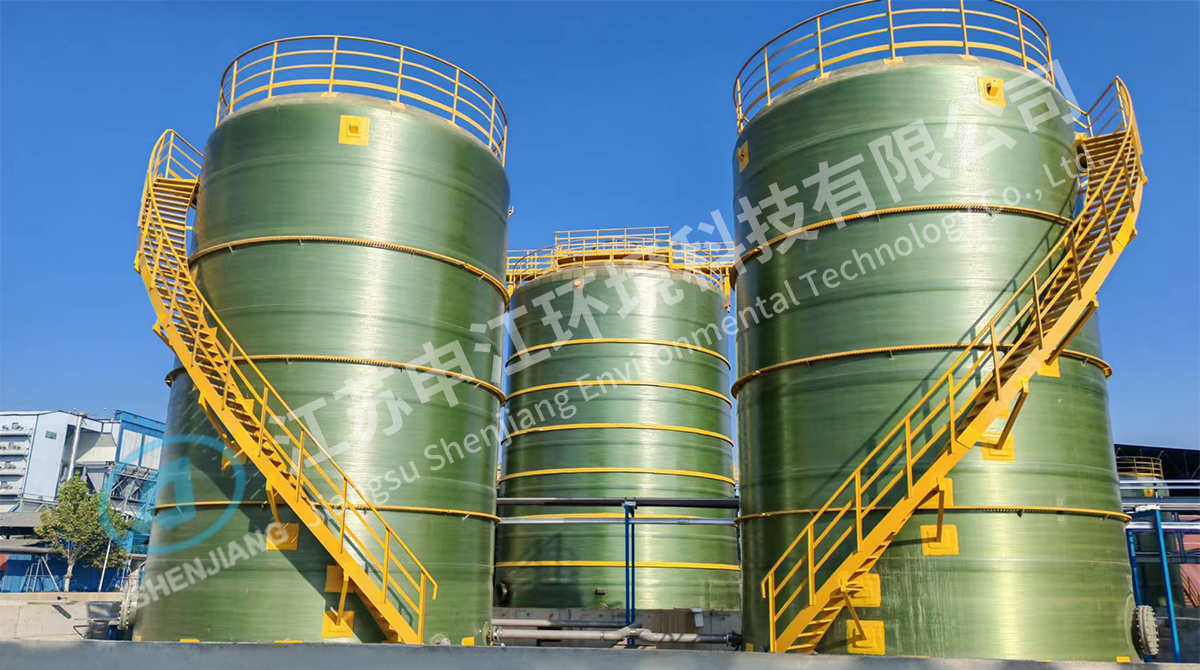
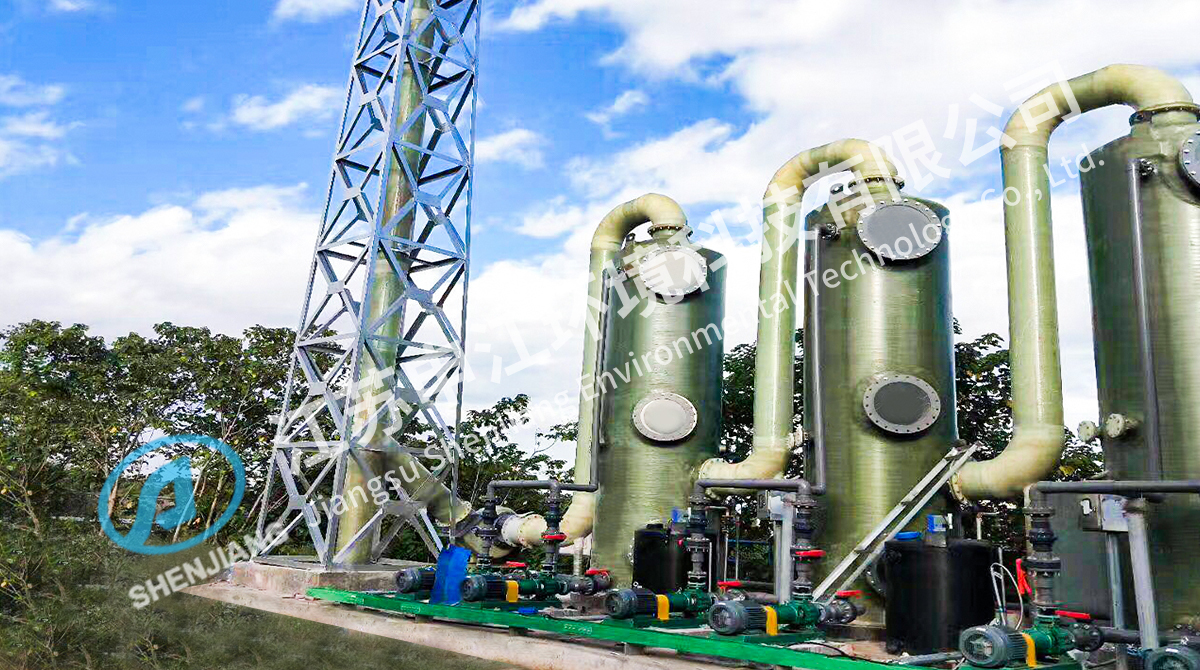
The primary absorption tower serves as the structural heart of the wet FGD system. These massive vertical vessels, often exceeding 15 meters in diameter and 30 meters in height, are manufactured using automated filament winding processes. The structural shell features a thick filament-wound structural core sandwiched between an internal chemical-resistant barrier and an external weather-resistant shell.
The column design must handle the dead load of internal spray levels, dynamic wind loads, seismic forces, and negative vacuum pressure spikes caused by down-stream fan operations. Because the bottom of the tower stores thousands of gallons of heavy limestone-gypsum slurry, the lower sections require reinforced laminate thicknesses and specialized foundation anchoring rings to distribute hydrostatic loads safely.
Internal Slurry Spray Header Networks
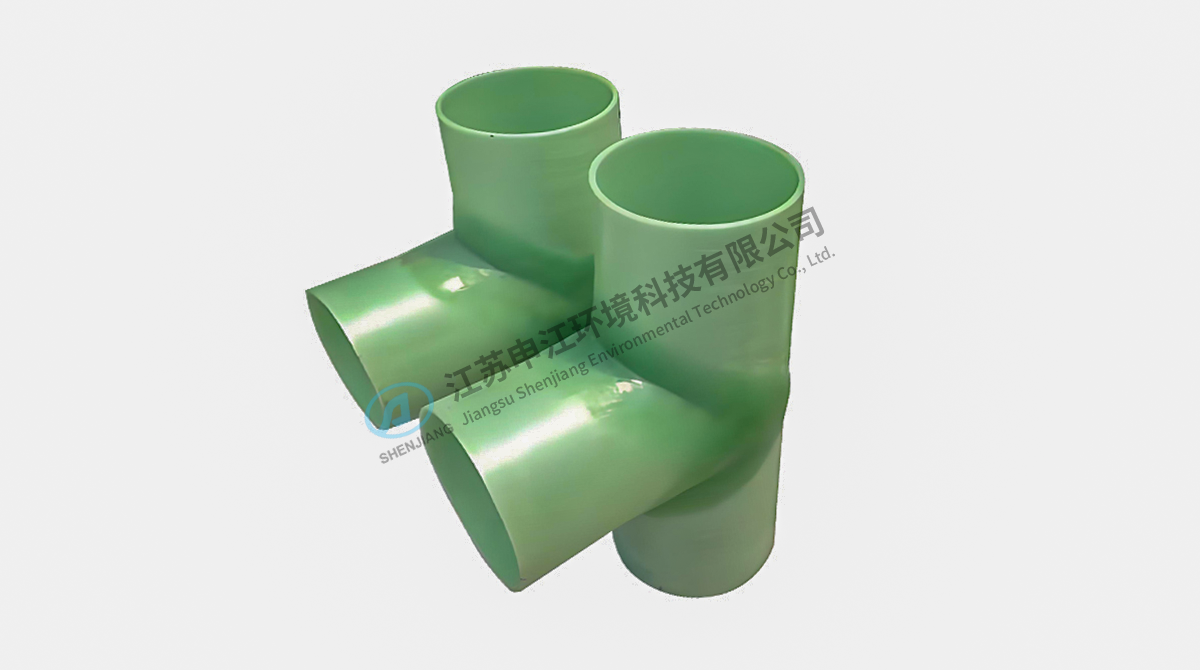
FRP spray headers distribute the abrasive limestone slurry evenly across the rising flue gas stream. These internal piping networks use a branching design with dual-direction spray nozzles to maximize the gas-liquid contact area. Because they are suspended directly in the high-velocity gas path, the headers experience continuous external aerodynamic drag and internal slurry abrasion.
To resist internal erosion from limestone particles traveling at velocities of 2.5 to 3.5 meters per second, the inner walls of the headers are lined with a thick layer of resin mixed with silicon carbide (SiC) or ceramic micro-particles. This specialized lining reduces sliding abrasion wear, preventing the piping walls from thinning prematurely and ensuring a long, reliable operational life.
Flue Gas Chimney Liners and Ductwork
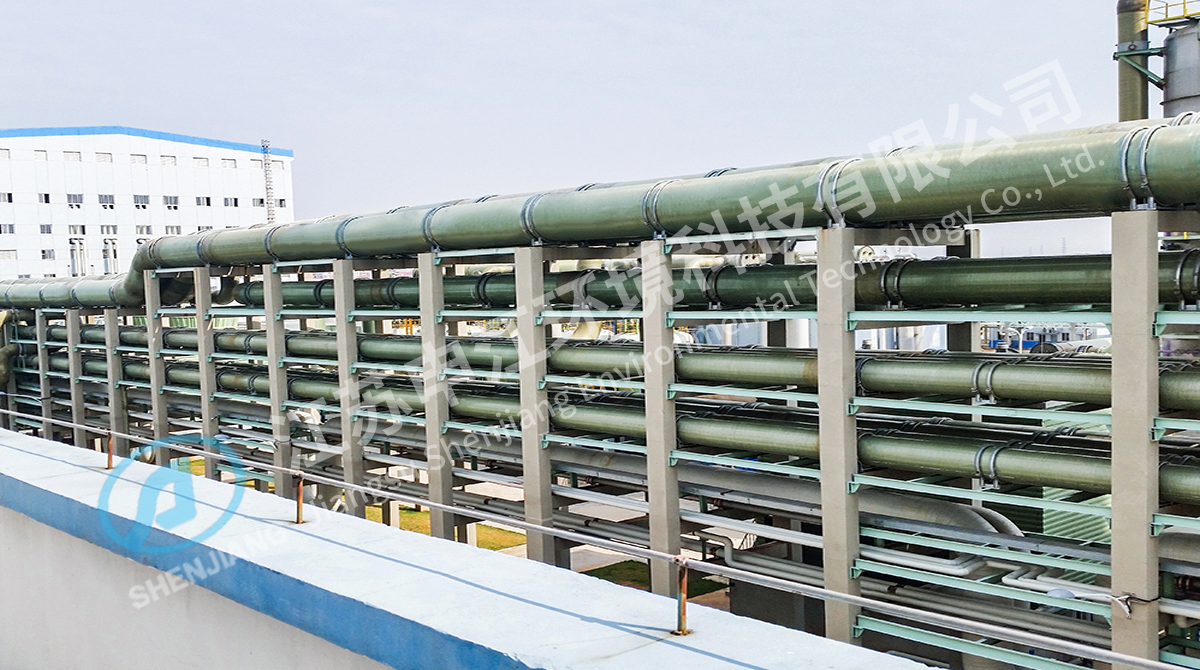
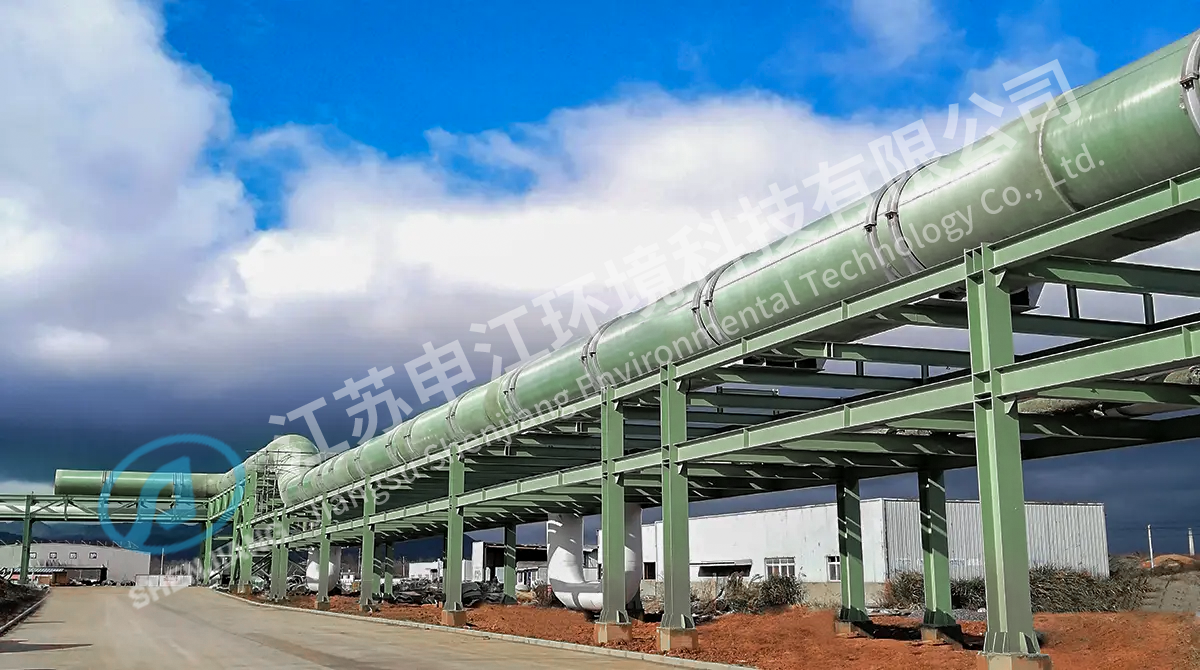
After leaving the absorption zone, the cleaned flue gas remains saturated with moisture and traces of acidic vapor. This low-temperature, high-humidity gas travels through overhead ductwork into the stack liner for atmospheric release. This wet gas environment is highly corrosive to traditional masonry or concrete chimneys.
FRP stack liners offer an ideal solution, providing a lightweight, seamless conduit that inserts directly into an outer concrete or steel support structure. These liners handle continuous exposure to condensates with a pH as low as 1.0, while their smooth internal surface reduces friction losses, optimizing natural stack draft and lowering the power consumption of upstream booster fans.
Material Science and Resin Matrix Optimization
The chemical and thermal performance of FRP desulfurization equipment depends heavily on the formulation of the polymer resin matrix. The choice of resin dictates the maximum continuous operating temperature, resistance to acidic penetration, and long-term structural retention of the composite asset.
Premium Epoxy Vinyl Ester Resins represent the industry standard for wet FGD equipment fabrication. These resins are synthesized by reacting epoxy configurations with methacrylic acid, creating a polymer backbone with reactive ester sites located only at the ends of the molecular chains. This molecular layout provides exceptional fracture toughness and allows the cross-linked matrix to absorb structural impacts and thermal shocks without micro-cracking.
For standard operations where flue gas entry temperatures stay below 120°C, high-performance bisphenol-A epoxy vinyl ester resins provide an optimal balance of cost and chemical resistance. However, if a cooling water pump fails upstream, the system can experience temperature spikes up to 180°C or higher. To handle these thermal bypass conditions without structural softening, engineers specify Novolac epoxy vinyl ester resins, which feature a high density of aromatic rings that provide excellent heat resistance and a high Heat Distortion Temperature (HDT).
The fiberglass reinforcement used must consist of electrical-grade corrosion-resistant glass (E-CR glass) or high-grade synthetic veils. Standard E-glass fibers degrade quickly when exposed to acidic liquids if the resin barrier is compromised. In contrast, E-CR glass utilizes a specialized boron-free formulation that provides high resistance to acid-induced stress corrosion, ensuring the structural reinforcement layer remains protected against chemical attacks.
Laminate Structural Design and Layer Architecture
Industrial FRP vessels do not utilize a uniform, single-layer wall structure. Instead, they are engineered as a multi-layered composite sandwich panel where each layer is designed to handle specific chemical or mechanical loads, following standards like ASME RTP-1 or EN 13121.
The innermost layer is the Chemical Corrosion-Resistant Liner, which typically measures 2.5mm to 5.0mm in thickness. This barrier contains a high resin-to-glass ratio (approximately 70% to 80% resin), reinforced with a non-woven synthetic polyester veil or C-glass veil. This resin-rich layer acts as an impermeable shield that stops acidic liquids, moisture, and chloride ions from migrating into the outer structural layers of the vessel.
Directly behind the inner liner sits the Structural Layer, which provides the necessary mechanical strength. This layer reverses the material ratio, utilizing approximately 60% to 70% glass reinforcement and 30% to 40% resin. Automated filament winding machines apply continuous glass rovings at precise helix angles (typically between 55 and 110 degrees relative to the vertical axis) to maximize both circumferential hoop strength and longitudinal tensile strength.
The final outer layer is the External Topcoat and Weather Barrier. This layer includes ultra-violet (UV) inhibitors and paraffin waxes mixed into the vinyl ester resin. The UV stabilizers protect the underlying polymer chains from solar degradation, while the wax additions seal the outer surface against atmospheric moisture and rain, ensuring long-term durability in outdoor industrial environments.
Performance Matrix: FRP Material vs. Legacy Metal Alloys
Evaluating the mechanical, operational, and financial performance of FRP composites against legacy metals demonstrates why composites are the preferred choice for modern flue gas desulfurization installations. The table below details the operational characteristics across standard industrial material options.
| Material Classification |
Specific Gravity |
Chloride-Induced Pitting Resistance |
Average Operational Lifespan |
Relative Maintenance Capital Cost |
| Premium Vinyl Ester FRP |
1.8 - 2.0 |
Complete Immunity (Non-conductive) |
25+ Years |
Low (No re-lining required) |
| Titanium Gr. 2 (FGD Clad) |
4.5 |
Exceptional Resistance |
20+ Years |
Extreme (High raw material cost) |
| Nickel Alloy C-276 |
8.9 |
Very High Resistance |
15 - 20 Years |
Very High (Expensive material & field labor) |
| Rubber-Lined Carbon Steel |
7.8 (Steel Base) |
Poor (Subject to liner debonding) |
5 - 8 Years |
High (Frequent repair shutdowns) |
Material performance comparison matrix for flue gas desulfurization environments.
The material comparison shows that high-performance vinyl ester FRP provides excellent chloride pitting resistance and long-term durability at a fraction of the weight of metallic alloys. Because the specific gravity of FRP is around one-quarter that of steel, structural support structures, concrete foundations, and overhead lifting equipment can be optimized for lower loads, reducing field construction and installation costs.
Manufacturing Technologies and Quality Control Protocols
Fabricating industrial FRP desulfurization equipment requires advanced, automated processes. Because these components face high mechanical and chemical loads, manufacturing quality must be tightly controlled using standardized testing to prevent subsurface laminate defects.
Computer-Controlled Filament Winding
Large cylindrical vessels, storage tanks, and large ducting segments are produced using computer-controlled multi-axis filament winding systems. Continuous E-CR glass fiber strands travel through a temperature-controlled vinyl ester resin bath before being applied to a rotating steel mandrel under precise tension.
The winding software calculates the required fiber paths to reinforce the vessel against specific stresses. For example, areas around large nozzle cuts or support rings require extra carbon-fiber or multi-directional woven mats to mitigate localized stress concentrations and ensure a safe, uniform distribution of mechanical loads.
Curing Controls and Barcol Hardness Verification
Once the lamination sequence is complete, the composite must undergo a controlled polymerization and curing process. Thermocouples monitor the heat generated by the exothermic reaction to ensure the resin cures uniformly, preventing internal thermal stresses that could cause layer separation.
After initial curing, the structural cross-linking density is verified using a Barcol Impressor (ASTM D2583). Technicians measure indentation resistance at multiple points across the vessel wall; for a fully cured vinyl ester resin, Barcol hardness values must consistently meet a minimum target of 35 to 40, confirming that the polymer matrix has reached its designed mechanical strength and chemical resistance.
Field Installation and Jointing Engineering
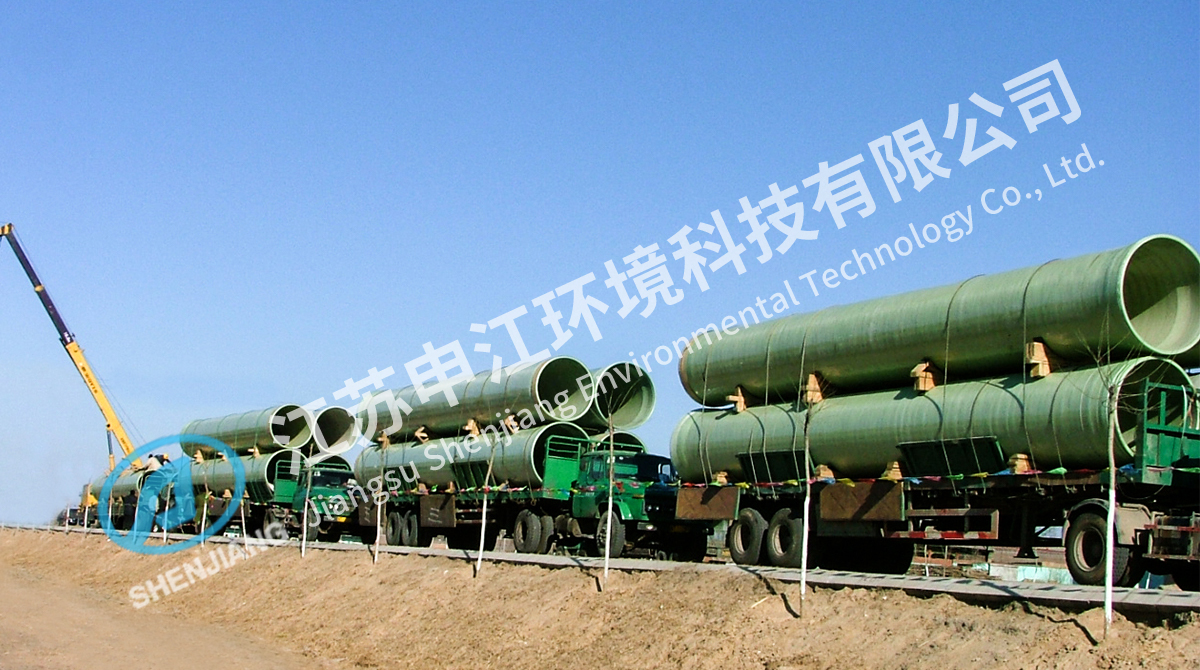
Assembling large-scale FRP components onsite requires specialized procedures. Because large scrubbing towers cannot be shipped as single completed units due to transport size limits, components are delivered as prefabricated sections that are joined together in the field.
Phase 1: Precision Fit-Up and Geometric Alignment
Prefabricated vessel rings or duct segments are lifted into place using multi-crane rigging systems. Laser tracking devices check the vertical alignment and ovality of the matching sections, ensuring that the gap between the joining edges is uniform and stays within a strict 2mm to 4mm tolerance along the entire perimeter.
Phase 2: Internal and External Surface Tapering
Before applying the structural joint laminates, the areas around the seam must be prepared. Technicians grind the internal and external surfaces to create a smooth, gradual taper extending 100mm to 300mm on both sides of the joint. Grinding removes the glossy outer resin layer and exposes the underlying glass fibers, ensuring a strong mechanical bond for the field-applied laminates.
Phase 3: Butt-and-Strap Structural Lamination
The field connection uses a precision butt-and-strap lamination method.
- Apply a high-viscosity vinylester putty into the seam gap to fill any voids between the matching edges.
- Lay alternating layers of chopped strand mat (CSM) and woven roving across the joint, matching the original thickness and fiber orientation of the factory-made shell.
- Roll each applied layer firmly with a serrated steel roller to eliminate trapped air bubbles, ensuring a dense, void-free joint structure.
Phase 4: Restoring the Inner Liner and Final Post-Cure
Once the structural weld is complete, the internal chemical barrier across the joint is restored by applying multiple layers of resin-rich synthetic veil mat. After the joint air-cures, a localized thermal post-cure treatment is applied using external heating blankets. This treatment holds the joint area at 80°C to 100°C for several hours, maximizing the chemical resistance of the field-applied resin and completing the structural assembly.
Acoustic Emission and Non-Destructive Structural Inspections
To ensure the long-term structural integrity of FRP emissions infrastructure, facilities implement comprehensive inspection schedules. Because polymer composites degrade differently than metals, checking for internal defects requires specialized non-destructive testing (NDT) methods.
The primary method used for testing large FRP vessels under hydrostatic stress is Acoustic Emission (AE) Monitoring (ASTM E1067). Piezoelectric sensors are clamped to the outer shell of the absorption tower while the vessel is filled with liquid. As structural loads increase, any internal micro-cracks, fiber breaks, or layer separations emit high-frequency acoustic waves that are captured by the sensor array.
Computerized monitoring systems analyze the arrival time and intensity of these acoustic signals to pinpoint the location of active structural defects. This localized tracking allows maintenance teams to focus physical inspections on specific areas, avoiding the need to inspect thousands of square feet of internal wall surfaces manually.
For localized inspections of slurry pipelines or ductwork connections, technicians use Digital Ultrasonic Testing (UT) or Laser Shearography. These tools measure the time-of-flight variations of acoustic pulses through the composite wall, mapping thickness profiles and identifying internal voids or moisture ingress behind the chemical liner. Catching these early delamination signs allows plants to schedule targeted repairs during planned maintenance turnarounds, avoiding unexpected equipment shutdowns.




 English
  中文简体
中文简体 Español
 عربى
عربى русский
 ไทย
ไทย Indonesia
 Tiếng Việt