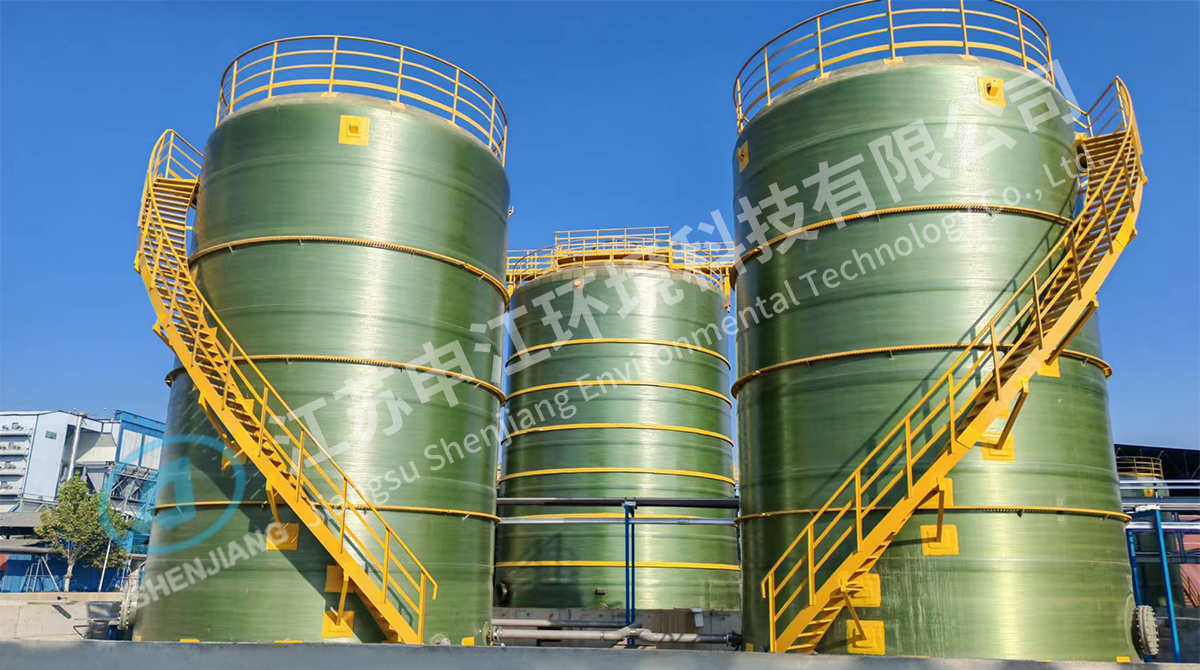
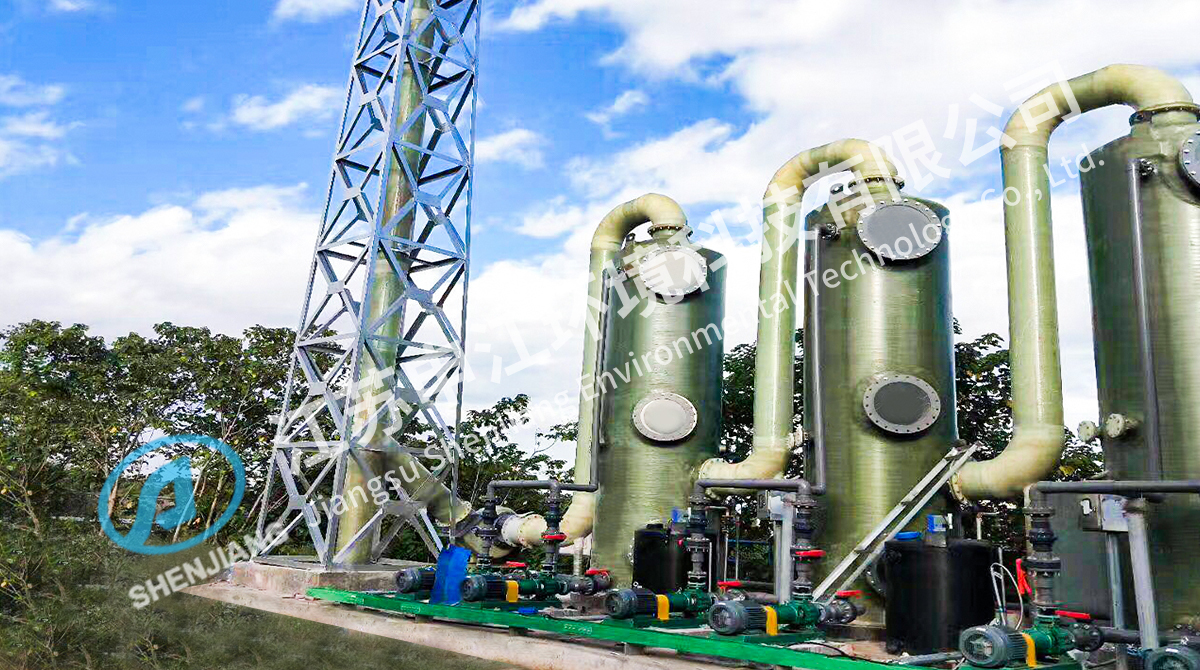
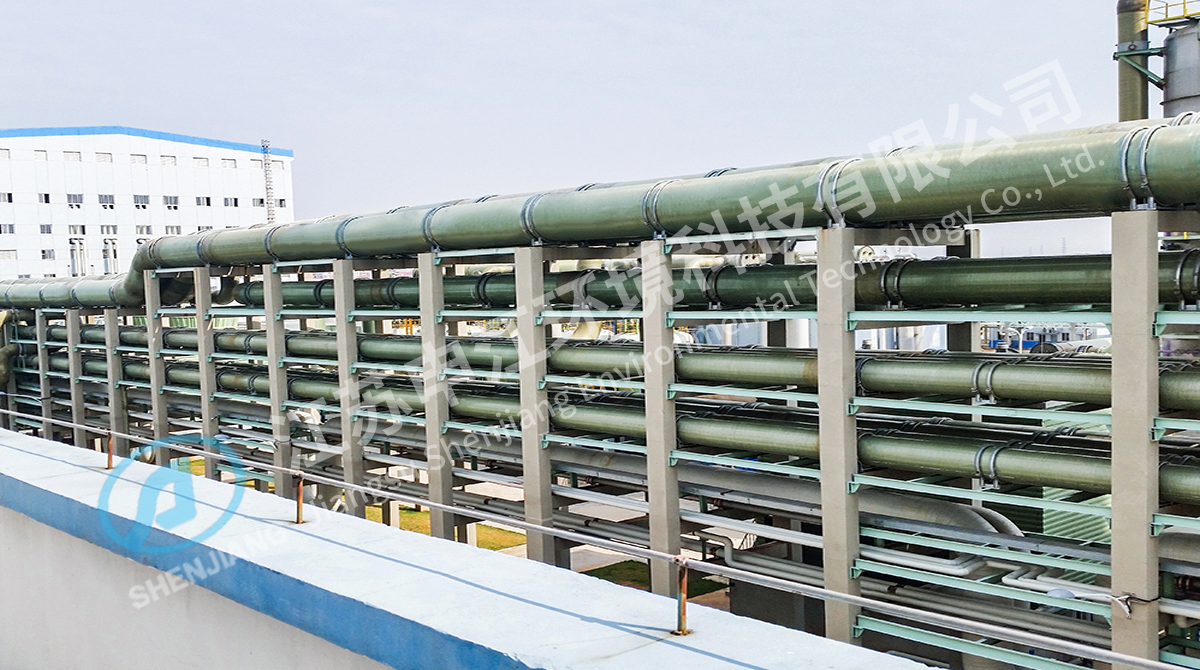
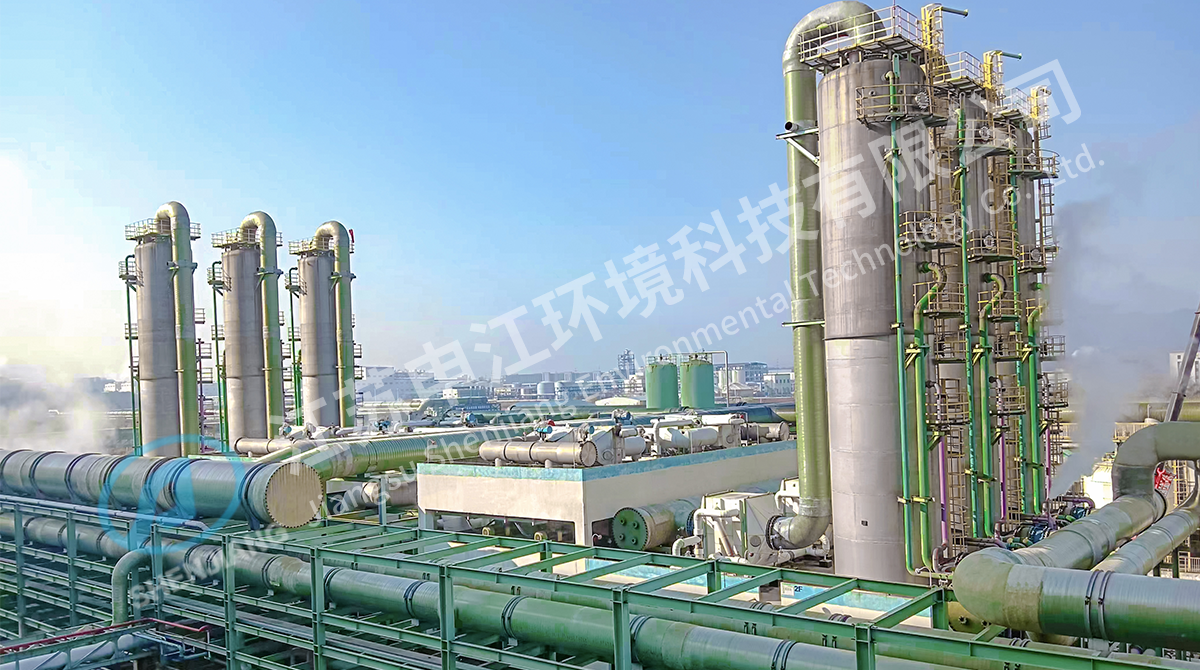
The Verdict: FRP Tank Life Exceeds 20 Years in Corrosive Environments Where Steel Fails in 3-5
For storage of corrosive chemicals (acids, alkalis, brines, and aggressive solvents), FRP tanks (fiber-reinforced plastic) provide a service life of 20-30 years in environments where carbon steel tanks fail within 3-5 years and stainless steel fails within 8-12 years. Field failure data from chemical processing facilities shows that FRP tanks experience less than 0.5% wall thickness loss per year in 30% hydrochloric acid service, compared to 2-3 mm/year for carbon steel. The direct conclusion: specify an FRP tank with the correct resin system (vinyl ester for acids, isophthalic polyester for water/wastewater, epoxy for solvents) and laminate schedule to match chemical concentration and operating temperature.
Resin Selection by Chemical Service
The resin matrix determines FRP tank chemical resistance. Isophthalic polyester resin is suitable for water, wastewater, dilute acids (below 10%), and ambient temperatures up to 60°C. It costs $2.50-3.50 per kg and provides 15-20 year service life in mild environments. Vinyl ester resin (bisphenol-A or novolac types) offers superior resistance to strong acids (up to 50% sulfuric, 37% hydrochloric), alkalis (up to 20% sodium hydroxide), and temperatures up to 100°C. Vinyl ester costs $5-8 per kg but extends tank life by 2-3x in aggressive service. For organic solvents (acetone, toluene, xylene, MEK), specify epoxy resin or novolac vinyl ester; standard vinyl ester swells and degrades in many solvents.
Table 1: FRP tank resin selection by chemical service and temperature limit.
| Resin Type |
Max Temperature (°C) |
Chemical Resistance |
Relative Cost |
Typical Applications |
| Isophthalic polyester |
60 |
Water, wastewater, dilute acids (<10%) |
$ (1x) |
Water storage, sewage treatment |
| Bisphenol-A vinyl ester |
80 |
Strong acids (20-50%), alkalis, bleaches |
$$ (1.5-2x) |
Chemical storage, acid pickling lines |
| Novolac vinyl ester |
100 |
Concentrated acids, solvents, high temp |
$$$ (2-2.5x) |
Concentrated acid storage, hot chemicals |
| Epoxy |
70 |
Organic solvents, fuels, caustics |
$$$ (2-3x) |
Solvent storage, fuel tanks, pharma |
For mixed chemical service (e.g., acid with trace solvent contamination), select the resin with the broadest compatibility—typically novolac vinyl ester. Field failures of FRP tanks occur in 85% of cases due to resin incompatibility, not mechanical overload. Always request chemical compatibility documentation from the resin supplier for the exact chemical mixture, concentration, and temperature. Never assume compatibility based on generic charts; test coupons in the actual chemical solution for 30-90 days before finalizing resin selection.
Corrosion Barrier Thickness and Construction
The corrosion barrier (inner liner) of an FRP tank is the first line of defense against chemical attack. Minimum corrosion barrier thickness for FRP tanks is 2.5mm (100 mils) for mild service, 3.5-5mm for severe chemical service. The barrier consists of three layers: a resin-rich inner surface (0.5-1.0mm) with 90-95% resin content, a corrosion liner (1.5-2.5mm) with chopped strand mat and 70-80% resin, and a backing layer (remainder) with 50-60% resin transitioning to structural laminate. Inspect for air bubbles (blisters) in the corrosion barrier; any blister larger than 3mm diameter is a defect that will eventually penetrate and allow chemical wicking into the structural laminate.
The surface veil (innermost layer) must be C-glass or synthetic veil (polyester or polypropylene), not E-glass. E-glass veil has insufficient acid resistance and fails by silica gel formation, causing blistering within 12-24 months in acid service. C-glass veil costs 20-30% more but provides 3-5x longer corrosion barrier life. For oxidizing acids (nitric, chromic, concentrated sulfuric), specify synthetic veil (Nexus or similar) which has superior resistance to glass-based veils.
Structural Laminate Design and Thickness
The structural laminate of an FRP tank provides mechanical strength to withstand hydrostatic pressure, wind loads, and seismic forces. For a 3-meter diameter FRP tank filled to 4 meters height with water, the required wall thickness is 15-20mm at the bottom tapering to 6-10mm at the top. Thicker is not necessarily better; excessive thickness increases weight (reducing corrosion barrier flexibility) and cost without proportional strength gain. The laminate must be designed according to ASTM D3299 (filament-wound) or ASTM D4097 (contact-molded) standards, with a minimum safety factor of 5 for pressure vessels and 4 for storage tanks.
The structural laminate uses E-glass or E-CR glass (corrosion-resistant E-glass) with either chopped strand mat (CSM), woven roving (WR), or filament winding (FW). Filament-wound FRP tanks offer the highest strength-to-weight ratio (specific strength 4x carbon steel) but have lower interlaminar shear strength than hand lay-up with CSM. For tanks subject to thermal cycling or mechanical vibration, specify a combination of CSM and WR (alternating layers) to increase interlaminar bonding. For pure static storage, filament winding is cost-effective ($8-15 per kg of laminate vs. $15-25 for hand lay-up).
Operating Temperature Limits and Thermal Degradation
FRP tank resin systems lose mechanical strength rapidly above their heat deflection temperature (HDT). For isophthalic polyester (HDT 70°C), continuous use at 60°C reduces tensile strength by 30-40% compared to room temperature; at 80°C, strength loss exceeds 70%. Vinyl ester (HDT 100-120°C) maintains 80% of room temperature strength at 80°C. For high-temperature applications, reduce the allowable stress by the appropriate factor per ASTM D2992. A tank rated for 2 bar at 25°C may only be rated for 0.8 bar at 80°C—a critical consideration for pressure vessels.
Thermal cycling (frequent heating and cooling) is more damaging than steady high temperature. Each 30°C thermal cycle induces 0.05-0.1% micro-cracking in the laminate, reducing stiffness by 2-3% after 100 cycles. For applications with daily temperature swings (outdoor tanks in desert climates or steam-heated tanks), specify a resin with high elongation at break (5-8% for vinyl ester vs. 2-3% for polyester) to accommodate differential expansion between resin and glass fibers. For outdoor FRP tanks in climates with freeze-thaw cycles, ensure the resin has passed ASTM D5628 (low-temperature impact testing) with no cracking at -30°C.
Design Pressure and Vacuum Service
FRP tanks can be designed for pressure (positive or negative/vacuum) but require specific laminate schedules. Atmospheric tanks (design pressure 0 to +0.5 kPa) use standard laminates with 4-8mm wall thickness for smaller diameters. Low-pressure tanks (up to 2 bar) require additional laminates and often integral stiffening ribs; wall thickness increases to 12-25mm depending on diameter and pressure. For vacuum service (-0.5 to -1 bar), FRP tanks are susceptible to buckling collapse (tension weak, compression critical). Specify vacuum rings (external stiffeners) at 500-1000mm spacing for any tank operating below -0.2 bar. A 3m diameter atmospheric tank collapsed under full vacuum (1 bar) experiences buckling at 0.15-0.2 bar; design for vacuum requires 2-3x the laminate thickness of atmospheric design.
For pressure vessels (ASME Section X, RTP-1), require third-party inspection and stamping. FRP pressure vessels cost 3-5x atmospheric FRP tanks due to additional testing, thicker walls, and mandatory hydrostatic proof testing. For pressures above 10 bar, FRP is generally not cost-effective compared to lined steel or solid plastic vessels (polyethylene, PVDF). For vacuum service above 0.5 bar vacuum, specify a filament-wound tank with thicker walls (minimum 15mm for 2m diameter) and external stiffeners; hand lay-up tanks are more prone to buckling due to less uniform material distribution.
Nozzles, Flanges, and Fittings Integration
Nozzles and fittings are common failure points on FRP tanks. All nozzles must be integrally laminated (wet lay-up) to the tank shell, not bonded with adhesives or mechanical fasteners. Integrally laminated nozzles have pullout strength 5-10x higher than bonded connections. Minimum nozzle reinforcement: for nozzles above 100mm diameter, require a doubler pad (additional 150mm of laminate extending beyond the nozzle flange) equal to 50% of shell thickness. Nozzle orientation should be as low as practical on the tank sidewall to allow complete drainage; bottom nozzles (through the tank floor) require a sump design to prevent trapped liquid.
Flange faces must be flat, with a surface finish of 200-400 microinches (Ra) for gasket sealing. FRP flanges are not as rigid as steel flanges; bolt torque must be limited to 15-25 Nm for 16mm bolts, versus 40-60 Nm for steel flanges. Overtorquing FRP flanges causes flange rotation (dish distortion) and gasket leakage. Use full-face gaskets (EPDM or PTFE) rather than ring gaskets to distribute bolt load. For toxic or flammable chemicals, specify a secondary containment flange (double flange with weep hole) that provides visible leak detection before primary seal failure.
Secondary Containment and Double-Wall FRP Tanks
For chemical storage requiring secondary containment (regulated chemicals, underground tanks, environmentally sensitive locations), double-wall FRP tanks are available. A double-wall FRP tank consists of an inner primary tank (3-6mm corrosion barrier) and an outer secondary tank (3-5mm structure) separated by a 10-25mm interstitial space. The interstitial space is monitored for leaks using a liquid sensor or vacuum system. Double-wall tanks cost 50-80% more than single-wall tanks but provide 99% leak detection reliability and eliminate the need for separate concrete containment dikes. For underground installations, double-wall FRP is mandatory for most regulated chemicals.
The interstitial space should be designed for continuous vacuum monitoring (0.2-0.5 bar negative pressure). A drop in vacuum pressure of more than 20% over 24 hours indicates a leak in either the primary or secondary barrier. For above-ground tanks, open interstitial monitoring (visual inspection through a sight glass) is acceptable. The outer tank must be protected against ultraviolet degradation with a UV-stable resin or a 0.5-1.0mm gel coat containing UV absorbers. Without UV protection, the outer FRP laminate degrades at 0.1-0.2mm per year in direct sunlight.
Manufacturing Methods: Filament Winding vs. Hand Lay-Up
Two manufacturing methods dominate FRP tank production. Filament winding (FW) uses continuous glass roving wound onto a rotating mandrel at precise angles (typically 45-65 degrees from axis). FW produces tanks with the highest fiber volume fraction (55-65% glass vs. 30-40% for hand lay-up), resulting in 2-3x higher tensile strength and 30-50% lower weight. FW is economical for diameters above 1.5m and quantities above 10 units. Hand lay-up (contact molding) involves placing layers of glass mat and woven roving into a mold and saturating with resin by hand roller. Hand lay-up is suitable for custom shapes, small diameters, and short production runs but has higher labor cost (3-5x per kg of laminate) and higher porosity (2-5% voids vs. 1-2% for FW).
For corrosion-critical service, FW is preferred because the continuous fibers provide no transverse joints that can wick chemicals into the laminate. Hand lay-up tanks have a higher risk of blistering (2-3x) due to uneven resin distribution and higher void content. However, hand lay-up allows integration of complex internal features (baffles, weirs, mixer supports) that are difficult or impossible with FW. For tanks with internal mixers or heating coils, hand lay-up is the only practical method.
Curing and Post-Cure Requirements
Proper curing is essential for FRP tank performance. Ambient-cured FRP tanks (cured at 20-30°C for 7-14 days) achieve only 60-70% of the hot-cured mechanical properties. For chemical service above 50°C, post-cure is mandatory: heat the tank to 70-90°C for 8-24 hours to complete cross-linking of the resin. Post-curing increases the heat deflection temperature by 20-30°C and improves chemical resistance by a factor of 3-5. Without post-cure, a vinyl ester tank rated for 80°C may fail at 55°C due to incomplete polymerization. Request documentation of the post-cure cycle (temperature ramp, soak time, cool-down rate) for any tank used above ambient temperature.
Cure monitoring: measure the Barcol hardness (ASTM D2583) at 5-10 locations on the tank surface. Minimum acceptable Barcol hardness for isophthalic polyester is 35; for vinyl ester, 40; for epoxy, 45. Hardness variation greater than ±10 points across the tank indicates incomplete or non-uniform cure. Reject tanks with Barcol hardness below the minimum; attempting to post-cure a tank weeks after fabrication is ineffective—the resin has already "frozen" in an under-cured state.
Inspection and Testing Standards
FRP tanks must be inspected and tested to industry standards before acceptance. Minimum inspection requirements: visual inspection per ASTM D2563 (acceptability of defects), thickness measurement per ASTM D2584 (10 points per square meter), and Barcol hardness per ASTM D2583 (5 points per square meter). Defects requiring rejection: cracks visible to the naked eye, dry spots (unwetted fibers), air bubbles larger than 6mm diameter, delamination detected by tap testing (hollow sound), or foreign inclusions larger than 3mm.
For pressure-rated or vacuum-rated tanks, require a hydrostatic test at 1.5x design pressure for 1 hour. Leakage rate must not exceed 10⁻⁴ mbar·L/s (helium leak detection) or no visible leaks under hydrostatic pressure. For large atmospheric tanks (above 10,000 liters), require a vacuum box test of all seam and nozzle welds (100% of accessible areas). For tanks storing hazardous chemicals, require spark testing of the corrosion barrier (15 kV, 5mm electrode spacing) to detect pinholes; any spark indicates a defect requiring repair. Repair areas must be re-tested and documented.
Installation and Foundation Requirements
FRP tanks require flat, rigid foundations to prevent bottom flexure and stress cracking. Concrete foundation must have a flatness tolerance of ±3mm over any 3m length (F-number minimum 50). Irregular foundations create point loads that exceed the bottom laminate's bending strength; a 5mm high bump under a 2m diameter tank produces localized stress 3-4x the design allowable, leading to cracking within weeks of filling. For outdoor installations, the foundation must extend 150-300mm beyond the tank diameter to support access and prevent edge settlement.
Tank anchoring: FRP tanks are lighter than steel tanks (30-50% of steel weight), making them susceptible to buoyancy and wind uplift. Empty FRP tanks in high-wind areas require anchorage to the foundation; uplift forces for a 3m diameter, 4m tall tank at 150 km/h wind speed exceed 5,000 N. Use either embedded anchor bolts (stainless steel, minimum 4 per tank) with FRP lug pads, or a full-depth concrete collar poured around the bottom 300-500mm of the tank. Do not use chemical anchors in the FRP laminate—the point loading causes laminate failure. For seismic zones, require flexible pipe connections at all nozzles; rigid connections have caused nozzle failures in 15-20% of FRP tanks during moderate earthquakes.
Cost Comparison: FRP vs. Steel vs. Polyethylene
For a 10,000-liter vertical storage tank, cost comparisons based on 2025 pricing: Carbon steel (coated, with secondary containment) $8,000-12,000; 316 stainless steel $18,000-25,000; FRP (vinyl ester, 6mm wall) $5,000-8,000; cross-linked polyethylene (XLPE) $4,000-6,000. However, service life differs dramatically: in 30% HCl at 40°C, carbon steel lasts 3-5 years, FRP lasts 20+ years, and XLPE lasts 15-20 years. The total cost of ownership (TCO) over 20 years: carbon steel $15,000-30,000 (multiple replacements), FRP $8,000-12,000 (single installation), XLPE $10,000-15,000 (single installation, less suitable for elevated temperatures).
For temperatures above 60°C, XLPE is unsuitable (softens above 70°C). For pressures above 0.5 bar, FRP is the only non-metallic option (XLPE has poor pressure rating). For ultrapure water or pharmaceutical applications, XLPE or PTFE-lined FRP is preferred due to lower extractables. For large volumes (above 100,000 liters), FRP has a significant cost advantage because fabrication costs scale sub-linearly, while steel tank costs scale nearly linearly with volume. A 200,000-liter steel tank costs 4-5x a 10,000-liter tank; a 200,000-liter FRP tank costs 2-3x a 10,000-liter tank due to lower material and shipping costs per liter of capacity.
Repair and Field Modifications
FRP tank repairs are feasible but require skilled technicians and proper conditions. Small defects (blisters under 25mm diameter, scratches not penetrating the corrosion barrier) can be repaired by grinding out the defect and hand lay-up of matching resin and glass. Repairs to the corrosion barrier require 50mm minimum overlap beyond the ground area. For structural cracks (through the laminate), the repair must restore 100% of original strength, requiring beveling to a 10:1 taper, lay-up of 12-20 layers, and post-cure at 60-70°C. After repair, re-test with hydrostatic pressure (if pressure-rated) or spark test (for hazardous chemicals).
Field modifications (adding nozzles, cutting manways) are strongly discouraged after the tank leaves the factory. Post-manufacture modifications void the manufacturer's warranty and have a 30-40% failure rate within 5 years due to improper surface preparation or cure conditions. If a modification is unavoidable, the work must be performed by an ASME RTP-1 certified fabricator, with surface preparation to ISO 8501 (Sa 2.5 equivalent), and documentation of the repair resin's compatibility with the original resin system. For modifications involving welding of metal fittings to FRP, use a non-metallic backup plate; welding directly to FRP is impossible (FRP is non-metallic).




 English
  中文简体
中文简体 Español
 عربى
عربى русский
 ไทย
ไทย Indonesia
 Tiếng Việt