


 English
  中文简体
中文简体 Español
 عربى
عربى русский
 ไทย
ไทย Indonesia
 Tiếng Việt





Denitrification FRP Tower: Engineering Guide for Industrial Wastewater Treatment
Understanding the Denitrification FRP Tower: Design and Function
A denitrification FRP tower is a vertical vessel designed to house biological denitrification processes, where nitrate (NO3) is converted to nitrogen gas (N2) under anoxic conditions. The tower is typically packed with biological media that support the growth of denitrifying bacteria, which utilize nitrate as an electron acceptor in the absence of dissolved oxygen.
The denitrification FRP tower operates on the principle of fixed-film biological treatment. Wastewater containing nitrates is introduced at the top or bottom of the tower, flowing through the biological media bed. Denitrifying bacteria attached to the media consume nitrate and organic carbon sources, releasing nitrogen gas that is safely vented to the atmosphere. The FRP construction ensures the tower resists the corrosive effects of wastewater, acidic byproducts, and the alkaline conditions sometimes required for pH adjustment.
Denitrification FRP Tower vs. Alternative Construction Materials
The following table compares the denitrification FRP tower against alternative construction materials across critical performance and durability parameters.
| Parameter | FRP Denitrification Tower | Carbon Steel Tower | Concrete Tower | Stainless Steel Tower |
| Corrosion Resistance | Excellent (inert to most chemicals) | Poor (requires coating/lining) | Moderate (acid attack risk) | Good (depends on grade) |
| Initial Cost | Moderate | Low | Low | Very High |
| Maintenance Cost (annual) | Low (0.5-1.5% of capital) | High (3-5% of capital) | Moderate (2-3% of capital) | Low (0.5-1.0% of capital) |
| Service Life (years) | 25-35 | 10-15 | 15-20 | 30-40 |
| Weight (kg/m³ of volume) | 1,500-1,800 | 7,800-8,000 | 2,300-2,500 | 7,800-8,000 |
| Thermal Insulation | Good | Poor | Moderate | Poor |
| Installation Speed | Fast (prefabricated) | Moderate | Slow | Moderate |
The Biological Process Inside a Denitrification FRP Tower
The denitrification FRP tower houses a biological process that requires careful control of environmental conditions to achieve optimal nitrogen removal. The key process parameters include:
- Dissolved Oxygen (DO): Denitrification is an anoxic process requiring DO concentrations below 0.5 mg/L. The denitrification FRP tower is designed with a sealed top cover to prevent oxygen ingress and maintain the anoxic environment essential for denitrifying bacteria activity.
- Carbon Source Availability: Denitrifying bacteria require an organic carbon source as an electron donor. The influent wastewater may contain sufficient carbon, or an external carbon source such as methanol, ethanol, or acetic acid must be added. The optimal COD/Nitrate ratio is typically 3:1 to 5:1.
- pH Control: Denitrification produces alkalinity, raising the pH of the wastewater. The denitrification FRP tower must maintain a pH between 6.5 and 8.0 for optimal bacterial activity. FRP's chemical resistance allows the addition of acid or alkali for pH adjustment without risking structural damage.
- Temperature Management: The denitrification rate is temperature-dependent, with optimal rates at 20-35C. The FRP material provides natural insulation, reducing heat loss in colder climates.
Corrosion Resistance
FRP construction provides exceptional resistance to the acidic and alkaline conditions encountered during biological denitrification. The resin matrix protects the glass fibers from chemical attack, ensuring long-term structural integrity.
Lightweight Construction
A denitrification FRP tower weighs approximately 80% less than an equivalent steel tower, reducing foundation costs and enabling modular installation. This also facilitates transport and on-site assembly.
Design Flexibility
FRP fabrication allows for custom tower geometries, including varying diameters, heights, and internal structures. This enables optimization for site-specific conditions and process requirements.
FRP Material Selection for Denitrification Towers
The performance of a denitrification FRP tower depends significantly on the selection of appropriate resins, glass fibers, and laminate construction. The resin matrix must resist the chemical environment while providing adequate structural strength.
- Resin Types: Isophthalic polyester resins are commonly specified for denitrification FRP tower applications, offering good chemical resistance at moderate temperatures. For more aggressive chemical environments, vinyl ester resins provide enhanced resistance to acids, alkalis, and organic solvents. For high-temperature applications, bisphenol-based resins maintain structural integrity up to 120C.
- Glass Fiber Content: The glass fiber content in a denitrification FRP tower typically ranges from 25-40% by weight. Higher fiber content increases tensile strength and stiffness but reduces chemical resistance. The optimum fiber content depends on the specific operational requirements of the tower.
- Surface Veil: A corrosion barrier layer of C-glass or polyester veil, with a resin-rich composition, is essential to protect the structural glass fibers from chemical attack. This surface veil also provides a smooth, cleanable surface that resists biological fouling.
Hydraulic Design and Media Selection for Denitrification FRP Towers
The hydraulic performance of a denitrification FRP tower is critical to achieving consistent nitrogen removal. The tower's internal design must ensure uniform flow distribution, prevent channeling, and maintain optimal contact time between the wastewater and the biological media.
- Flow Distribution: A properly designed denitrification FRP tower incorporates a distribution system at the inlet to ensure uniform flow across the entire cross-section of the media bed. Nozzle-type distributors or weir systems are commonly used to achieve this.
- Media Selection: The biological media used in a denitrification FRP tower must provide high surface area for bacterial attachment, low pressure drop, and resistance to biological fouling. Common media include:
- Rasching rings and saddle shapes for random packing
- Structured sheet media for uniform flow distribution
- Biomass support media such as Kaldnes or BioChip for moving bed applications
- Hydraulic Retention Time (HRT): The HRT in a denitrification FRP tower typically ranges from 2-6 hours, depending on the nitrate concentration and the biological activity of the bacterial population. Longer HRT provides more complete nitrate reduction but requires a larger tower volume.
Corrosion Protection in Denitrification FRP Towers
The denitrification FRP tower offers inherent corrosion resistance that makes it ideal for biological wastewater treatment applications. However, specific design considerations must be addressed to ensure long-term performance.
- Chemical Resistance: The FRP laminate must withstand the specific chemical environment of the denitrification process. This includes resistance to nitrate and nitrite compounds, organic acids from biological metabolism, and pH fluctuations from 3.0 to 11.0. A corrosion barrier of 2-5mm thickness is standard for a denitrification FRP tower.
- UV Protection: When a denitrification FRP tower is installed outdoors, the resin must be formulated with UV inhibitors to prevent surface degradation and fiber blooming. A gelcoat or topcoat provides additional UV protection and enhances the tower's appearance.
- Thermal Expansion: The coefficient of thermal expansion for FRP (approximately 20-25 x 10^-6/C) is higher than steel. A denitrification FRP tower design must incorporate allowances for thermal movement to prevent stress cracking at joints and connections.
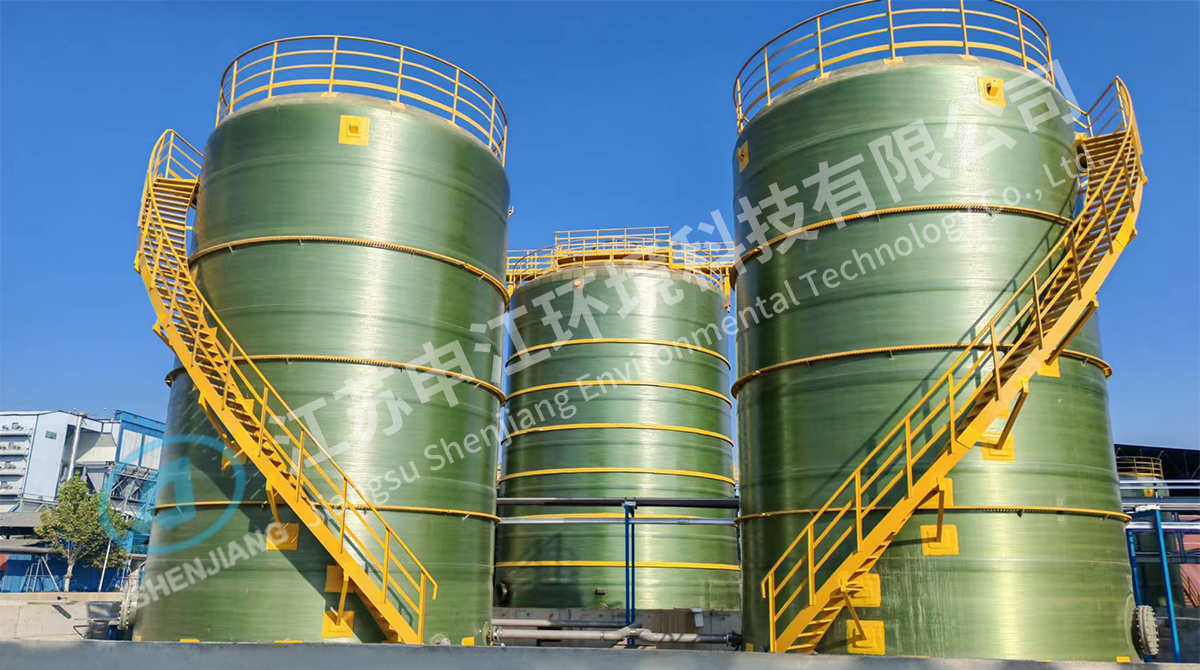
Critical insight for facility engineers: A denitrification FRP tower should be designed with a liquid-tight sump and inspection ports for maintenance access. The FRP material can be fabricated with integral flanges, nozzles, and ladders, eliminating the need for additional metal fittings that could introduce corrosion points. This monolithic construction significantly reduces the risk of leaks and extends the tower's service life.
Operating a Denitrification FRP Tower: Best Practices
The successful operation of a denitrification FRP tower requires careful monitoring and control of key process parameters. The following best practices are recommended:
- Nitrate Monitoring: Continuous online nitrate monitoring provides real-time feedback on tower performance. The target effluent nitrate concentration for a denitrification FRP tower is typically below 5 mg/L NO3-N, with some installations achieving below 1 mg/L.
- Carbon Source Dosing: Carbon source addition should be controlled based on the nitrate concentration in the influent. Over-dosing wastes chemicals and increases operating costs. Under-dosing reduces nitrate removal efficiency and can cause nitrite accumulation.
- Sludge Wasting: Biological growth in the denitrification FRP tower results in biomass accumulation that can restrict flow and reduce treatment performance. Periodic backwashing or sludge wasting is required to maintain hydraulic capacity.
- pH Monitoring: Denitrification produces alkalinity, which can raise the pH above 8.5, potentially inhibiting bacterial activity. pH control, using acid addition if necessary, keeps the pH in the optimal range for denitrification.
Regulatory Compliance and Environmental Benefits of Denitrification FRP Towers
The denitrification FRP tower plays a critical role in helping industrial facilities meet increasingly stringent nitrogen discharge limits. Environmental regulations worldwide are tightening nitrogen limits due to the negative effects of eutrophication and water quality degradation.
- Nitrogen Discharge Limits: Many jurisdictions now require effluent nitrate concentrations below 10 mg/L NO3-N, with some sensitive watersheds requiring below 5 mg/L. A well-designed denitrification FRP tower can achieve these limits reliably.
- Environmental Impact: Effective denitrification reduces the nutrient loading on receiving waters, preventing algal blooms and habitat degradation. A single denitrification FRP tower treating 1,000 m³/day of wastewater can remove 500-1,500 kg of nitrate nitrogen annually, significantly contributing to environmental protection.
- Certification: A denitrification FRP tower must be designed and constructed to meet applicable codes and standards, including ASME Section X for pressure vessels and ASTM standards for FRP materials. Third-party certification provides assurance of quality and compliance.
Cost-Benefit Analysis of Denitrification FRP Towers
The denitrification FRP tower offers a compelling return on investment compared to alternative nitrogen removal technologies, when evaluated over the full service life.
For a typical industrial wastewater treatment plant treating 500 m³/day with influent nitrate concentrations of 50 mg/L NO3-N, the following cost comparison illustrates the economic advantage:
- FRP Denitrification Tower: Installed cost $350,000. Annual maintenance cost $5,000. Service life 30 years. Total 30-year cost: $500,000.
- Carbon Steel Tower with Linings: Installed cost $250,000. Annual maintenance cost $15,000. Service life 15 years. Total 30-year cost including replacement: $700,000.
- Concrete Denitrification Tower: Installed cost $300,000. Annual maintenance cost $10,000. Service life 20 years. Total 30-year cost including replacement: $600,000.
The denitrification FRP tower delivers the lowest total cost of ownership among the alternatives, with the added benefits of faster installation, lower maintenance effort, and superior corrosion resistance.
Design Standards and Fabrication Quality for Denitrification FRP Towers
The design and fabrication of a denitrification FRP tower must conform to established engineering standards to ensure safety, reliability, and longevity.
- ASME RTP-1: The ASME standard for reinforced thermoset plastic corrosion-resistant equipment. This standard provides design rules, material specifications, and testing requirements for FRP vessels.
- ASTM D3299: Standard specification for filament-wound glass-reinforced thermosetting resin pipe. This standard includes design and fabrication requirements for FRP structures.
- Material Certification: A denitrification FRP tower manufacturer must provide material test reports (MTRs) for all components, including resin, glass fiber, and catalyst materials.
- NDT Requirements: The denitrification FRP tower should be tested using non-destructive techniques including ultrasonic thickness testing, dye penetrant inspection, and visual inspection.