Pipe Material Comparison
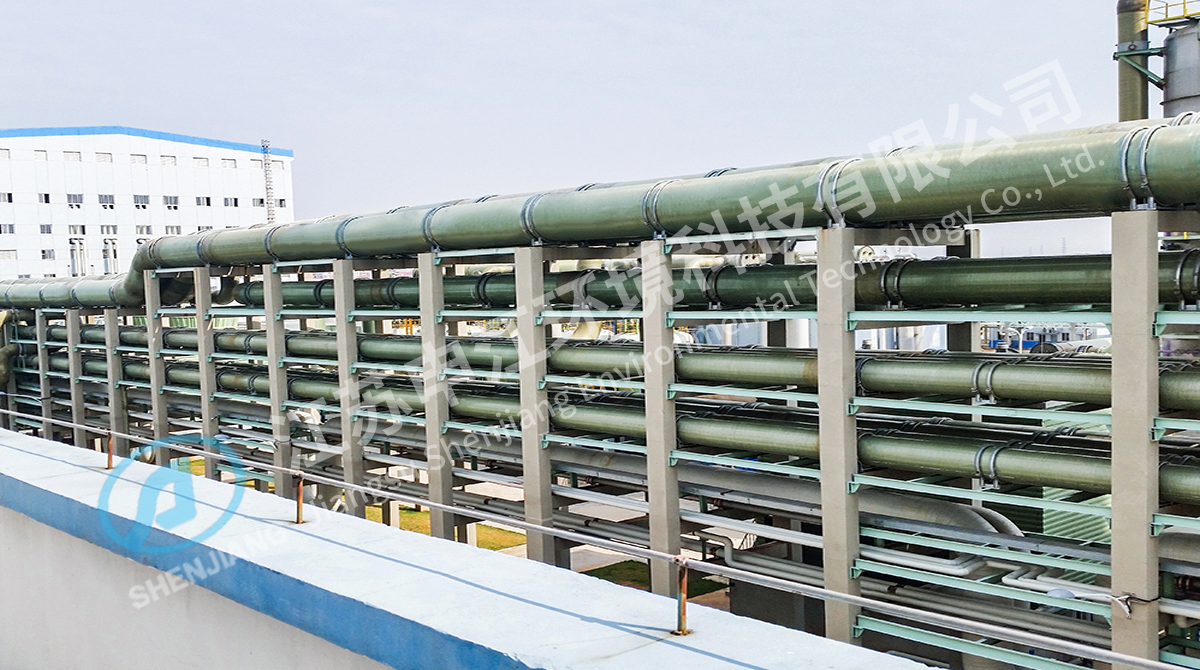
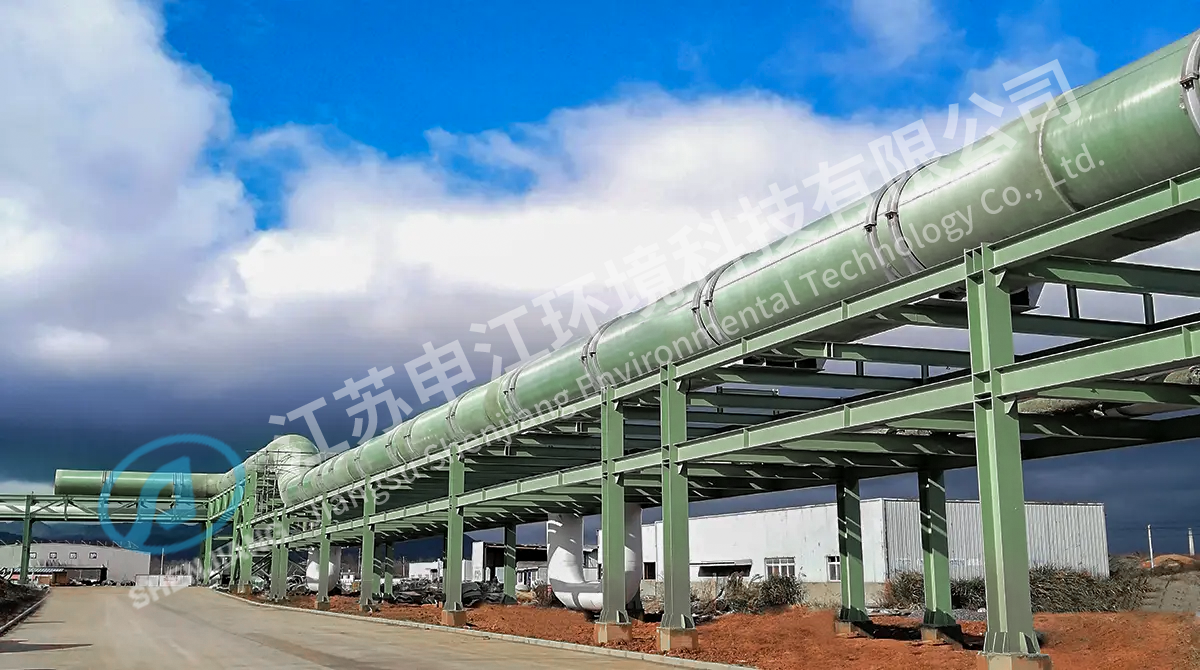
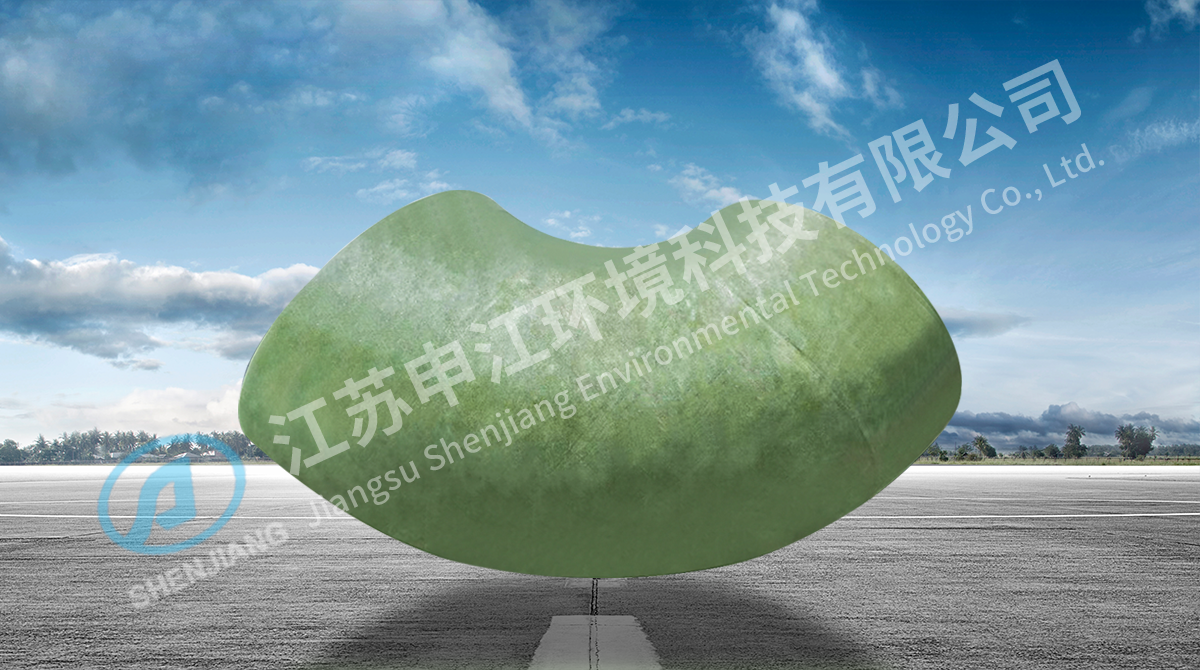
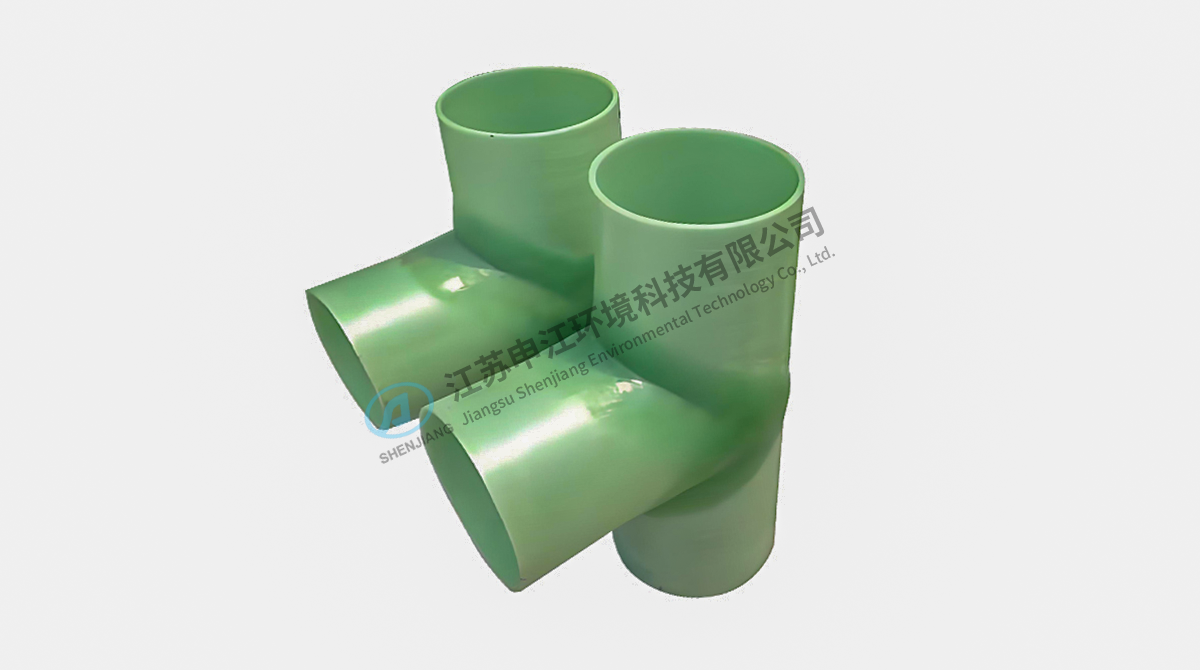
FRP (fiberglass reinforced plastic) pipes and fittings are the strongest choice for handling corrosive chemicals and saline fluids at moderate pressure, outlasting coated steel and avoiding the weight penalty of ductile iron.
Steel and ductile iron still win where pressure ratings or impact resistance exceed what FRP composite walls can reliably handle, and HDPE or PVC remain the more cost-effective choice for low-pressure buried gravity lines.
Chemical plants, desalination facilities, and pulp and paper mills all share one design headache: moving corrosive or abrasive fluid through miles of piping without the pipe itself becoming the maintenance problem. Steel needs coatings and cathodic protection that eventually fail. Ductile iron is heavy and still vulnerable to internal corrosion without lining. FRP piping was developed specifically to sidestep both problems, but it isn't a universal answer — comparing it honestly against the alternatives shows exactly where it earns its reputation and where it doesn't.
What Makes FRP Piping Structurally Different
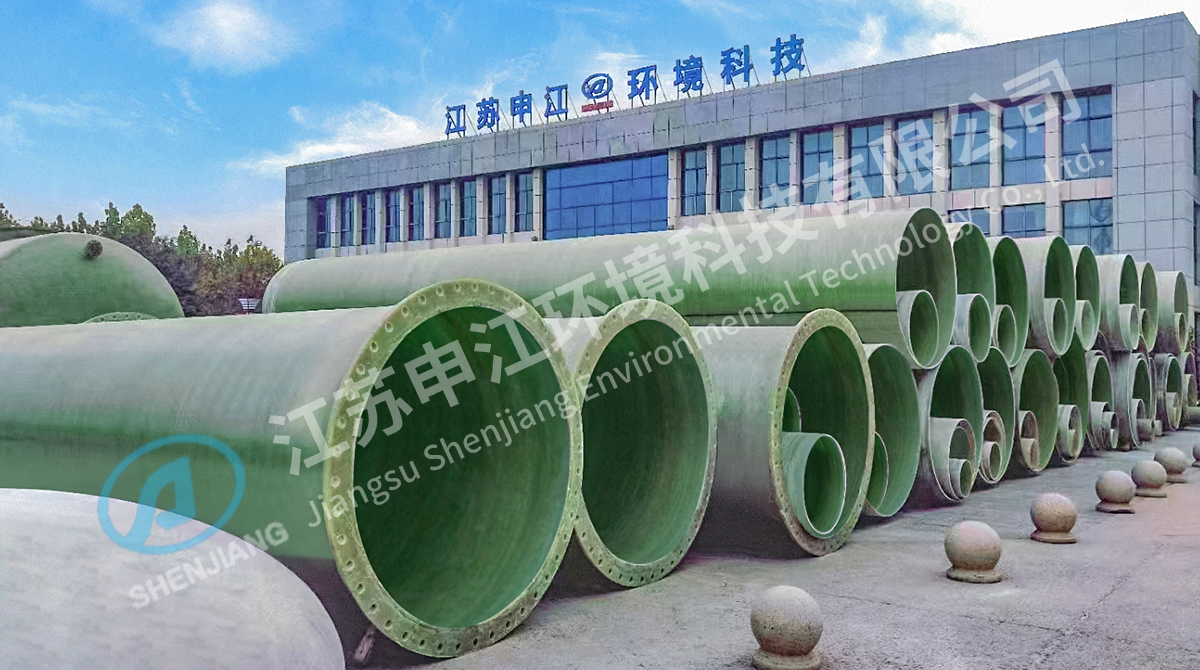
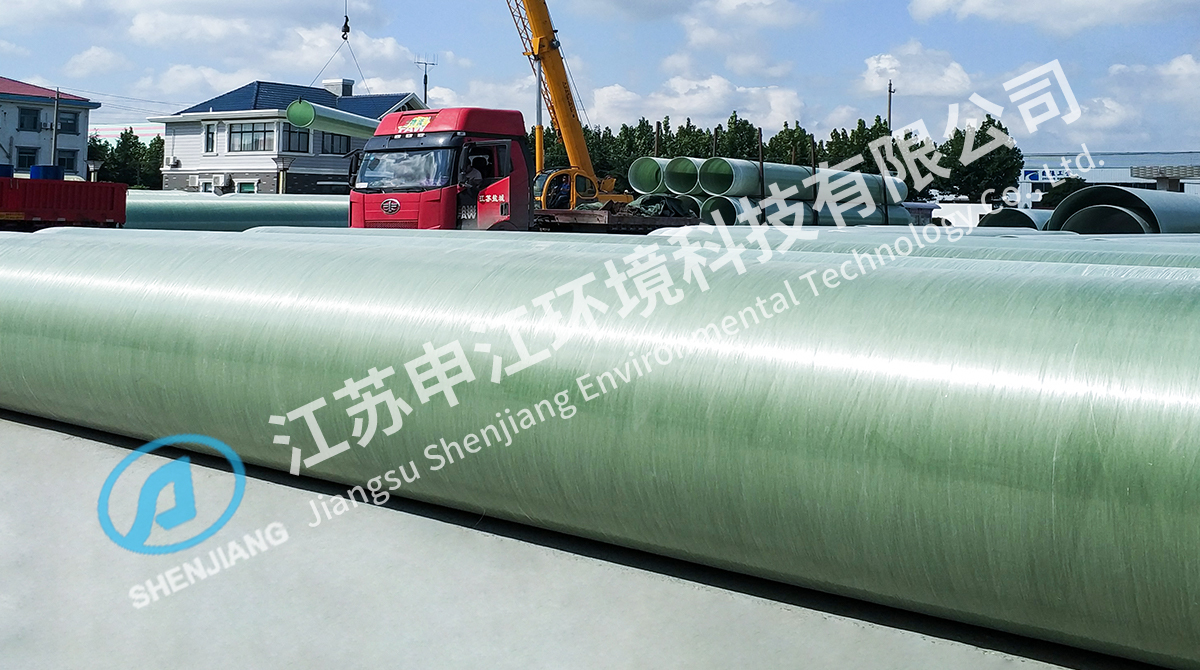
FRP pipe walls are built in layers, not as a single homogeneous material, and that layered construction is what gives it its particular strengths and limits compared to metallic or thermoplastic pipe.
Resin-rich liner — chemical barrier, no glass fiber
Structural layer — glass fiber and resin, carries pressure load
Outer layer — UV and mechanical protection
The inner liner is deliberately resin-rich and free of exposed glass fiber, since fiber in direct contact with a corrosive fluid can wick moisture along the fiber path and undermine the structural layer behind it. This is the same basic reason a well-made FRP pipe resists chemical attack far longer than a coated steel pipe, where a single coating breach exposes bare metal directly to the fluid.
FRP Versus Steel and Ductile Iron for Corrosive Service
Steel and ductile iron both rely on a barrier — paint, epoxy lining, galvanizing — standing between the metal and whatever's flowing through it. Once that barrier is compromised at even a single point, corrosion begins and often accelerates locally, sometimes perforating a pipe wall years before the rest of the system shows wear. FRP's corrosion resistance comes from the base material itself, not an applied coating, which removes that single point of failure.
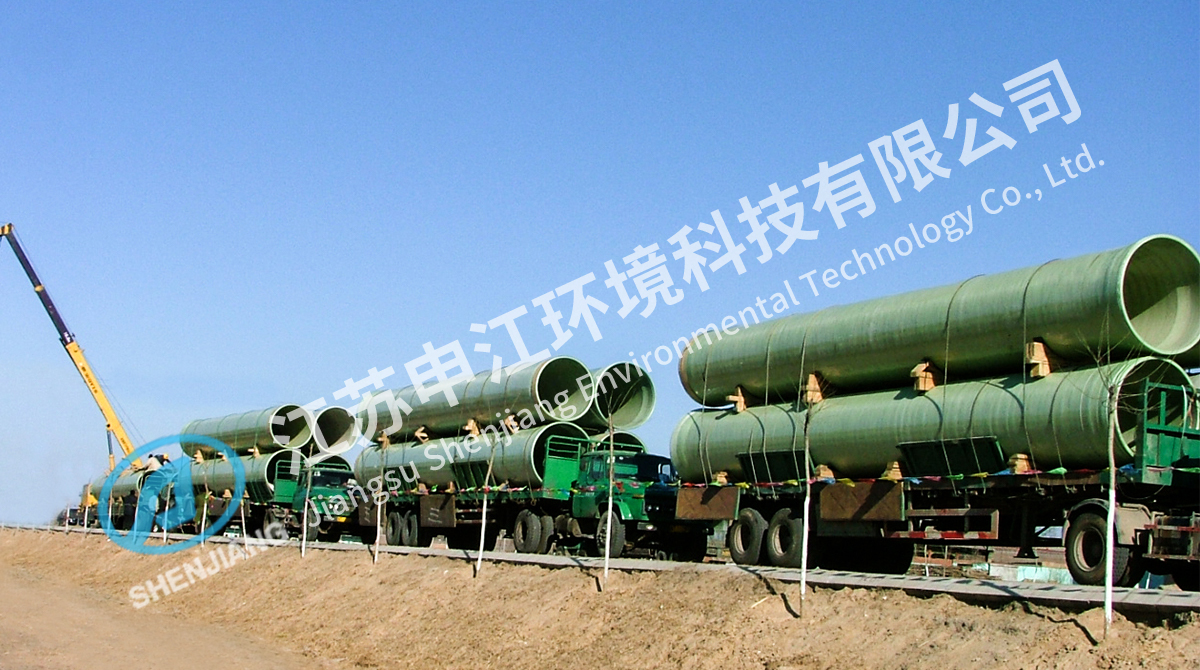
- Weight and installation: FRP pipe typically weighs a fraction of comparable-diameter steel or ductile iron, cutting installation labor and equipment costs, particularly for large-diameter runs where a steel pipe section might require a crane that an FRP section doesn't.
- Corrosion allowance: Steel pipe specifications often include a corrosion allowance — extra wall thickness sacrificed over the design life — that FRP doesn't need since its chemical resistance doesn't degrade the same way.
- Pressure ceiling: Steel and ductile iron still outperform FRP at very high pressure ratings, which matters for high-pressure transmission mains where FRP wall thickness would need to grow disproportionately to match steel's strength-to-wall-thickness ratio.
A coated steel pipeline carrying brine or acidic process water commonly needs coating inspection and repair on a multi-year cycle, while a properly specified FRP line handling the same fluid can run 25–30 years with minimal intervention, provided the resin system was matched correctly to the specific chemical service from the start.
FRP Versus PVC and HDPE for Buried and Gravity Lines
Thermoplastic pipe — PVC and HDPE — competes with FRP most directly in buried, lower-pressure applications like water distribution and gravity sewer lines. The comparison here is less about corrosion resistance, since both material families handle many common fluids well, and more about stiffness, diameter range, and cost.
FRP Pipe
Better dimensional stability at large diameters and higher pressure ratings than thermoplastic pipe of similar wall thickness, plus stronger performance in high-temperature service where PVC and HDPE begin to soften.
PVC / HDPE Pipe
Lower material and installation cost for small-to-medium diameter, lower-pressure gravity lines, with simpler fusion or solvent-weld joining methods that don't require the specialized crews FRP installation often needs.
For a large-diameter, high-temperature, or chemically aggressive line, FRP's performance headroom usually justifies its higher material cost. For a straightforward buried water main at moderate diameter and standard pressure, HDPE or PVC frequently wins on total installed cost without giving up meaningful performance.
Filament-Wound Versus Centrifugally Cast Manufacturing
Two dominant manufacturing processes produce FRP pipe, and the method used changes the pipe's fiber orientation and, consequently, its mechanical behavior. Filament winding wraps continuous glass fiber around a rotating mandrel at a controlled angle, building up layers saturated in resin. Centrifugal casting instead places chopped fiber and resin inside a rotating mold and uses centrifugal force to compact and cure the wall from the outside in.
| Attribute |
Filament-Wound |
Centrifugally Cast |
| Fiber orientation |
Controlled helical angle |
More randomized, chopped fiber |
| Hoop strength |
Very high, angle-optimized |
Good, less directionally tuned |
| Wall consistency |
Highly uniform |
Very smooth inner bore |
| Typical application |
High-pressure transmission lines |
Gravity and moderate-pressure lines |
Filament winding's ability to precisely angle fiber layup relative to the pipe axis lets manufacturers tune the pipe specifically for hoop stress versus axial stress, which is a big part of why filament-wound FRP dominates high-pressure pipeline applications over centrifugally cast alternatives.
Matching Resin System to Chemical Service
The resin binding the fiberglass matters as much as the fiber itself, and choosing the wrong one is a common cause of premature FRP failure that has nothing to do with the fiberglass construction being inherently unsuitable. Polyester resins handle a broad range of general chemical service at lower cost. Vinyl ester resins offer noticeably better resistance to strong acids, caustics, and oxidizing chemicals. Epoxy resins bring the strongest overall chemical and temperature resistance but at a higher material cost that's usually reserved for the most demanding service conditions.
- General water and mild chemical service: Polyester resin systems typically provide adequate resistance at the lowest cost per foot.
- Acidic or caustic process streams: Vinyl ester resin systems are the more common specification, balancing chemical resistance with reasonable material cost.
- High-temperature or highly aggressive chemical service: Epoxy resin systems justify their added cost when service conditions would degrade polyester or vinyl ester over the design life.
Joint Types and What They Mean for Installation
FRP piping systems typically join through bell-and-spigot adhesive-bonded joints, bolted flanges, or mechanical couplings, each with different labor and reliability trade-offs. Adhesive-bonded joints create a continuous, leak-resistant connection but require careful surface preparation and cure time, meaning installation quality depends heavily on crew training. Flanged and mechanical joints install faster and allow easier future disassembly for maintenance, at the cost of introducing more potential leak points along the line compared to a fully bonded joint system.




 English
  中文简体
中文简体 Español
 عربى
عربى русский
 ไทย
ไทย Indonesia
 Tiếng Việt