There is no single best industrial waste gas treatment technology — the right choice depends entirely on which pollutants are present, at what concentration, and in what volume of airflow. A system built for high-concentration organic solvent vapors will underperform badly on low-concentration particulate-laden exhaust, and vice versa. Facilities that match treatment technology precisely to their emission profile typically achieve removal efficiencies above 95%, while mismatched systems often struggle to clear 60–70% even when running at full capacity.
Matching Treatment Method to Pollutant Type
Industrial waste gas generally falls into a few broad categories, and each responds best to a different treatment approach. Treating the wrong pollutant with the wrong method is the single most common reason emission control systems fail to meet regulatory standards despite significant capital investment.
| Pollutant Category |
Common Source |
Effective Treatment Method |
| Volatile Organic Compounds (VOCs) |
Painting, printing, solvent use |
Thermal/catalytic oxidation, activated carbon adsorption |
| Acid Gases (SO2, HCl, NOx) |
Combustion, metal processing, chemical manufacturing |
Wet scrubbing, dry sorbent injection |
| Particulate Matter |
Cement, metal grinding, combustion ash |
Bag filtration, electrostatic precipitation |
| Odorous Compounds |
Wastewater treatment, food processing, rendering |
Biofiltration, chemical scrubbing |
A facility emitting a mix of VOCs and particulates — common in coating and painting operations — typically needs a staged approach: particulate removal first to protect downstream equipment, followed by VOC destruction or capture. Skipping the pre-filtration stage often shortens the service life of oxidizer catalysts or activated carbon beds considerably, since particulates foul active surfaces and reduce treatment efficiency over time.
Thermal Oxidation Versus Catalytic Oxidation for VOC Control
For VOC-heavy waste streams, the choice between thermal and catalytic oxidation significantly affects both destruction efficiency and operating cost, and the right pick depends largely on VOC concentration and composition.
- Thermal oxidizers combust VOCs directly at temperatures typically between 750°C and 850°C, achieving destruction efficiencies often exceeding 99% regardless of the specific VOC compound present. They handle variable or unknown VOC mixtures reliably but consume more fuel to maintain combustion temperature.
- Catalytic oxidizers use a catalyst bed to lower the required reaction temperature to roughly 300–450°C, cutting fuel consumption substantially compared to thermal systems. However, catalysts can be poisoned by certain compounds like silicones, phosphorus, or heavy metals, and destruction efficiency can drop noticeably once catalyst activity degrades.
Regenerative thermal oxidizers (RTO), which recover heat from treated gas to preheat incoming waste gas, can reduce supplemental fuel use by 80–95% compared to a straight thermal oxidizer without heat recovery, making them the preferred choice for continuous, high-volume VOC streams even though the upfront equipment cost is higher.
Wet Scrubbing Versus Dry Sorbent Injection for Acid Gases
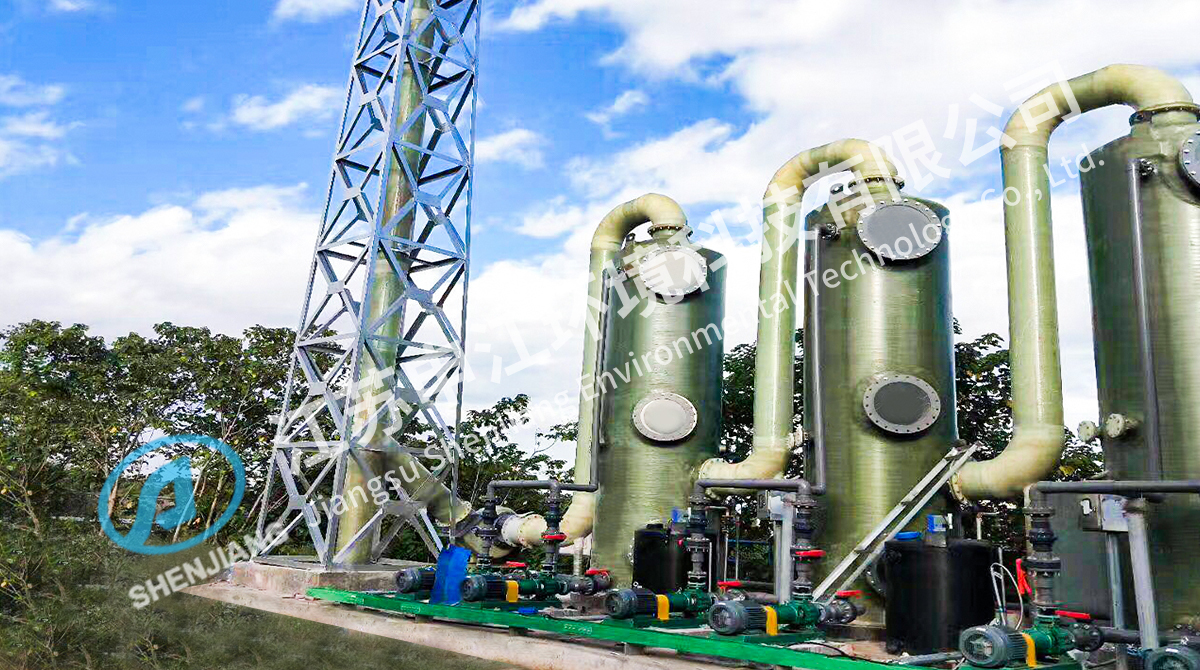
Acid gas control presents a similar fork in the road. Wet scrubbers pass exhaust gas through a liquid absorbent — often an alkaline solution — that neutralizes acid gases on contact, typically achieving removal efficiencies of 90–99% for compounds like SO2 and HCl. They perform reliably across a wide range of inlet concentrations but generate wastewater that itself requires treatment or disposal, adding a secondary cost and compliance consideration.
Dry sorbent injection introduces a fine alkaline powder, such as hydrated lime, directly into the gas stream, where it reacts with acid gases before being captured downstream by a baghouse filter. This method avoids wastewater generation entirely and requires less capital investment in liquid handling infrastructure, but generally achieves somewhat lower removal efficiency — often in the 70–90% range — and works best for facilities with moderate rather than extremely high acid gas loading.
| Method |
Typical Removal Efficiency |
Byproduct Handling |
| Wet Scrubbing |
90–99% |
Wastewater treatment required |
| Dry Sorbent Injection |
70–90% |
Solid waste disposal only |
Particulate Control: Bag Filtration Versus Electrostatic Precipitation
For dust and particulate-heavy exhaust streams, bag filters and electrostatic precipitators (ESPs) dominate industrial applications, but they suit different operating conditions. Bag filters trap particulate matter as gas passes through fabric filter media, commonly achieving collection efficiencies above 99% for particles as small as 1 micron. They perform consistently across varying particulate loads but require periodic bag replacement and generate pressure drop that increases fan energy consumption as filters load with dust.
Electrostatic precipitators charge particles electrically and collect them on oppositely charged plates, handling very high gas volumes with low pressure drop and correspondingly lower fan energy cost. However, ESP performance is more sensitive to particle resistivity — certain dust compositions don't hold an electrical charge well, reducing collection efficiency in ways that bag filtration doesn't experience. Facilities with consistent, well-characterized dust composition often favor ESPs for large-volume applications like cement or power generation, while facilities with variable or poorly characterized particulate streams tend to rely on bag filtration for its more predictable performance.
Biofiltration for Odor and Low-Concentration Organic Compounds
Where odor control rather than strict emission limits is the primary driver — common in wastewater treatment plants, composting facilities, and food processing operations — biofiltration offers a lower-cost alternative to combustion-based methods. Waste gas passes through a bed of organic filter media populated with microorganisms that biologically degrade odorous and low-concentration VOC compounds as the gas moves through.
Biofilters typically achieve 80–95% odor reduction for compounds like hydrogen sulfide and ammonia at a fraction of the operating cost of thermal oxidation, since they require no fuel input and minimal electricity beyond the blower fan. Their limitation is capacity: biofilters work best for low-to-moderate concentration streams and struggle with sudden concentration spikes or highly variable gas composition, since the microbial population needs time to adapt to changing conditions.
Operating Cost Comparison Across Treatment Technologies
Capital cost tells only part of the story when comparing industrial waste gas treatment options — ongoing operating cost, driven mainly by energy consumption and consumables, often determines the more economical choice over a 10-year period.
- Thermal oxidation without heat recovery carries the highest ongoing fuel cost, often making it the most expensive option to operate continuously despite moderate upfront investment.
- Regenerative thermal oxidizers cost more initially but cut fuel consumption dramatically, frequently achieving payback within 2–4 years for high-volume continuous operations.
- Catalytic oxidation offers a middle ground on operating cost but carries catalyst replacement expense every few years depending on gas composition and poisoning risk.
- Biofiltration has the lowest ongoing operating cost of the major methods but the narrowest range of applicable pollutants and concentrations.
- Wet scrubbing operating cost is driven largely by reagent consumption and wastewater disposal, which can vary significantly based on local disposal regulations and cost.
Sizing Treatment Systems to Actual Airflow and Concentration Data
A frequent and costly mistake in specifying industrial waste gas treatment equipment is sizing based on nameplate capacity of upstream production equipment rather than actual measured airflow and pollutant concentration under real operating conditions. Production equipment rarely runs at rated capacity continuously, and actual exhaust characteristics can vary significantly by shift, season, or product mix.
Facilities that commission a stack test or continuous emissions monitoring period before finalizing treatment system specifications typically arrive at more accurately sized equipment, avoiding both the wasted cost of an oversized system and the compliance risk of an undersized one. This data also proves valuable for selecting between competing technologies, since actual concentration profiles often reveal that a facility's emissions are better suited to one treatment method than the one initially assumed based on general industry practice for that sector.




 English
  中文简体
中文简体 Español
 عربى
عربى русский
 ไทย
ไทย Indonesia
 Tiếng Việt