
Jiangsu Shenjiang Environmental Technology Co., Ltd.

Recruiting Global Agents

Jiangsu Shenjiang Environmental Technology Co., Ltd.
Home / News / Industry News / FRP Tanks Transform Industrial Storage with Durability and Corrosion Resistance

FRP Tanks Transform Industrial Storage with Durability and Corrosion Resistance

FRP Tanks: Reliable and Corrosion-Resistant Storage Solutions

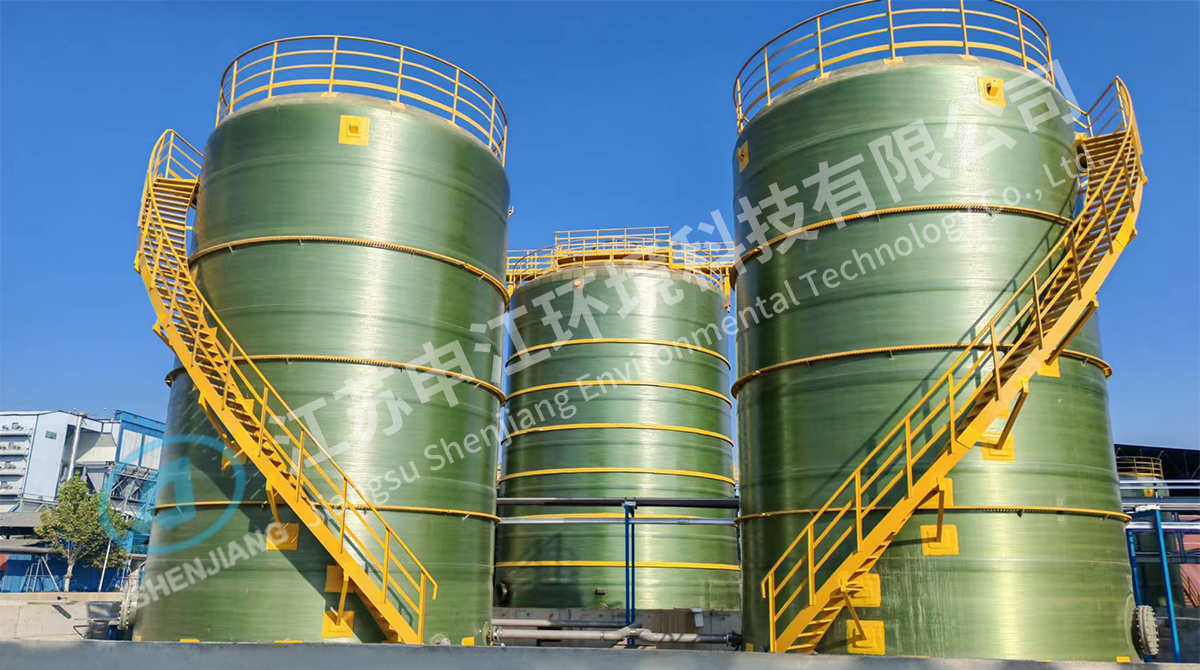
FRP tanks are the preferred choice for storing chemicals, water, and industrial liquids due to their exceptional corrosion resistance, lightweight structure, and long lifespan. Made from fiber-reinforced plastic composites, these tanks combine strength with durability, making them suitable for a wide range of industries.

Unlike traditional metal or concrete tanks, FRP tanks resist rust, scaling, and chemical attacks, providing a safer and more cost-effective storage solution.

Composition and Structure

FRP tanks are constructed from a combination of fiberglass reinforcement and resin matrices, which may include polyester, vinyl ester, or epoxy resins. This composite structure ensures:

  • High Strength-to-Weight Ratio: Easy to transport and install even in remote locations.
  • Corrosion Resistance: Impervious to acids, alkalis, and most industrial chemicals.
  • Thermal Stability: Can withstand temperature variations without structural damage.
  • Customizable Design: Can be manufactured in various shapes and sizes for specific storage requirements.

Applications Across Industries

FRP tanks are versatile and used in numerous sectors including chemical processing, water treatment, agriculture, and food industries:

Chemical Industry

FRP tanks resist strong acids, bases, and solvents, making them ideal for storing and processing chemicals without contamination or corrosion issues.

Water Treatment and Storage

These tanks are widely used in water treatment plants for storing potable water, wastewater, and rainwater due to their durable, non-corrosive nature and low maintenance requirements.

Food and Beverage Industry

FRP tanks are compatible with food-grade resins, ensuring hygiene and preventing chemical contamination while storing oils, syrups, and beverages.

Agriculture and Fertilizer Storage

In agriculture, FRP tanks are used for storing fertilizers, pesticides, and irrigation water, offering lightweight and easy-to-install solutions for farms and nurseries.

Design and Fabrication Techniques

FRP tanks are designed with attention to structural integrity and application-specific needs. Common fabrication methods include:

  • Hand Lay-Up: Traditional method using manual layering of resin and fiberglass for custom shapes.
  • Filament Winding: Automated process for cylindrical or spherical tanks, ensuring uniform strength and thickness.
  • Spray-Up: Efficient for large flat or curved panels, combining resin and chopped fibers through spraying.
  • Compression Molding: Used for standardized small tanks, offering high precision and repeatability.

Reinforcement and Layering

Multiple layers of fiberglass mat, roving, and woven fabrics are combined with resin to achieve desired strength, chemical resistance, and durability. Thicker layers are used for tanks storing aggressive chemicals or high-pressure applications.

Advantages Over Conventional Materials

FRP tanks offer significant benefits compared to metal, concrete, or plastic tanks:

  • Corrosion-Free: Unlike steel, FRP does not rust, significantly reducing maintenance costs.
  • Lightweight: Easier to transport and install than concrete or steel alternatives.
  • Long Lifespan: Can last 20–30 years with proper maintenance.
  • Customizable: Shapes, sizes, and resin types can be tailored to specific industrial needs.
  • Low Maintenance: Resistant to scaling, algae growth, and chemical attack, reducing cleaning frequency.

Installation and Maintenance Considerations

Proper installation and maintenance are crucial to maximize the lifespan of FRP tanks:

  • Foundation Preparation: Ensure level and stable support to prevent deformation.
  • Environmental Protection: Avoid prolonged UV exposure unless tanks are coated with UV-resistant layers.
  • Periodic Inspection: Check for cracks, delamination, or leaks, especially at joints and fittings.
  • Cleaning: Use non-abrasive methods suitable for the stored liquid to prevent surface damage.

Innovations and Market Trends

The FRP tank industry continues to evolve with technological and environmental advancements:

  • Hybrid Resins: Combining polyester and vinyl ester to improve chemical resistance and toughness.
  • Smart Monitoring: Integrating sensors to detect leaks or pressure changes in real time.
  • Eco-Friendly Production: Reduced VOC emissions during manufacturing and recyclable composite materials.
  • Modular Designs: Pre-fabricated sections allow easy assembly for large-scale storage systems.

Choosing the Right FRP Tank

Selecting the appropriate FRP tank involves evaluating:

  • Chemical Compatibility: Choose resin type according to the stored liquid’s chemical nature.
  • Size and Capacity: Match tank dimensions to storage volume requirements.
  • Environmental Factors: Consider temperature variations, UV exposure, and location.
  • Regulatory Standards: Ensure tanks meet local safety and environmental regulations.