Two quotations land on the same desk for the same exhaust stack. One prices a packed scrubbing tower in resin-based composite; the other prices a steel vessel with a rubber lining. Both are sold as environmental protection equipment, both promise high removal efficiency, and the price gap is wide enough to stall the project for a month. In practice the decision rarely turns on the vessel itself. It turns on what is in the gas, how hot and how wet it is, and how often the plant is willing to shut down for inspection.
The conclusion first: specify the gas stream and the duty cycle before comparing equipment, and treat the corrosion-resistant duct, tower and tank as part of the treatment system rather than as commodity pipework. In heavy industry that means two families of hardware working together, pollutant removal systems on one side and composite structures on the other, sized against the same operating envelope.
What Environmental Protection Equipment Actually Covers
Buyers use the phrase for anything from a single odour-control unit to a full turnkey line. When a project team asks for a quotation, seven equipment groups usually sit behind the request. Knowing which group owns the problem keeps the technical comparison honest.
Table 1: The seven equipment groups most industrial buyers mean when they request environmental protection equipment, and the duty each one performs.
| Equipment group |
Primary function |
Typical duty |
Common industries |
| Flue gas desulfurization |
Absorbs sulphur dioxide from combustion gas |
Wet alkaline or limestone scrubbing, often with dust removal |
Power, paper, chemical fibre |
| Flue gas denitrification |
Converts nitrogen oxides into nitrogen and water vapour |
Catalytic reduction with reagent injection |
Power, industrial boilers |
| Wet electrostatic precipitator |
Captures acid mist and fine particulate that cyclones miss |
Saturated gas downstream of a scrubber |
Power, metallurgy |
| Industrial waste gas treatment |
Removes or recovers solvent, carbon disulphide, acid and odour |
Biological deodorization, acid production, packaged CS2 plants |
Chemical fibre, paper, petrochemical |
| FRP duct and piping |
Carries aggressive gas and liquid without corroding |
Above-ground, buried, heat-resistant and seawater duty |
Gas transport, desalination, oil |
| FRP tower and tank |
Provides the reaction and storage volume |
Scrubbing towers, absorption towers, vessels, evaporators |
Chemical, power, water treatment |
| HVAC and cooling |
Keeps buildings and processes ventilated and cooled |
Air handling units, ventilation ducting, cooling towers |
All process industries |
Match the Equipment to the Gas Stream, Not the Catalogue
A supplier can only quote accurately once the stream is described. The diagram below is the first-pass routing logic most process engineers apply before any vendor is contacted, and it explains why two projects with similar stack heights can end up with completely different hardware.
Raw exhaust stream leaving the process
Sulphur-bearing flue gas: desulfurization and denitrification Solvent or CS2 vapour: recovery, incineration or packaged plant Odour and dilute VOC: biological deodorization Acid mist and fine dust: wet electrostatic precipitator
Common outlet: corrosion-resistant duct, scrubbing tower and stack
Figure 1: A first-pass route from raw stream to treatment family. The final box applies to every branch, because whatever removes the pollutant still needs a corrosion-resistant path to the stack.
Three questions that set the specification
- Composition and peak concentration. Average values hide the problem. Design on the highest concentration the process can produce during start-up, grade changes or upset conditions, then confirm that the removal route still meets the emission limit at that peak.
- Temperature and moisture. A stream at 60 °C with saturated water vapour behaves very differently from a dry stream at 120 °C. The first demands a corrosion barrier and drainage design; the second may need quenching before the gas reaches a wet scrubber.
- Turn-down and cycling. Equipment sized for continuous full load often runs poorly at 40% capacity. Ask what happens to removal efficiency, reagent consumption and fan stability when the line runs at half rate for a week.
 Integrated CS2 Exhaust Gas Treatment PackageIntegrated CS2 waste gas package covering collection, recovery, acid-making, low-concentration treatment and desulfurization, with EPC scope suited to coordinated plant delivery.View Product →
Carbon disulphide in chemical fibre plants is a good illustration. The stream is toxic, flammable and corrosive once it condenses, so a packaged plant usually combines collection ducting, treatment equipment and the control logic in one scope, with design, equipment supply, commissioning and construction handled by the same team. Splitting that scope across three suppliers is where most start-up delays originate.
Flue Gas Treatment: Where the Real Cost Sits
Desulfurization and denitrification are frequently quoted as separate packages and then operated as one system. The capital cost of the absorber or the reactor is visible and easy to compare. The cost that decides the fifteen-year picture is usually hidden in reagent consumption, waste water load and reheating duty.
A wet scrubber that reaches the emission limit with a cheap reagent can still lose money if the resulting waste water needs a dedicated treatment stage, or if the saturated gas has to be reheated to avoid a visible plume. A dry or semi-dry route may cost more in reagent and produce a solid residue that is easier to handle. Neither is universally better; the choice follows the reagent price, the water balance and the local discharge rules.
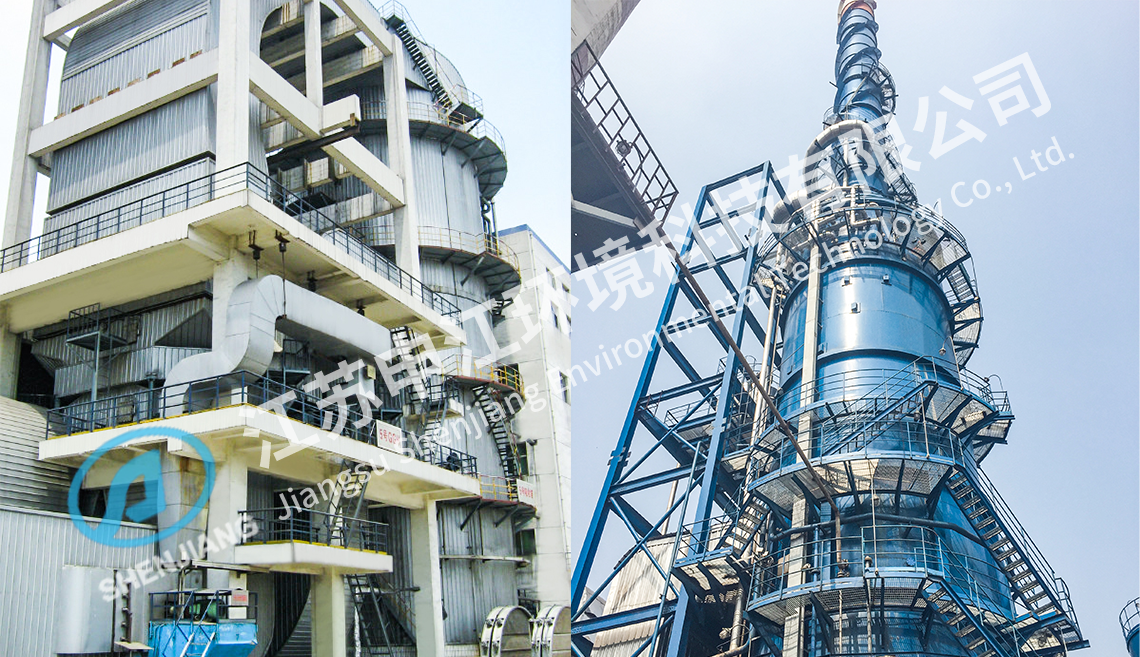 SCR Denitrification for Industrial Flue GasSCR denitrification for coal-fired boiler flue gas, using ammonia and catalyst to reduce NOx, with dynamic adjustment to flue gas conditions.View Product →
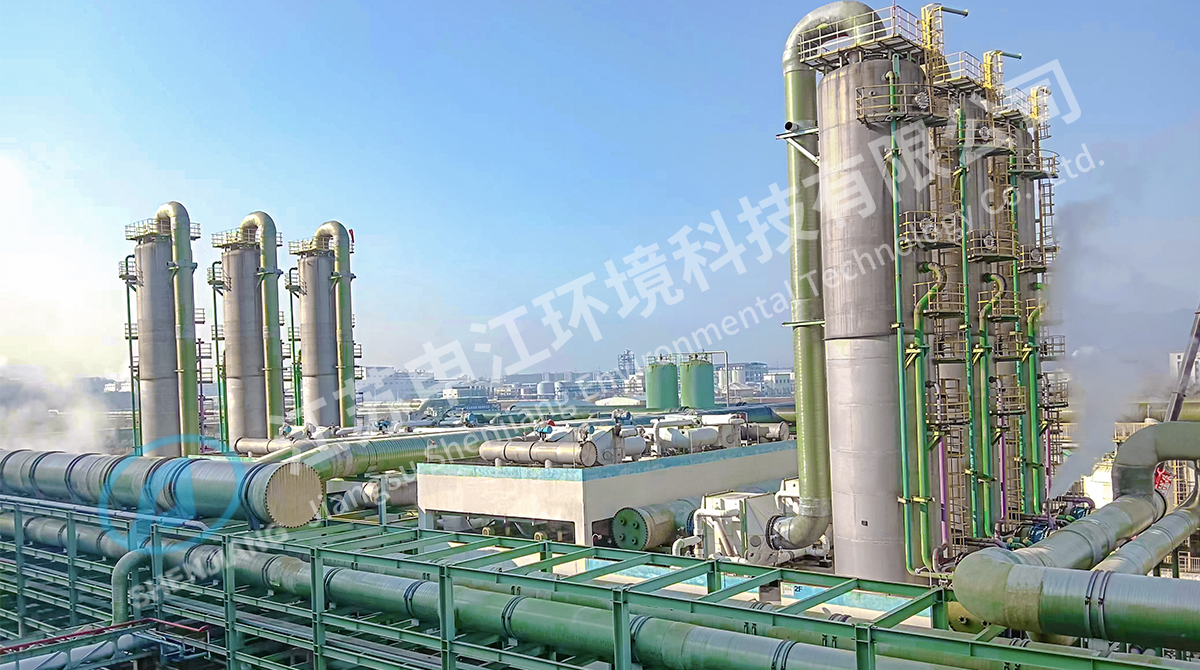
Downstream of the scrubber, acid mist and sub-micron particulate remain. A wet electrostatic precipitator placed after the absorber captures what mechanical separators cannot, and it is often the difference between meeting a visible-emission requirement and arguing about it. Because these stages are sequential, the duct between them carries saturated, acidic gas, which is precisely where material selection stops being a detail.
Composite Structures: Ducts, Towers and Tanks That Outlast Steel
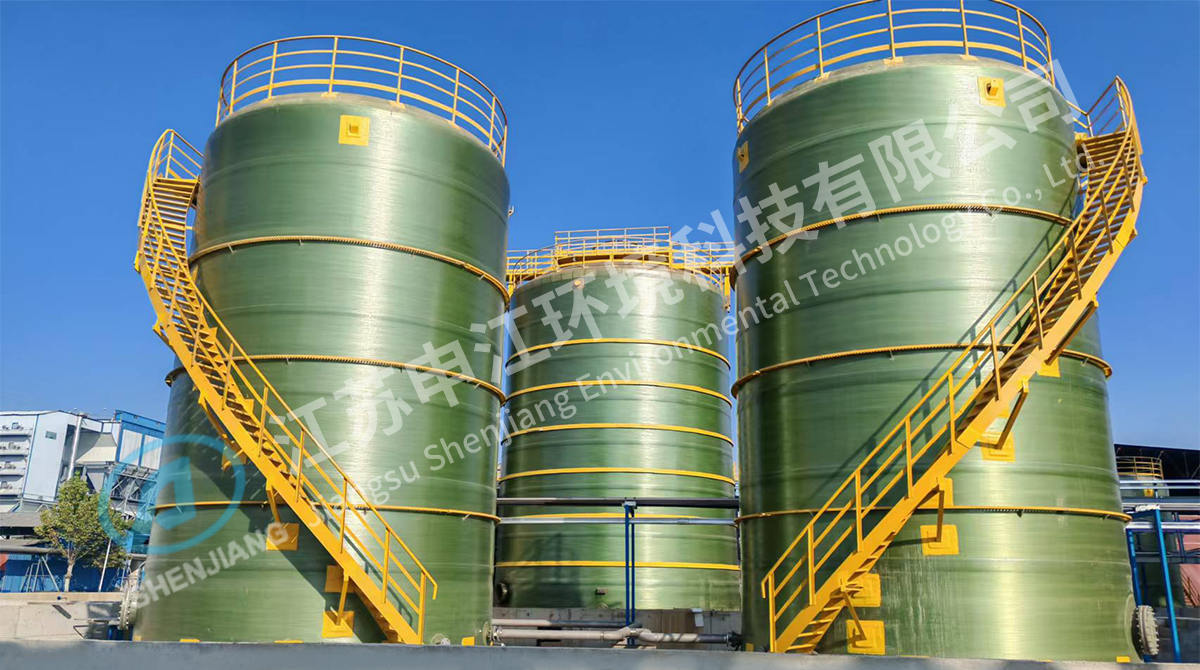
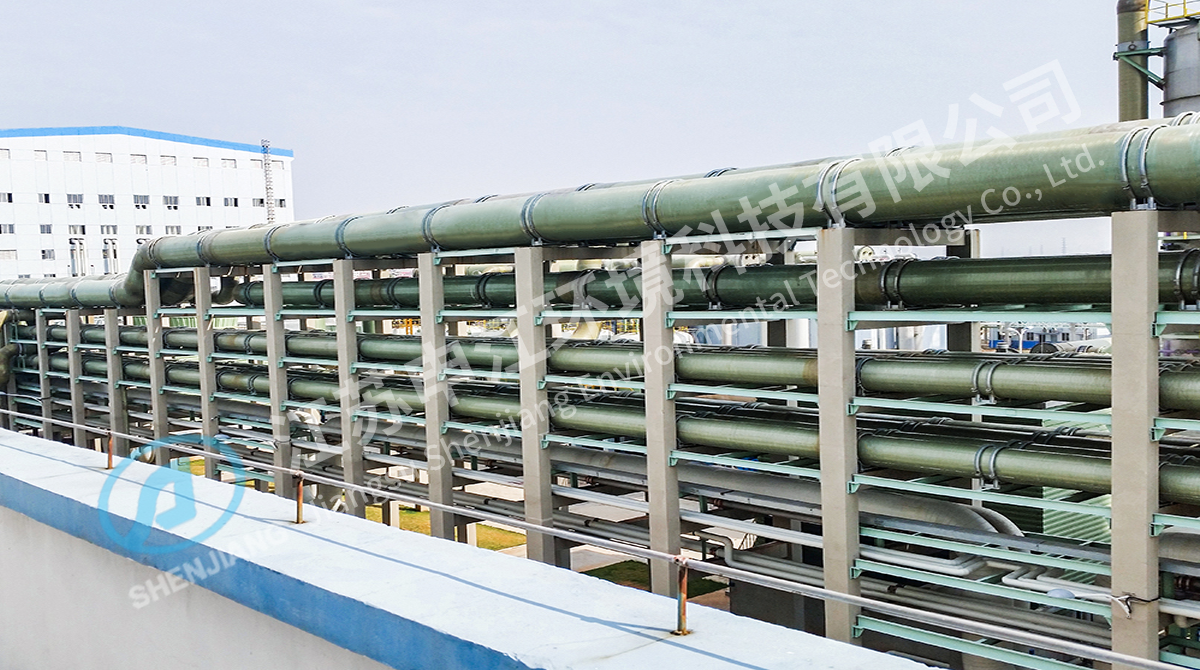
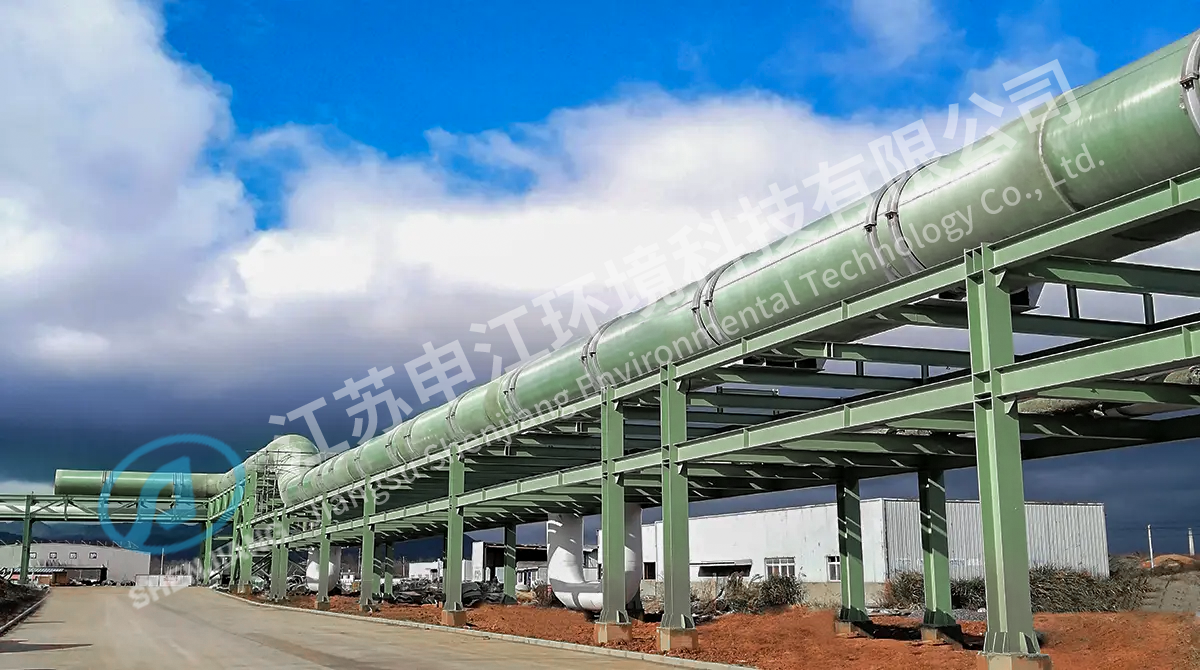
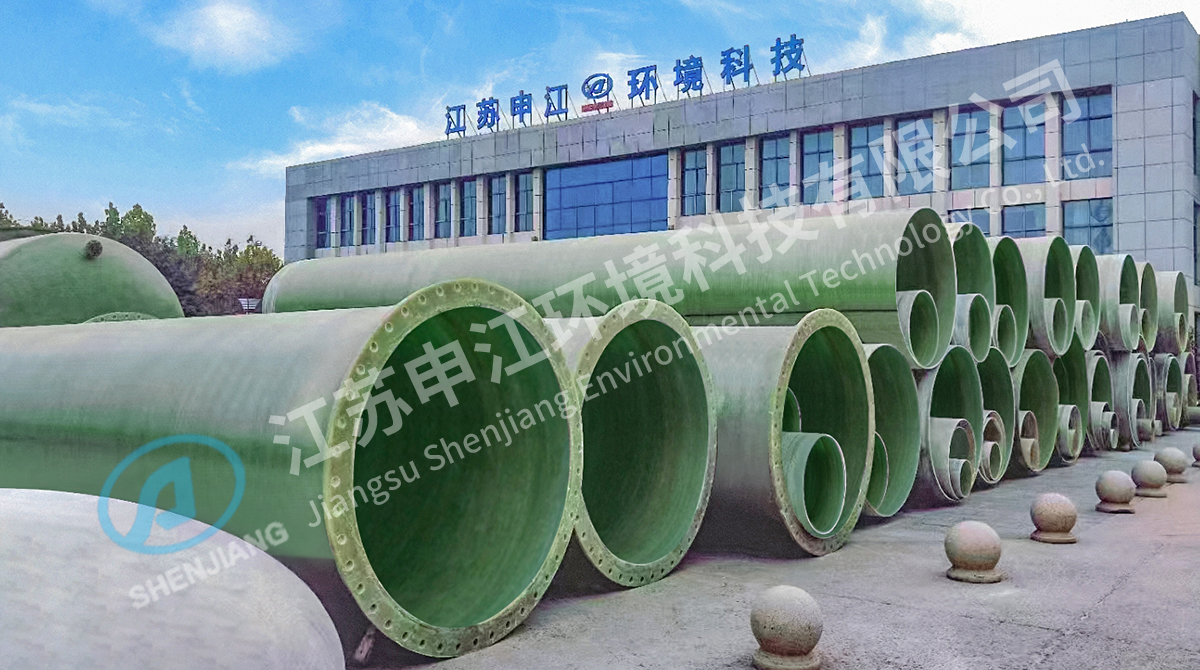
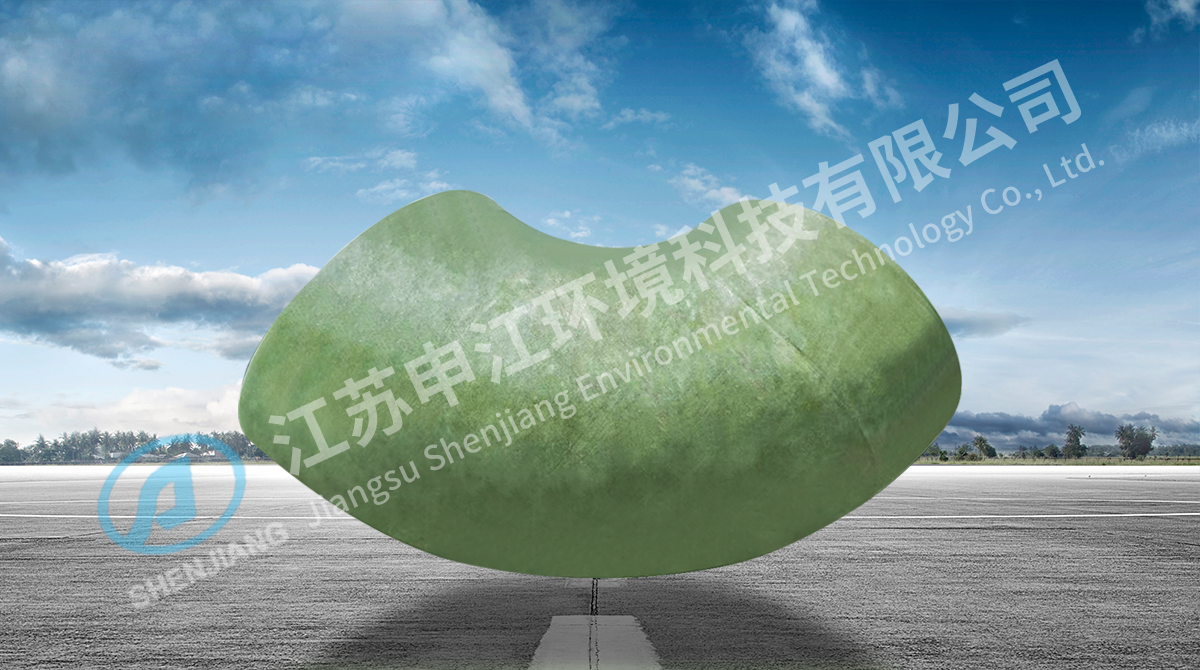
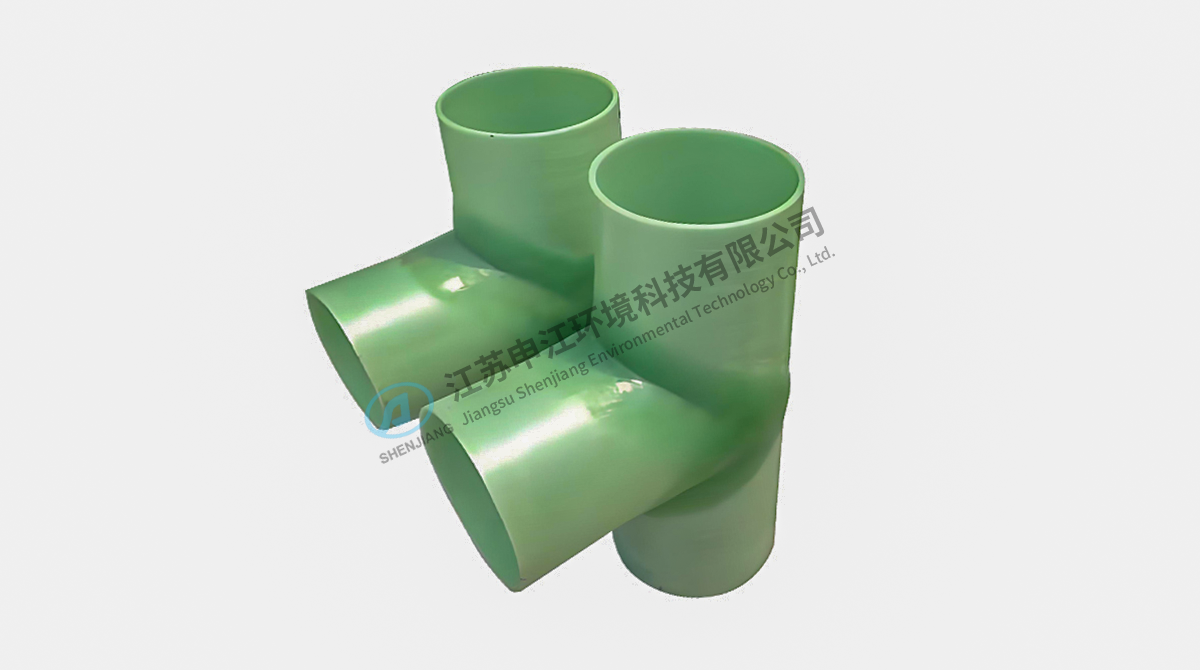
Glass fibre reinforced plastic earns its place in this discussion for three reasons: it does not rust, it weighs roughly a quarter of steel for the same duty, and it can be formed into complex shapes on site. For a duct carrying wet, chloride-bearing gas, that combination often removes the need for internal lining, external painting and the inspection regime that goes with both.
The comparison is not one-sided. Steel wins on temperature ceiling, impact resistance and familiarity for maintenance crews. A useful side-by-side of the two materials, including where each one should not be used, is set out in this FRP pipe and steel pipe comparison, and it is worth reading before the material is frozen on the drawings.
Within composites, resin choice matters more than wall thickness. Standard polyester grades suit mild service; vinyl ester grades handle acids, chlorides and hypochlorite; heat-resistant systems extend the working range for hot flue gas. Joints deserve equal attention. Butt-and-strap lamination, flanged connections and hand lay-up each behave differently under vacuum, thermal cycling and vibration from the fan.
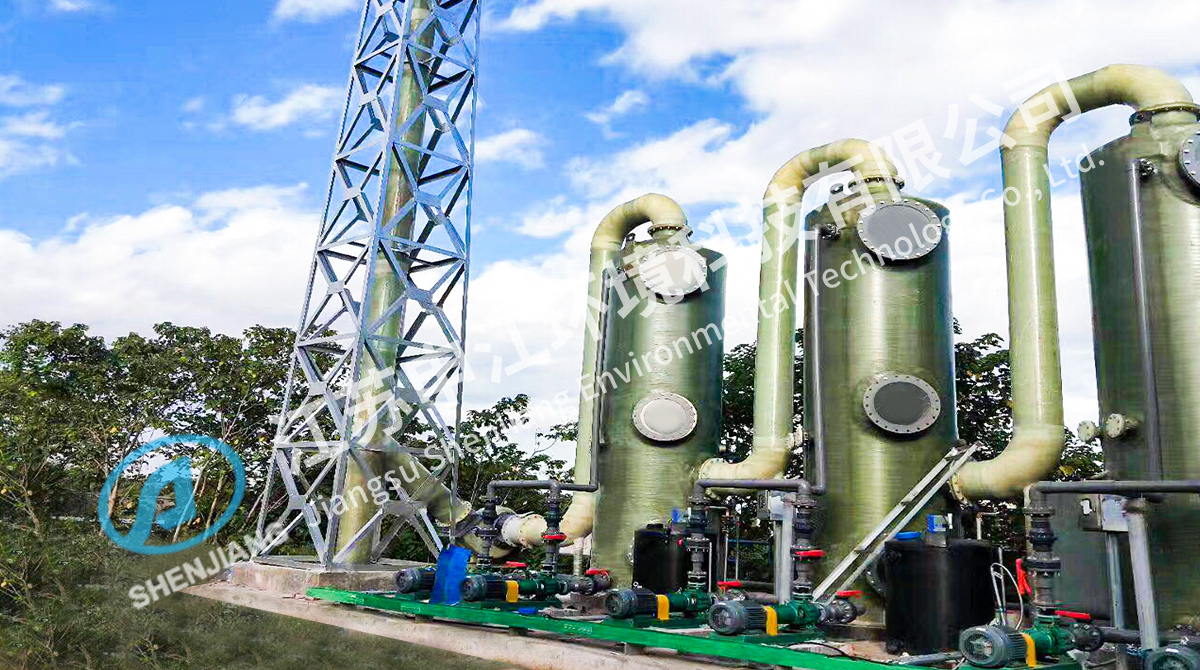
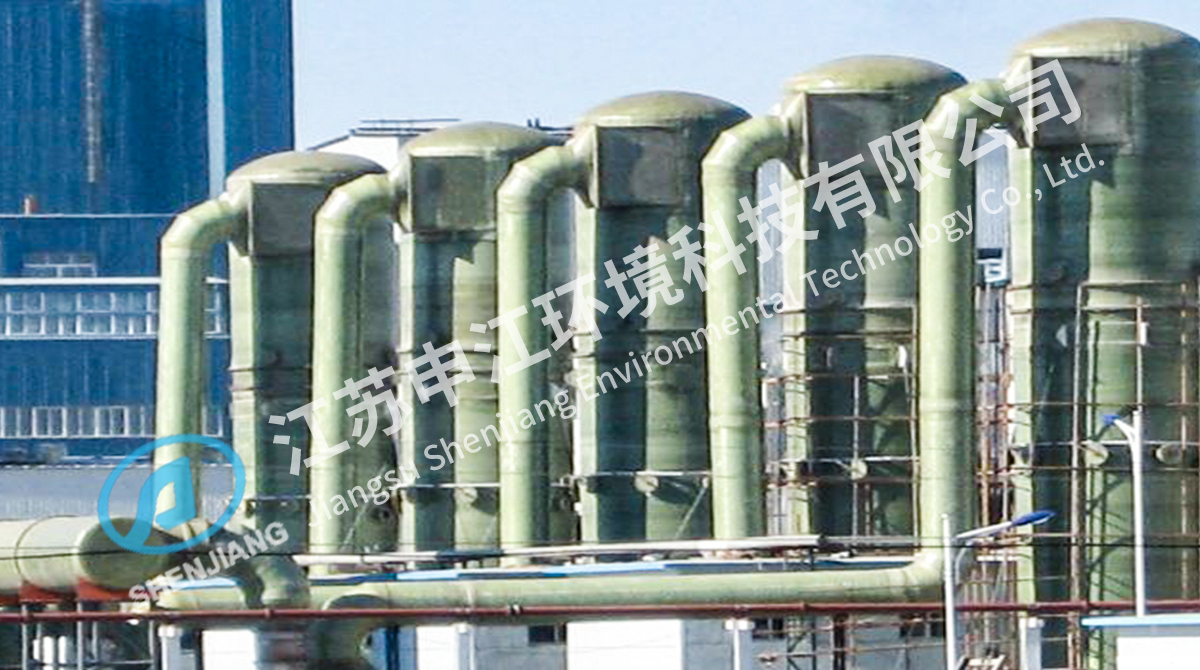 FRP Scrubbing Tower for Industrial Waste GasFiberglass scrubbing tower for corrosive industrial waste gas, using spray-liquid contact to absorb acidic, alkaline and organic pollutants; process sizing and fabrication need to align.View Product →
A scrubbing tower illustrates how the two families merge. The shell, the packing support and the mist eliminator are composite structures, but their dimensions come from the gas flow, the liquid-to-gas ratio and the pressure drop budget. Buying the vessel without the process calculation, or the calculation without a fabricator who can build to it, produces a tower that fits the drawing and misses the emission limit.
Procurement Details That Decide Whether It Lasts Fifteen Years
Most failures traced back to a purchase order are specification gaps rather than manufacturing defects. These are the items worth writing into the technical annex:
- Corrosion barrier defined on the drawing, including resin grade, surface veil and minimum barrier thickness, not just total laminate thickness.
- Design temperature stated with a margin above the maximum continuous operating temperature, and a separate allowance for short excursions.
- Pressure and vacuum rating that covers fan surge and blocked-damper scenarios, since negative pressure collapses more ducts than positive pressure bursts.
- Support spacing, expansion joints and anchor details agreed between the equipment supplier and the civil contractor before fabrication starts.
- Test documentation: hardness checks, spark testing of the lining, hydrostatic testing and dimensional reports, delivered with the equipment rather than months later.
- A clear scope split for installation, commissioning, operator training and spare parts, so the responsibility for a failed start-up is not negotiated after the fact.
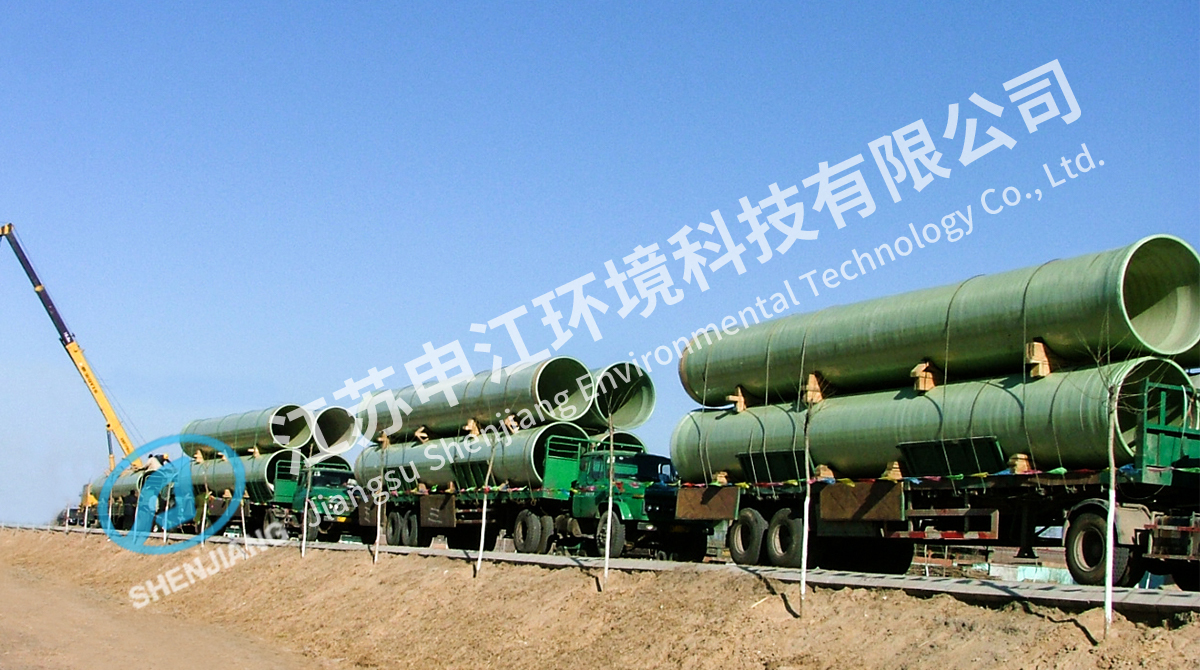
Lead time belongs on the same list. A composite tower is built to order, and a three-month fabrication slot cannot be compressed by asking politely, so the equipment schedule should be fixed while the civil works are still being tendered.
Environmental protection equipment is not a catalogue purchase. The gas stream sets the process route, the process route sets the materials, and the materials determine what maintenance looks like a decade later. A supplier that can design the treatment step, fabricate the composite duct and tower, and then commission the system on site removes one of the most common handover risks in industrial projects, which is the gap between a working reactor and a duct that was never sized for it.
Jiangsu Shenjiang Environmental Technology has worked on both sides of that gap since 1996, building flue gas and industrial waste gas treatment systems alongside glass fibre reinforced plastic pipes, tanks and towers in Yancheng, Jiangsu. Projects across chemical fibre, paper, power, oil, seawater desalination and gas transport are summarised in the company project case library, which is a practical place to check whether a comparable gas stream has already been handled before the specification is finalised.




 English
 中文简体
 Español
 عربى
 русский
 ไทย
 Indonesia
 Tiếng Việt