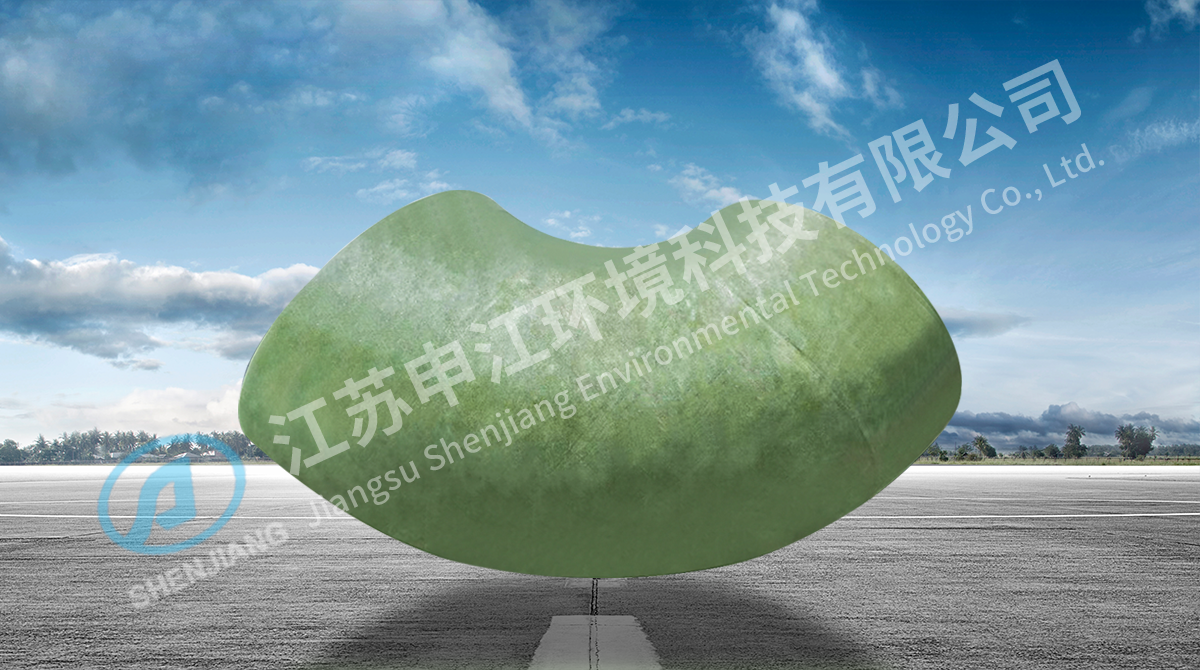
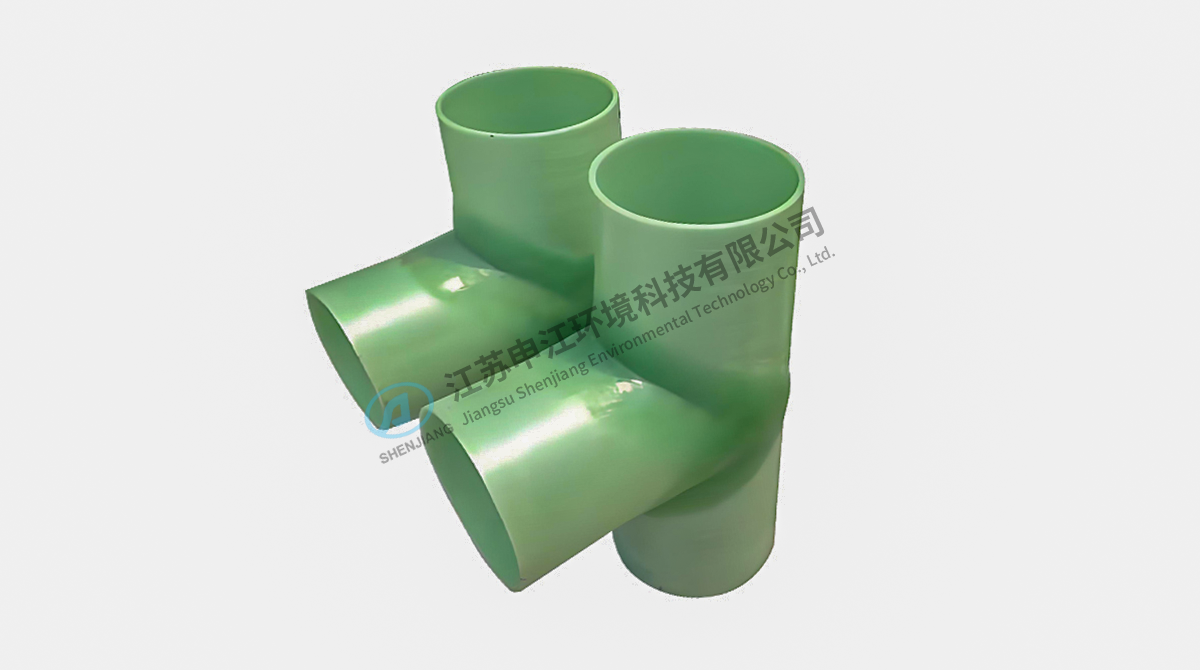
If a chemical plant replaces one 90-degree elbow in a wet chlorine line, that fitting often decides whether the piping system lasts five years or fifteen. FRP pipe fittings are not interchangeable hardware. The resin, liner, reinforcement, joint design, and pressure class must match the service fluid, temperature, and installation method. The conclusion is simple: specify the fitting with the same engineering data you use for the pipe, and verify the supplier's test records before approval.
This guide explains how to choose FRP pipe fittings for industrial service, what to verify in a quotation, and where hidden costs appear after installation. It focuses on practical selection criteria because most failures start at a joint, a branch, or a transition that was treated as a minor accessory.
Start With the Fitting, Not the Pipe Size
Most project teams order pipe by diameter and pressure class, then treat fittings as catalog items. That approach causes field failures. A fitting changes flow direction, concentrates stress, and creates a joint. In FRP, the joint is often the weakest point. A 90-degree elbow in a slurry line may need a thicker wall, a wear-resistant liner, or a larger radius than the straight pipe on either side.
Use the following decision tree to narrow the specification before you request a quotation.
Figure 1: FRP fitting selection decision tree
- Service fluid
- Acid or oxidizer: choose vinyl ester or bisphenol-A resin with a resin-rich liner.
- Solvent or hydrocarbon: verify resin compatibility; do not assume standard polyester works.
- Seawater or brine: specify a corrosion barrier and UV protection.
- Temperature
- Below 60 C: standard FRP grades often work.
- 60 to 100 C: derate pressure and verify the resin heat deflection temperature.
- Above 100 C: use high-temperature resin or consider a lined metal alternative.
- Pressure
- Low pressure: contact-molded or filament-wound fittings may be acceptable.
- Medium pressure: filament-wound construction with a matched joint is preferred.
- High pressure: require a hydrostatic design basis and cycle-test data.
- Installation
- Field adhesive bond: requires trained crew and cure control.
- Flanged: easier maintenance, but heavier and more expensive.
- Bell-and-spigot: fast, but alignment and gasket selection matter.
Once the service envelope is clear, the fitting type and joint method become engineering decisions rather than purchasing preferences.
Fitting Types and What Each One Does
FRP pipe fittings cover the same basic functions as metal fittings, but the manufacturing method and joint details change the risk profile. A filament-wound elbow behaves differently from a contact-molded elbow, especially under cyclic pressure or bending load.
Table 1: Common FRP pipe fittings and the specification points that matter most.
| Fitting type |
Typical service |
Key specification |
| Elbow, 45 or 90 degree |
Direction change in chemical, water, or gas lines |
Radius, wall thickness, resin type, and joint detail |
| Tee and lateral |
Branch connection on a main header |
Reinforcement at the branch, pressure class, and flow split |
| Flange |
Equipment connection, maintenance break |
Bolt pattern, facing type, gasket, and torque procedure |
| Reducer |
Line size transition |
Concentric or eccentric, taper angle, and support location |
| Custom bend |
Tight plant layout, non-standard angle |
Mock-up dimensions, stress analysis, and cure schedule |
For high-cycle or abrasive service, ask for the actual construction drawing. A catalog image does not show the liner thickness, the number of winding layers, or the reinforcement at a branch. The product page for FRP elbows is a useful starting point for standard configurations, but the project drawing still controls.
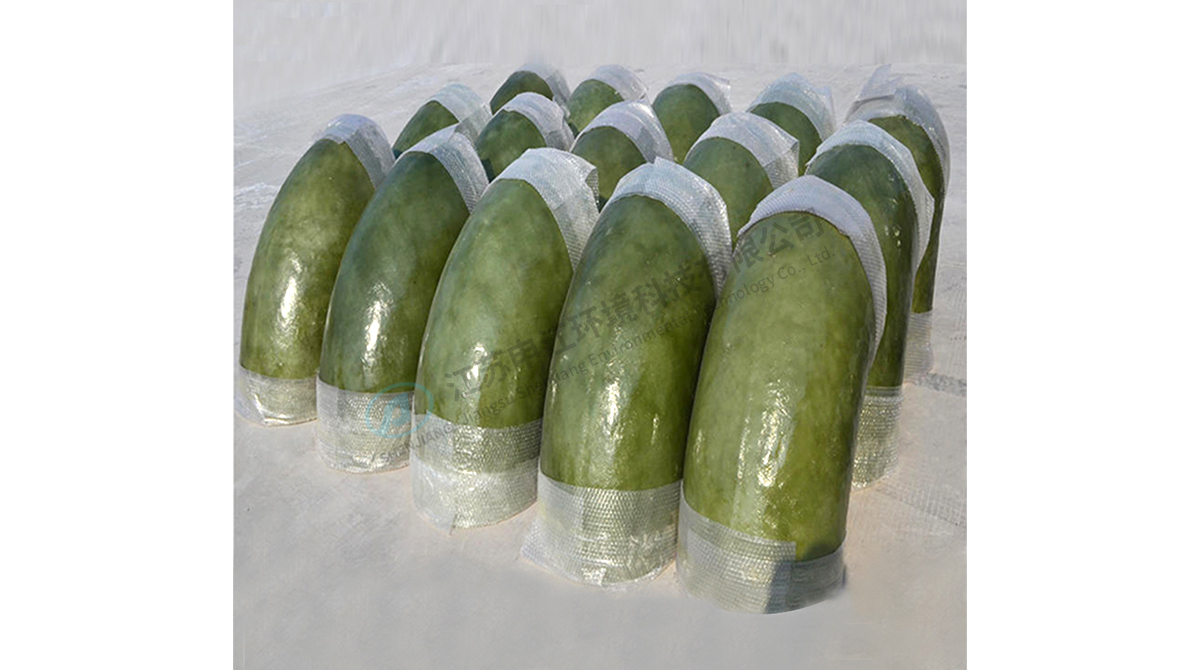 FRP Elbows for Corrosive Industrial Piping SystemsView standard or customized fiberglass-reinforced plastic elbows for chemical, petroleum, and water-treatment piping where corrosion resistance and mechanical strength matter.View Product →
Branch connections deserve special attention. A tee or lateral interrupts the hoop stress path in the pipe wall. If the branch is not properly reinforced, the fitting can crack at the crotch during pressure cycling or water hammer.
Material and Construction Choices That Control Service Life
Resin selection
The resin system determines chemical resistance more than any other variable. Isophthalic polyester is a common general-purpose choice for water and mild chemicals. Vinyl ester offers better resistance to acids, oxidizers, and many solvents. Bisphenol-A fumarate polyester is often used for caustic and high-temperature service. Epoxy can provide high strength, but it may not match vinyl ester in broad chemical resistance.
Liner and corrosion barrier
A resin-rich liner, often called the corrosion barrier, is the first line of defense. It should be specified by thickness and resin type, not just described as corrosion resistant. For aggressive service, a synthetic veil or surface mat can improve chemical resistance and reduce wicking along glass fibers.
Reinforcement and wall build
The structural wall carries pressure and external loads. Filament winding gives high hoop strength and consistent fiber content. Contact molding is more flexible for complex shapes but may have lower and more variable strength. Hand lay-up can be acceptable for low-pressure ducts, but it is usually not the best choice for pressure-rated fittings.
Pressure, Temperature, and Chemical Compatibility
FRP fittings are rated as a system, not as individual parts. A fitting may carry the same nominal pressure class as the pipe, but the joint may reduce the allowable pressure. Temperature also changes the allowable stress. Do not use the ambient-temperature pressure rating for a line operating above 60 C without a derating factor from the manufacturer.
Chemical compatibility must be checked at the expected concentration and temperature. A resin that works in 10 percent sulfuric acid at 20 C may fail in 50 percent acid at 80 C. The same logic applies to mixtures, trace oxidizers, and dissolved chlorides. When the chemistry is uncertain, request a resin compatibility chart or a sample test.
Pressure cycling is another hidden risk. A fitting that holds steady pressure may leak after thousands of pump starts or valve movements. For critical service, ask for cyclic pressure test data and specify a joint design that has been qualified for the expected number of cycles.
Joints, Flanges, and Field Installation
Most FRP piping problems appear at joints. The joint type should be selected before the fitting is ordered, because the fitting end preparation depends on it.
Flanged connections
Flanged FRP fittings simplify maintenance and equipment connections. They require correct bolt torque, gasket selection, and support to avoid overstressing the flange. A common mistake is to tighten bolts to metal-pipe torque values; FRP flanges can crack or creep under excessive load. The flange product page shows typical configurations, but the gasket and bolt-up procedure must match the service.
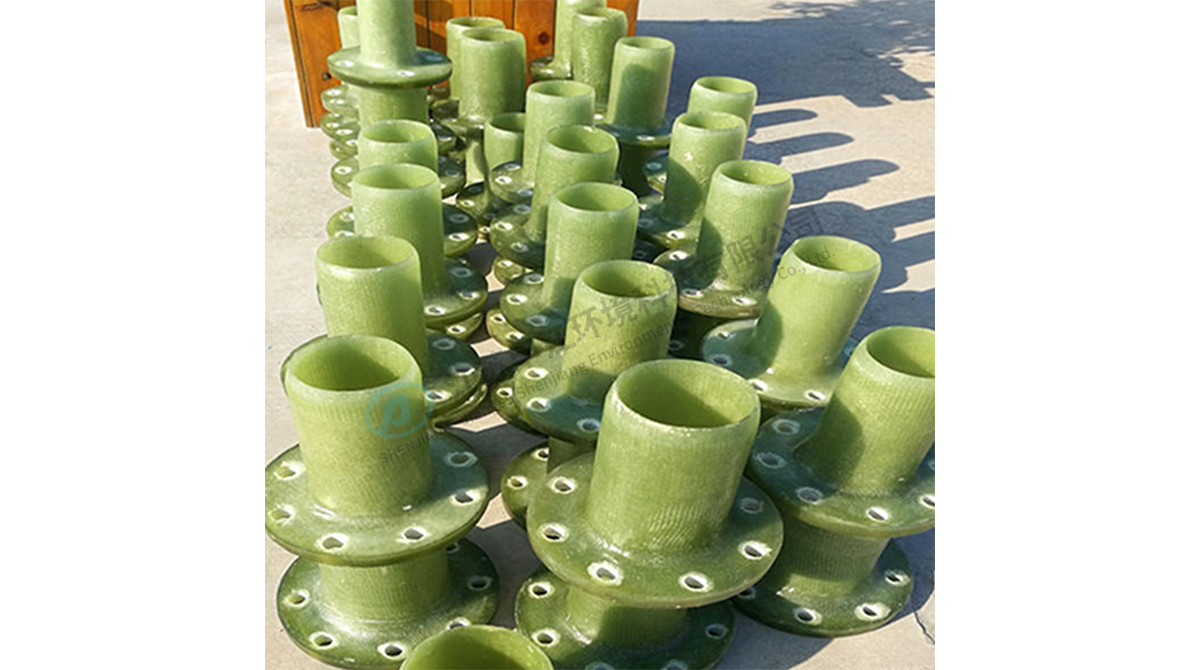 FRP Flanges for Chemical, Petroleum, and Marine PipingCheck these fiberglass-reinforced plastic flanges for corrosive media and equipment connections, where correct gasket and bolt-up procedures are essential.View Product →
Adhesive-bonded joints
Butt-and-strap and bell-and-spigot adhesive joints are common in buried and above-ground FRP lines. They require clean surfaces, correct fit-up, proper adhesive mix, and controlled cure. Field crews must be trained and the cure schedule must match the ambient temperature. A joint that looks solid can leak if the adhesive was mixed incorrectly or if the parts moved during cure.
Bell-and-spigot and gasketed joints
Bell-and-spigot joints with elastomeric gaskets are fast to assemble and tolerate some movement. They are not a substitute for a bonded joint in high-pressure or high-cycle service. Gasket material must be compatible with the fluid, and the spigot insertion depth must be controlled to allow thermal expansion.
Procurement Checklist: What to Verify Before You Approve a Quotation
Use the following checklist to compare suppliers on equal terms. It is based on the data that matters after the fitting leaves the factory.
- Resin type, liner type, and liner thickness for every fitting.
- Construction method: filament wound, contact molded, or hand lay-up.
- Pressure class, temperature derating curve, and hydrostatic design basis.
- Joint details and end preparation drawings, not just a catalog number.
- Dimensional tolerance and flange drilling standard.
- Test reports: hydrostatic, dimensional, and raw material certificates.
- Installation procedure, adhesive specification, and cure schedule.
- Packing and shipping protection for flanges, spigots, and coated surfaces.
For branch fittings and custom angles, add a drawing approval step before production. A one-degree error in a fabricated bend can become a field alignment problem that costs far more than the fitting. The bent-tee product page illustrates a typical configuration, but the project drawing should control the final dimensions.
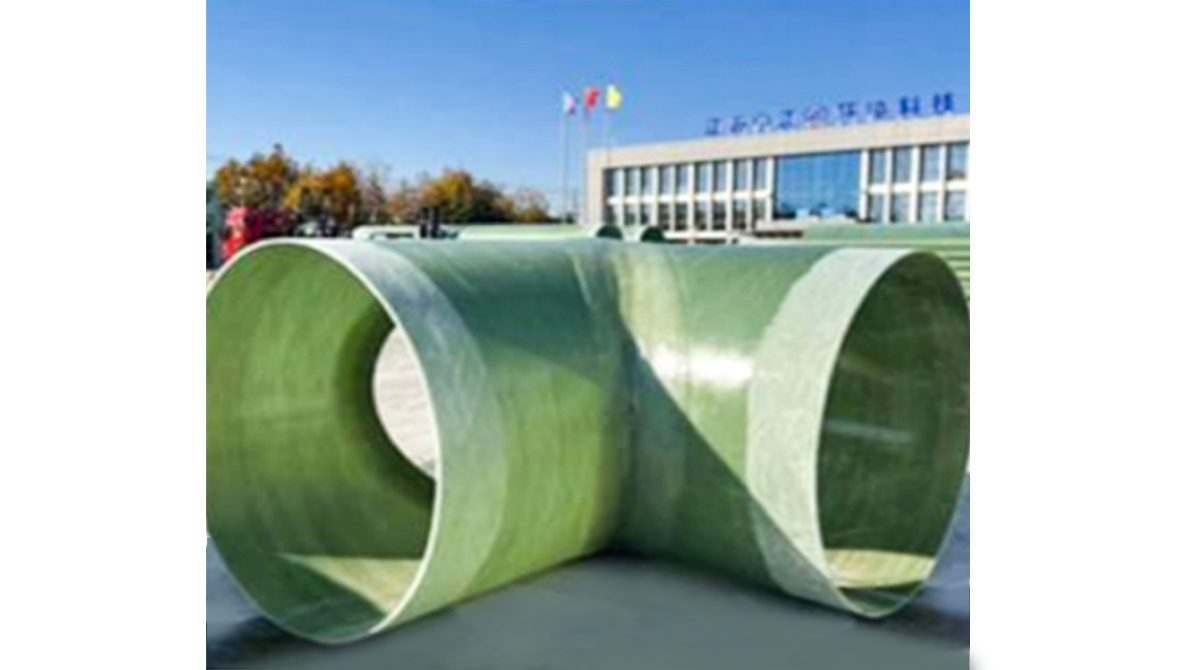 FRP Bent Tees for Petrochemical and Wastewater Pipeline SystemsEvaluate these fiberglass-reinforced plastic bent tees for corrosive or high-temperature fluid service, especially when custom angles and drawing approval are needed.View Product →
Total Cost of Ownership: FRP Versus Steel
FRP pipe fittings usually cost more than carbon steel fittings at the initial purchase. The economic case changes when corrosion, maintenance, and service life are included. In a chemical plant, a steel fitting may need a corrosion allowance, coating, or frequent replacement. FRP can reduce maintenance and extend replacement intervals.
Table 2: Practical comparison of FRP and steel fittings in corrosive service.
| Factor |
FRP fittings |
Steel fittings |
| Initial cost |
Usually higher |
Usually lower |
| Corrosion resistance |
Excellent when resin is matched to service |
Requires coating, alloy, or corrosion allowance |
| Weight |
About one-quarter of steel |
Heavy; needs more support and lifting equipment |
| Installation |
Adhesive or flanged joints; trained crew needed |
Welding or flanging; widely understood |
| Temperature limit |
Lower; depends on resin |
Higher for carbon and alloy grades |
| Maintenance |
Low in correct service |
Repainting, inspection, and replacement |
The FRP vs steel pipe comparison explains the material-level differences in more detail. For procurement, the key point is that FRP should be evaluated on lifecycle cost, not only on the fitting price.
Where FRP Pipe Fittings Fit in Industrial Projects
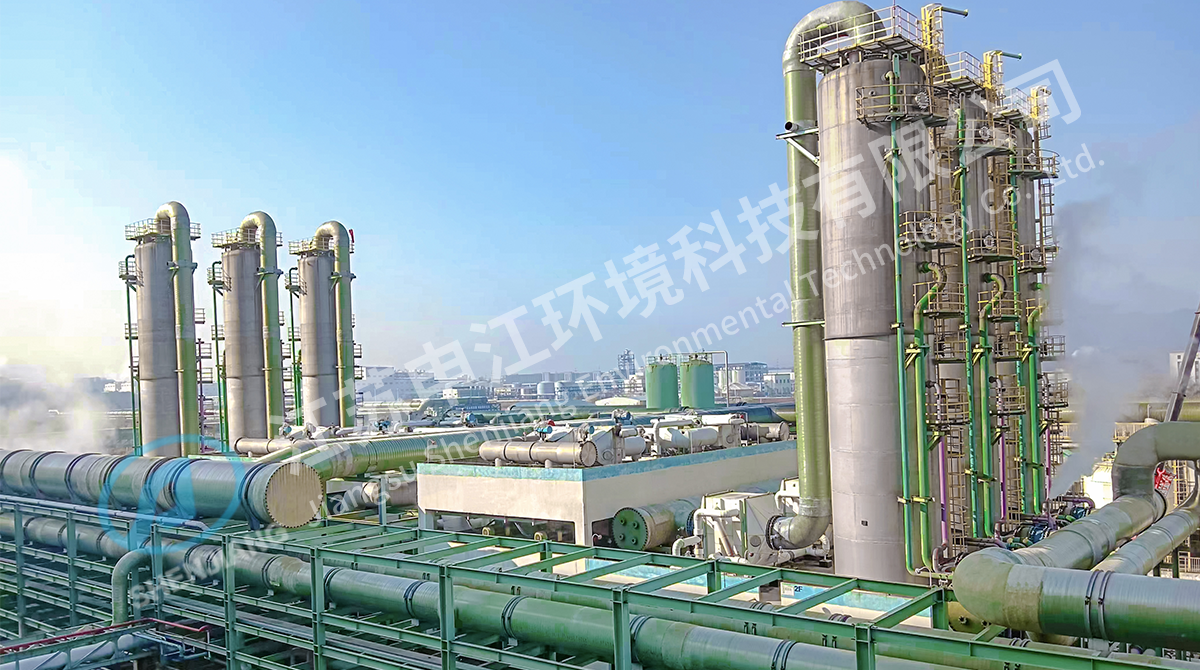
FRP fittings are common in chemical fiber, paper, power, oil and gas, seawater desalination, and gas transportation systems. Each industry stresses different properties. Chemical fiber plants often need resistance to CS2 and other solvents. Paper mills need corrosion resistance in bleach and caustic lines. Power plants use FRP in flue gas desulfurization and wastewater service. Seawater projects require resistance to chloride and biological fouling.
Project experience matters because the same fitting can be used in very different ways. A supplier that has delivered chemical fiber projects will usually understand solvent resistance, static electricity control, and the importance of leak-free joints. That experience should appear in the technical proposal, not only in a company brochure.
What a Good FRP Fitting Specification Looks Like
A good specification names the resin, liner, construction method, pressure class, temperature derating, joint type, and test requirements. It includes a drawing for any non-standard angle, branch, or transition. It also states who is responsible for fit-up, adhesive cure, torque, and inspection.
When those details are missing, the buyer is comparing prices for fittings that may not be interchangeable. When they are present, the quotation becomes a technical document that can be reviewed, approved, and used in the field. That is the difference between buying a fitting and buying a reliable piping system.




 English
  中文简体
中文简体 Español
 عربى
عربى русский
 ไทย
ไทย Indonesia
 Tiếng Việt