
Jiangsu Shenjiang Environmental Technology Co., Ltd.

Recruiting Global Agents

Jiangsu Shenjiang Environmental Technology Co., Ltd.
Home / News / Industry News / Advancements in FRP Technology for Effective Air Pollution Control in Industries

Advancements in FRP Technology for Effective Air Pollution Control in Industries

Introduction to FRP Denitrification and Desulfurization Equipment

FRP (Fiberglass Reinforced Plastic) denitrification and desulfurization equipment plays a vital role in industrial processes that aim to reduce harmful emissions. These systems help mitigate pollution by removing nitrogen oxides (NOx) and sulfur dioxide (SO2) from exhaust gases. The growing focus on environmental regulations has driven the adoption of these specialized equipment, particularly in power plants, chemical industries, and other high-emission sectors.

Understanding FRP Denitrification Equipment

FRP denitrification equipment is designed to reduce nitrogen oxide emissions, which are a major contributor to air pollution and acid rain. This process typically involves selective catalytic reduction (SCR) or selective non-catalytic reduction (SNCR) technologies, which work by introducing a reductant like ammonia or urea into the exhaust gases to break down NOx.

The primary benefits of using FRP materials for denitrification systems include:

  • Corrosion resistance – FRP can withstand aggressive chemical environments commonly found in exhaust gases.
  • Lightweight design – FRP equipment is easier to transport and install compared to traditional materials like steel.
  • Durability – The materials offer long service life, even under harsh operational conditions.

How FRP Denitrification Systems Work

The denitrification process begins when exhaust gases containing NOx pass through the FRP system. A reductant like ammonia is injected into the gas stream. In the presence of a catalyst or high temperatures (in SNCR), the NOx is reduced to nitrogen and water vapor. The efficiency of this process can vary depending on the system design, temperature, and reductant concentration.

Common configurations for FRP denitrification systems include both wet and dry SCR systems. The choice of system depends on the specific requirements of the application, such as gas flow rate and required reduction efficiency.

FRP Desulfurization Equipment: A Key to Controlling SO2 Emissions

Desulfurization is crucial in industries where sulfur compounds are emitted during combustion processes. FRP desulfurization equipment, primarily used in flue gas desulfurization (FGD), is designed to remove sulfur dioxide (SO2) from exhaust gases. SO2 is a significant contributor to air pollution, leading to acid rain and other environmental issues.

The most common methods for desulfurization are wet, dry, and semi-dry scrubbing. In wet scrubbing, a slurry of limestone or lime is used to absorb SO2 from the flue gases, converting it into calcium sulfate, a byproduct that can be safely disposed of or used in other industrial processes.

Key benefits of FRP desulfurization systems include:

  • Resistance to corrosive gases – FRP can withstand the acidic conditions caused by sulfur-rich gases.
  • Low maintenance – FRP materials require less upkeep than metal-based systems.
  • High efficiency – FRP systems are highly effective in SO2 removal, achieving compliance with environmental regulations.

How FRP Desulfurization Systems Operate

In a wet FGD system, flue gases are passed through a scrubber where they are exposed to an alkaline solution, typically containing limestone. This reaction neutralizes the sulfur dioxide and converts it into calcium sulfite. The byproduct can be oxidized to calcium sulfate (gypsum), which is often used in construction materials.

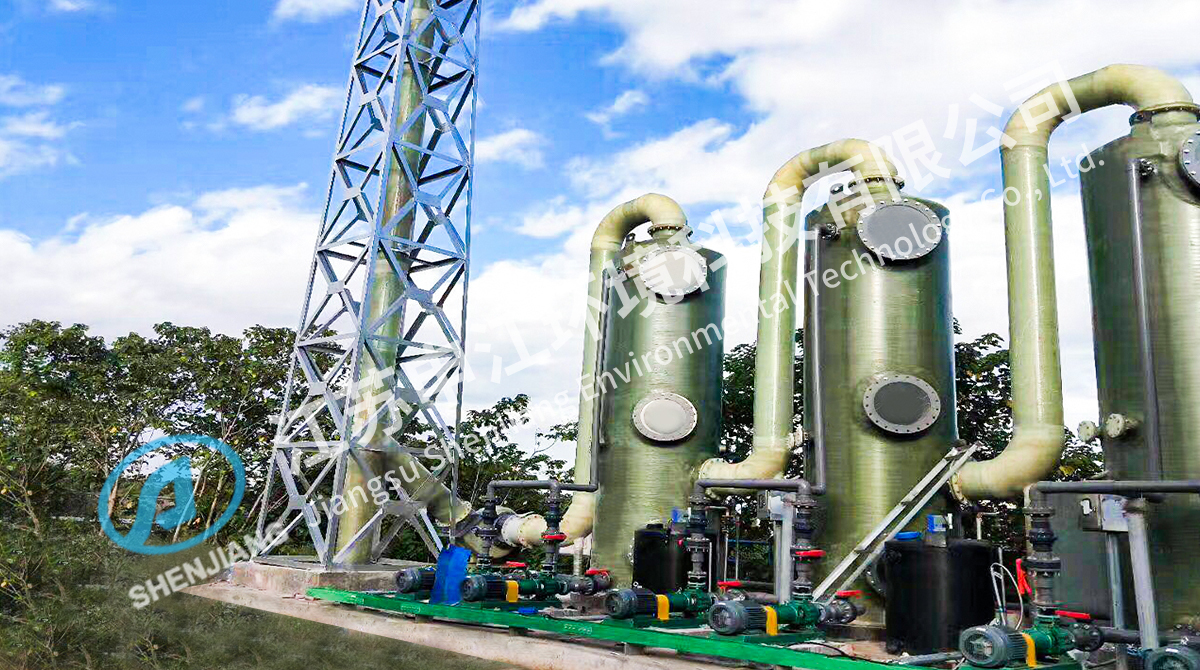
The system may include multiple stages to improve efficiency, such as spray towers or packed-bed scrubbers. The effectiveness of the system depends on factors such as the gas flow rate, SO2 concentration, and the specific scrubber design.

Applications of FRP Denitrification and Desulfurization Equipment

Both FRP denitrification and desulfurization systems are widely used in industries where emissions control is critical. The primary industries include:

  • Power plants – to control NOx and SO2 emissions from coal or natural gas combustion.
  • Chemical plants – where sulfur-based chemicals are used or produced.
  • Cement plants – which generate high levels of sulfur dioxide during production.

These systems are essential for meeting environmental standards and reducing the harmful impact of industrial emissions on air quality and public health.