A maintenance engineer at a chemical fiber plant once described the cost of corrosion this way: every leak in a duct or pipe line means lost production, safety paperwork, and a repair crew working overtime. His plant replaced failing carbon steel ducts with FRP equipment, and the same lines ran for more than a decade without a single leak. That kind of outcome explains why glass-reinforced plastic has become a standard material for handling corrosive gases, aggressive chemicals, and seawater in industrial plants across the world.
What Are FRP Equipments?
FRP stands for fiber-reinforced plastic, also known as GRP (glass-reinforced plastic). It is a composite material made by combining a polymer resin matrix with reinforcing glass fibers. The resin provides chemical resistance and binds the structure together, while the glass fibers carry the mechanical loads. Most industrial FRP equipment uses one of three resin families: polyester, vinyl ester, or epoxy. Each offers a different balance of chemical resistance, toughness, and temperature tolerance, so the resin is selected to match the specific process medium.
The result is a material with a distinctive property profile:
- Corrosion resistance to acids, alkalis, salts, oxidizing agents, and organic solvents.
- A strength-to-weight ratio that often exceeds steel, at roughly one-quarter of the weight.
- Design flexibility: pipes, tanks, towers, and complex fittings can be molded as one continuous structure.
- Temperature resistance up to about 120°C, depending on the resin system.
- Low thermal conductivity, which minimizes condensation on cold surfaces and reduces heat loss.
Because FRP is a manufactured composite rather than a fixed metal grade, the designer controls the corrosion barrier, structural wall thickness, and resin chemistry. This makes FRP equipment highly adaptable to the exact service conditions of each plant.
Main Types of FRP Equipment
FRP equipment is not a single product but a complete family of process equipment. In practice, most installations fall into three main categories: piping systems, tanks and vessels, and mass-transfer towers.
FRP Pipes and Fittings
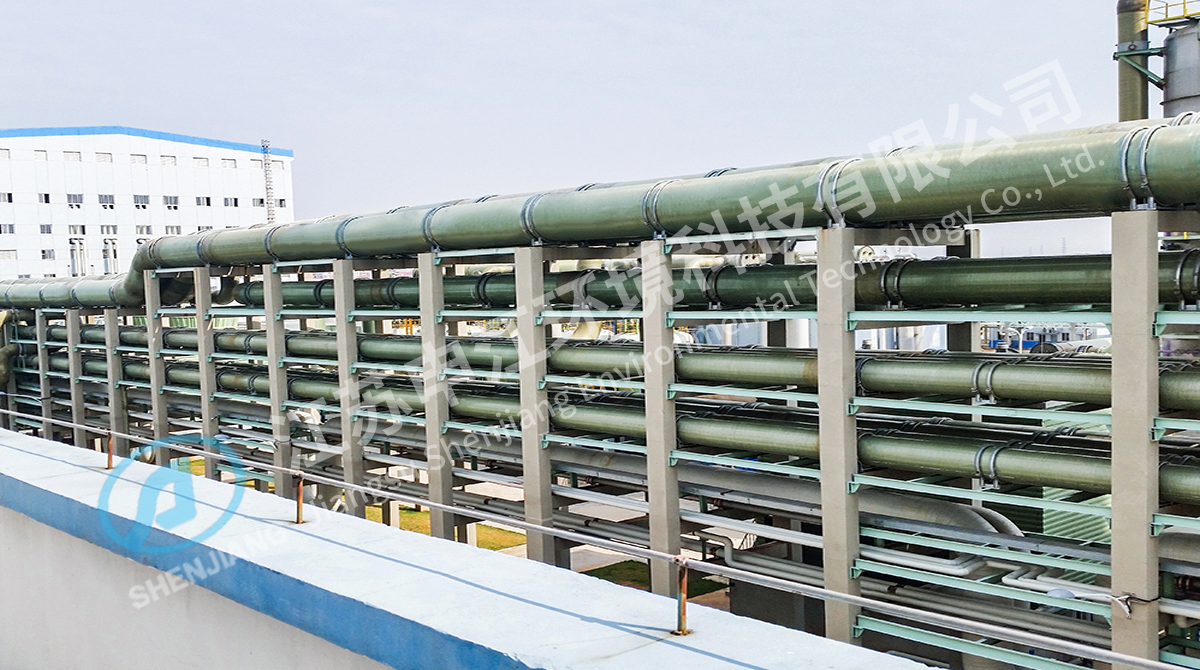
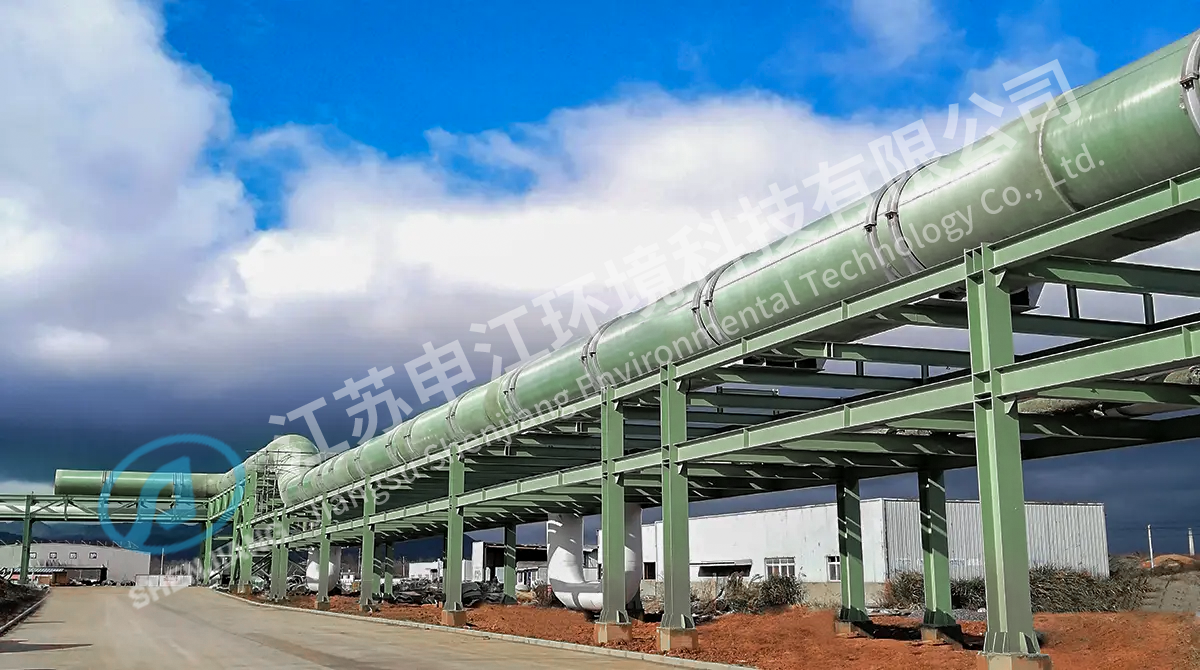
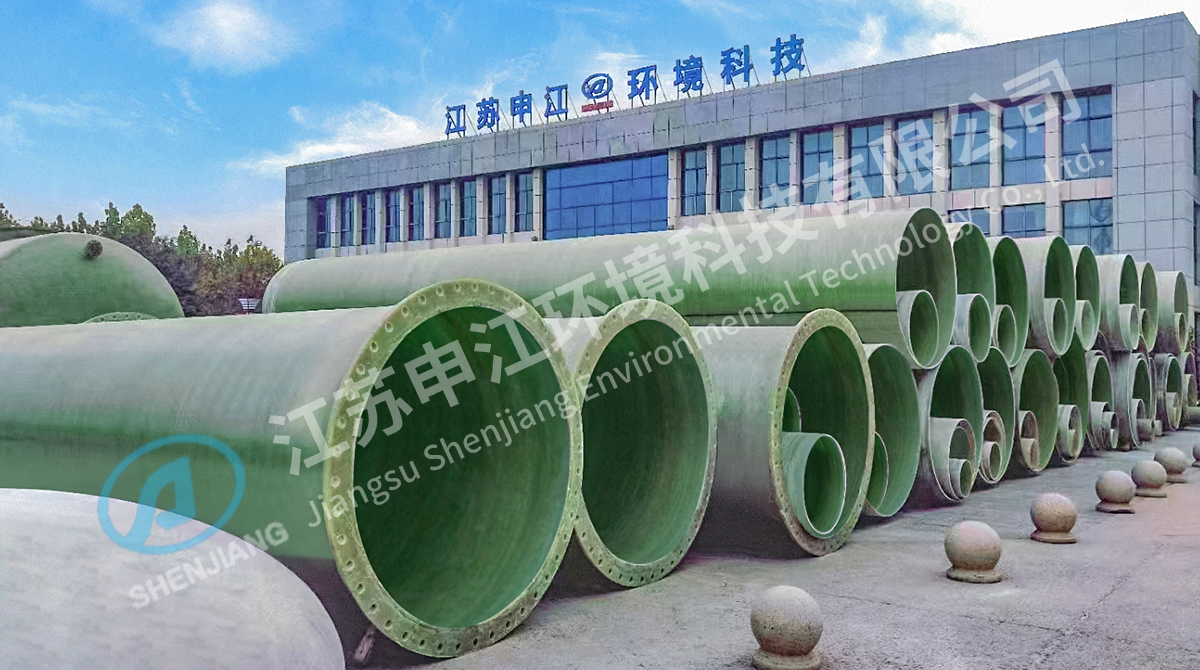
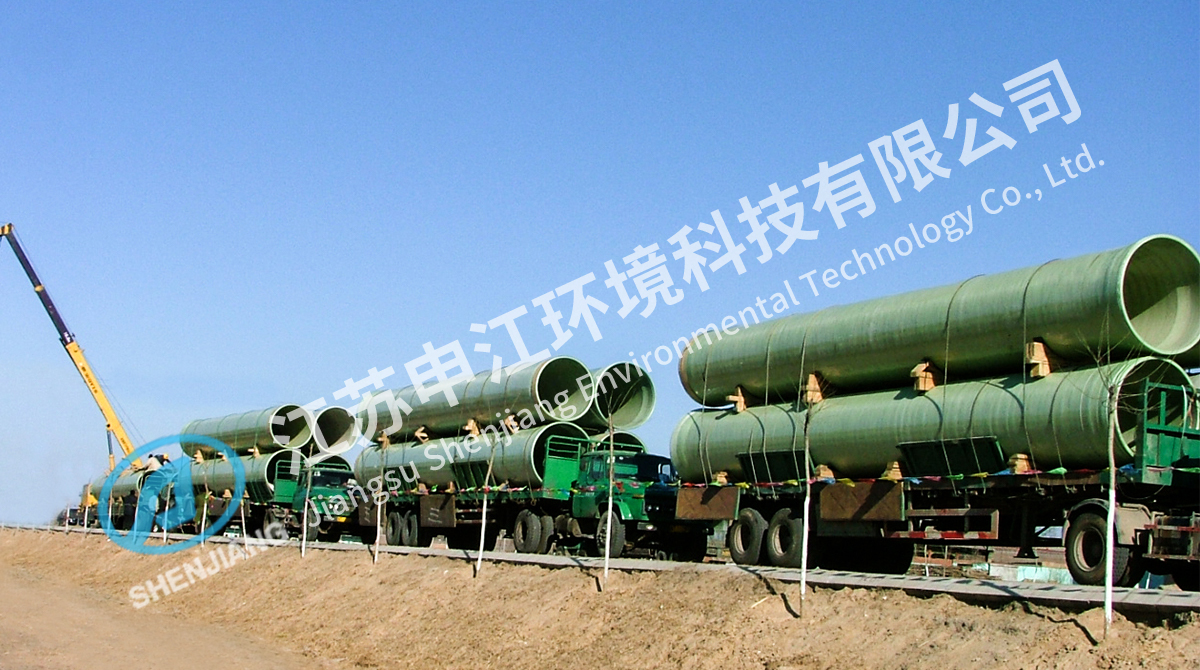
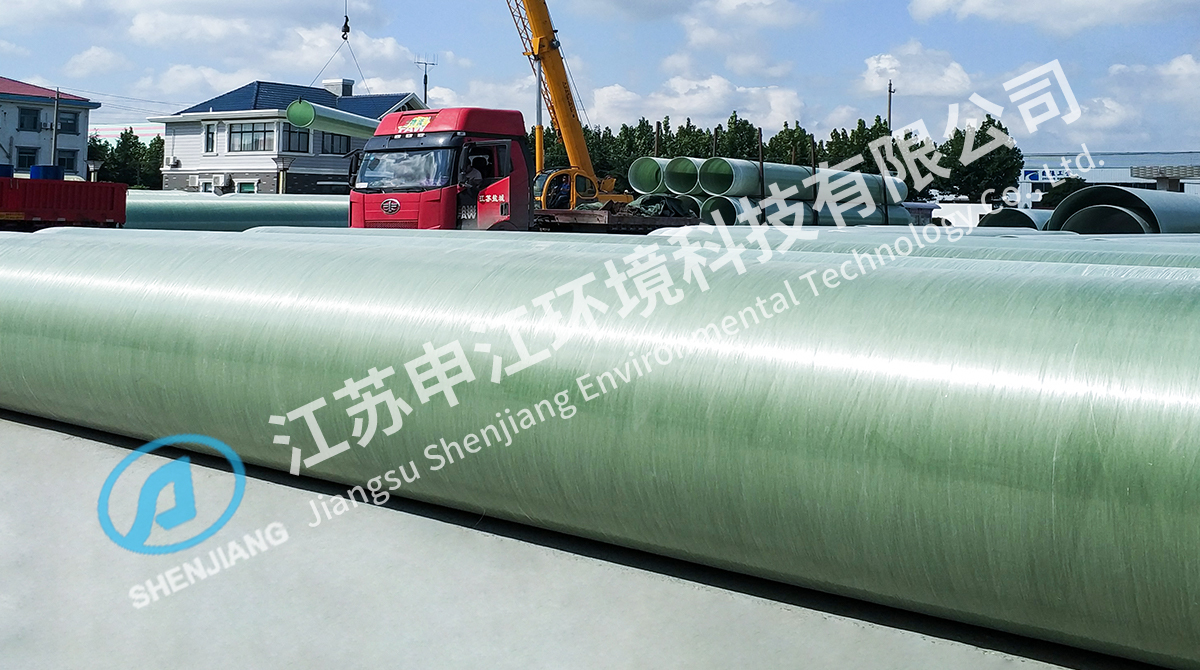
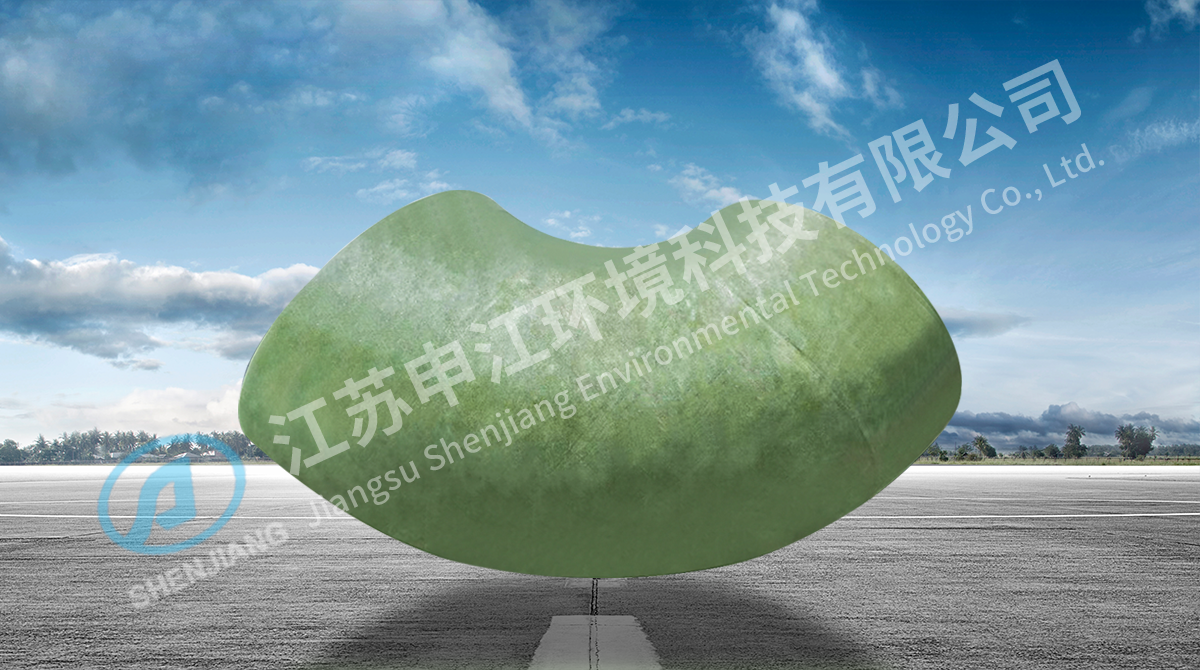
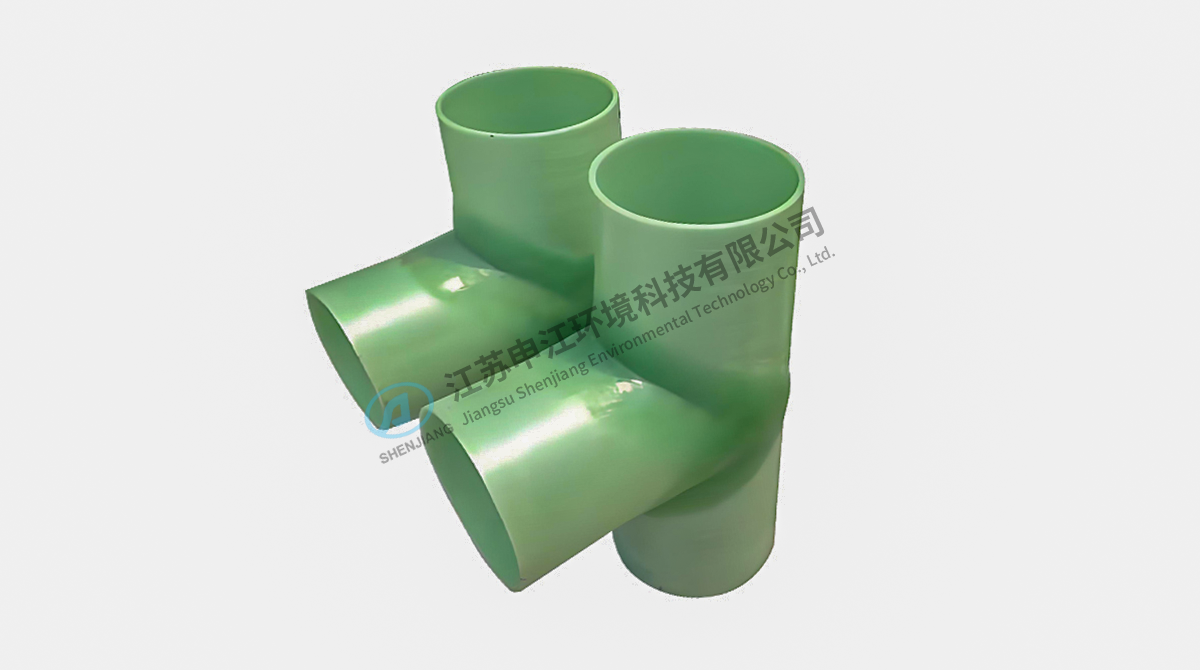
FRP piping is the backbone of corrosive fluid and gas transport in many plants. Filament-wound pipe offers high strength and consistent wall quality, while hand lay-up and sand-filled constructions are used for large diameters and special duties. Standard fittings - elbows, tees, flanges, reducers, and valve components - are fabricated with the same corrosion barrier as the pipe, so the entire line behaves as one homogeneous system. Special-purpose products extend the range further: FRP exhaust ducts extract corrosive fumes, heat-resistant pipes handle hot gas streams, seawater-submerged pipes serve marine intake and discharge lines, and process pipes carry chemical streams without the rust and scaling problems of metal.
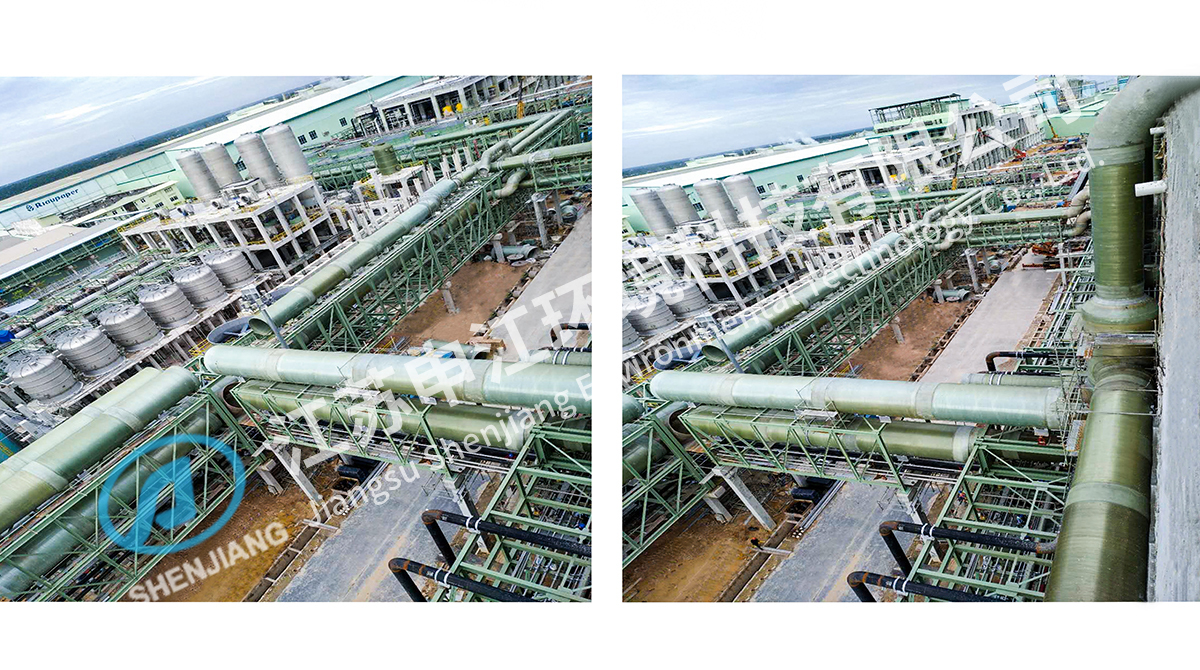 Corrosion-Resistant FRP Exhaust Duct for Industrial Fume ExtractionThis fiberglass duct is built to transport corrosive fumes from chemical and smelting processes, offering lightweight installation and high-temperature resistance. Its corrosion barrier suits demanding exhaust duties, making it a practical choice for reliable fume handling.View Product →
FRP Tanks and Vessels
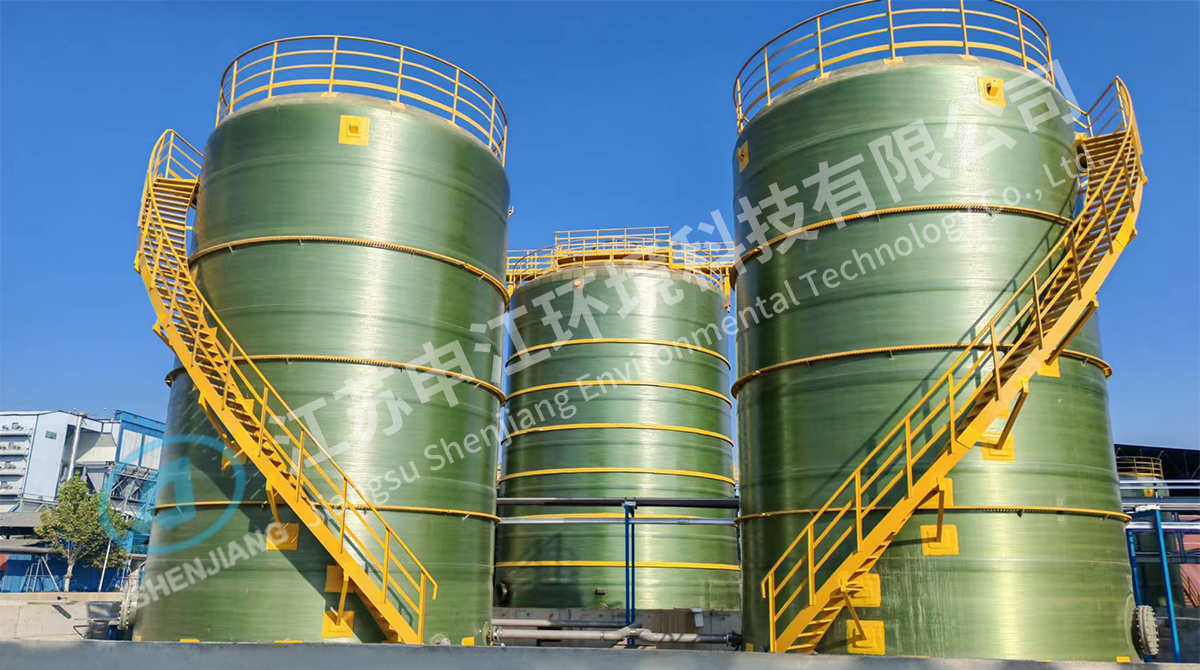
FRP tanks store acids, alkalis, bleaches, process water, and chemical intermediates in capacities ranging from small vertical vessels to large horizontal storage tanks. They are also used as process vessels, including absorption towers, evaporators, and reaction containers. Filament winding builds a strong structural wall, while an inner resin-rich layer forms the corrosion barrier. This two-layer design gives FRP tanks a long service life even with aggressive contents, and eliminates the regular inspecting, patching, and relining that steel tanks with rubber or brick linings require.
FRP Towers and Scrubbers
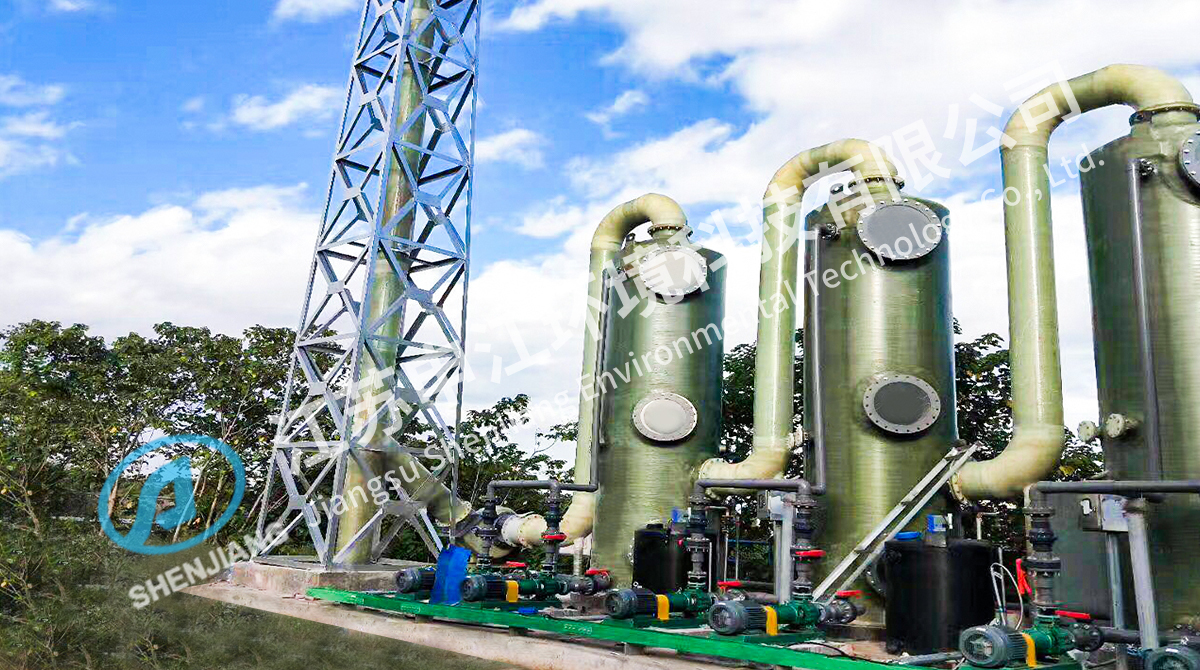
FRP towers are the workhorses of exhaust gas purification. Scrubbers, absorption columns, and stripping towers use packing or trays to contact a gas stream with a scrubbing liquid, removing contaminants such as hydrogen sulfide, sulfur dioxide, ammonia, and organic vapors. The FRP shell resists both the raw gas and the often highly corrosive scrubbing liquor, which means the whole column - shell, internals supports, and nozzles - can be built from one compatible material. This is a major advantage over steel towers with internal linings, where a single lining defect can destroy the vessel within months.
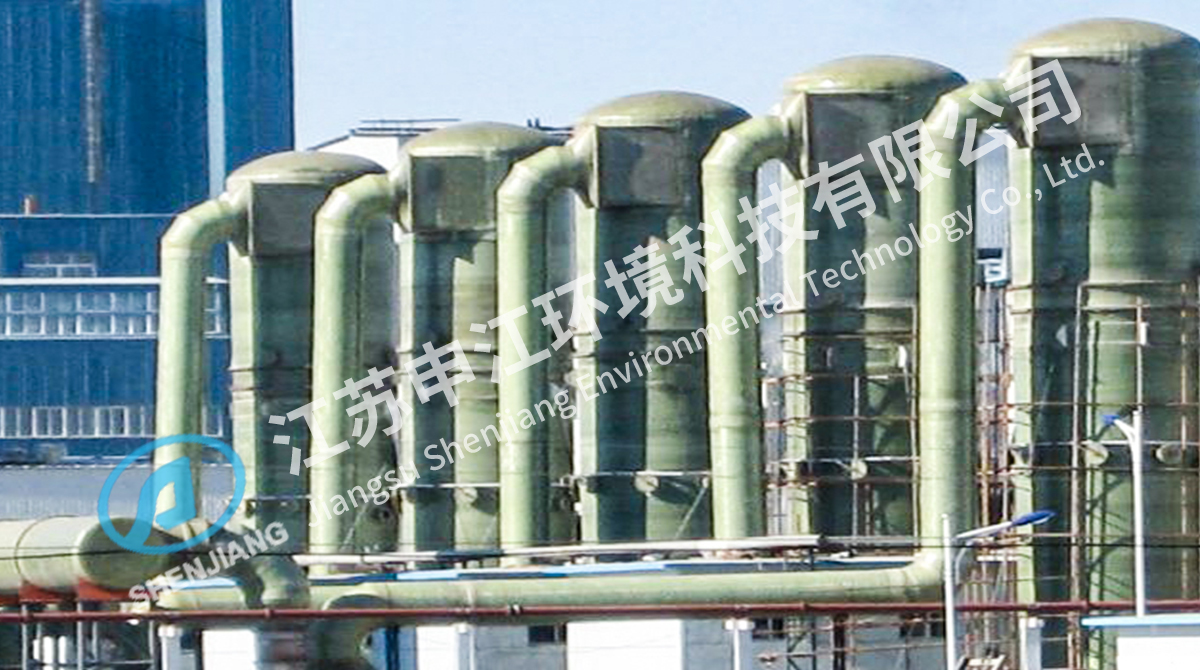 FRP Scrubbing Tower for Gas Purification and Pollutant RemovalConstructed from corrosion-resistant fiberglass, this scrubbing tower removes acidic, alkaline, and organic contaminants from industrial exhaust. Its integrated shell and internals resist aggressive scrubbing liquor, providing a durable solution for environmental compliance.View Product →
Typical Operating Envelopes
Selecting FRP equipment starts with understanding the duty. The following table summarizes the representative operating envelopes for the most common equipment categories; actual limits depend on the resin system, wall construction, and process chemistry.
Representative operating envelopes for common FRP equipments in industrial service
| Equipment type |
Typical service |
Common temperature range |
Typical size range |
| FRP pipes and fittings |
Corrosive liquid and gas transport |
20°C to 120°C |
DN50 to DN4000 |
| FRP tanks and vessels |
Chemical storage and process duties |
20°C to 100°C |
1 m³ to 500 m³ |
| FRP scrubbers and towers |
Exhaust gas purification |
20°C to 110°C |
0.5 m to 6 m diameter |
| FRP exhaust ducts |
Fume extraction and ventilation |
20°C to 120°C |
DN100 to DN3000 |
FRP Equipment Across Industries
Because corrosion is a universal problem in industrial processing, FRP equipment is used in almost every sector that handles aggressive media. Some of the most established applications are worth examining in detail.
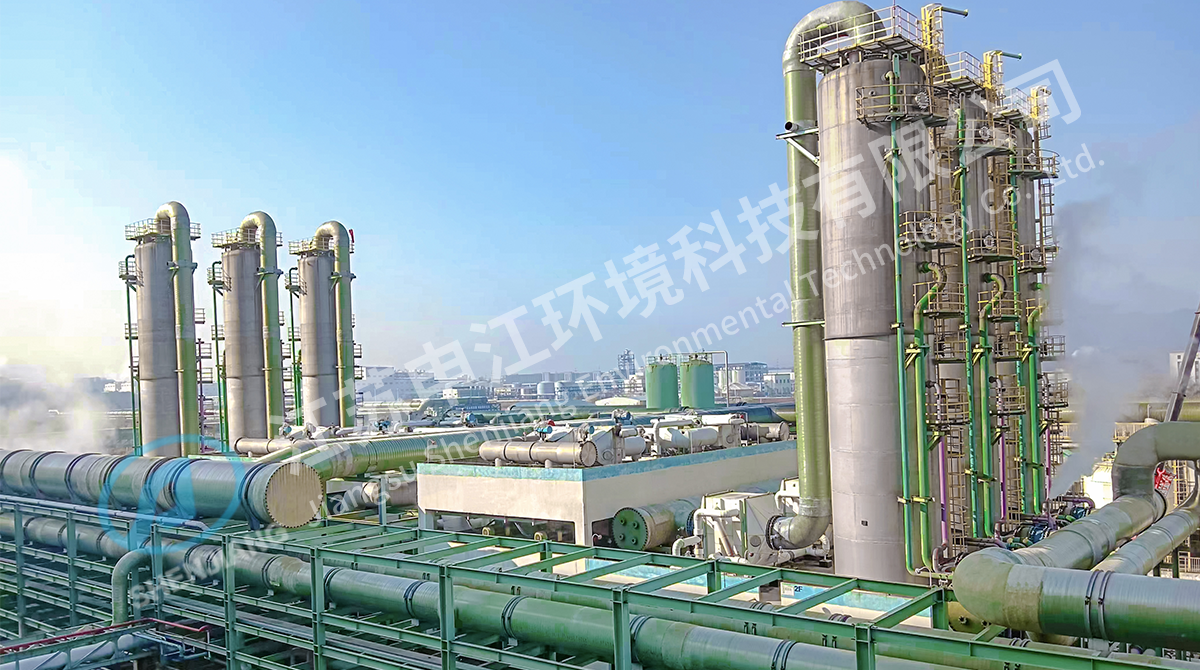
In the chemical fiber industry, the production of viscose rayon and related materials generates waste gas containing carbon disulfide and hydrogen sulfide. FRP piping, ducts, and scrubbing systems are the standard solution because the composite barrier withstands both the acidic condensation and the sulfur-bearing gas. Complete CS2 exhaust gas treatment projects are now delivered as turnkey packages that include process design, equipment and pipe supply, system commissioning, and construction.
 Turnkey CS2 Exhaust Gas Treatment Package with Recovery SystemsThis complete package covers collection, recovery, acid-making, and desulfurization stages for carbon disulfide waste gas. It includes process design, engineering, equipment supply, and commissioning, addressing complex sulfur-bearing emissions in chemical fiber production.View Product →
In power generation, flue gas desulfurization and denitrification systems use FRP for absorber vessels, ductwork, and stack liners where acidic condensate forms continuously. In petrochemical plants, FRP process lines, storage tanks, and effluent piping handle crude-derived chemicals, brine, and treatment additives. Seawater desalination facilities rely on FRP intake and discharge lines because the material resists chloride attack far better than steel in tidal and submerged zones. The pulp and paper industry uses FRP for bleach plant chemical lines, chlorine dioxide service, and waste gas scrubbing. In every one of these industries, the pattern is the same: a corrosive medium that makes steel expensive to protect and difficult to maintain.
What to Evaluate Before Buying FRP Equipment
Buying FRP equipment is a materials engineering decision, not simply a purchase order. Five factors separate installations that run reliably for decades from those that fail early.
Resin Chemistry
Polyester resins are economical and perform well in many acidic and salt-laden environments. Vinyl ester resins add toughness and better resistance to organic solvents, strong oxidants, and thermal cycling. Epoxy-based systems offer outstanding adhesion and alkaline resistance. The resin must be selected against the full chemical analysis of the process stream, including trace components and temperature excursions.
Manufacturing Method
Filament winding delivers predictable mechanical properties and is preferred for pressure-rated pipe and large tanks. Hand lay-up and spray-up allow complex geometries. In both cases, the corrosion barrier should be fabricated as a separate resin-rich layer with controlled thickness, because this layer, not the structural wall, determines the service life.
Quality Control and Testing
Wall thickness, resin content, degree of cure, dimensional tolerances, and pressure ratings should all be documented. Hydrostatic testing, spark testing of the corrosion barrier, and visual inspection are standard practices at reputable FRP manufacturers.
Installation and Jointing
FRP is light, but proper handling, jointing, and support spacing are essential. Poorly executed field joints are the most common cause of premature failure. A supplier that can design, fabricate, and install the system has a clear advantage over one that only ships components.
Life-Cycle Cost
The purchase price of FRP equipment can be higher than carbon steel, but the total cost of ownership is usually far lower. No painting, no lining repairs, no sacrificial anodes, and no premature replacements. When the comparison includes downtime and maintenance labor, FRP typically wins on cost as well as on reliability.
Conclusion
FRP equipment has earned its place as one of the most dependable material solutions for corrosive industrial service. Its corrosion resistance, light weight, and design flexibility are well documented, and its life-cycle economics are compelling. The key to a successful installation is to work with an experienced manufacturer that understands resin selection, structural design, and process conditions. Jiangsu Shenjiang Environmental Technology, founded in 1996, has applied FRP equipment in chemical fiber plants, power stations, paper mills, oil fields, seawater desalination projects, and gas transportation systems. Their in-house engineering and installation capabilities make them a practical partner whether you need a single FRP pipe, a complete scrubbing tower, or a full waste-gas treatment system.




 English
  中文简体
中文简体 Español
 عربى
عربى русский
 ไทย
ไทย Indonesia
 Tiếng Việt