Introduction to FRP towers and structural considerations
FRP (Fiber Reinforced Polymer) towers are engineered structures widely used in applications such as telecommunications, wind energy, and surveillance. They combine composite materials, typically fiberglass or carbon fiber reinforced with resin, to achieve a balance of strength, flexibility, and corrosion resistance. The ability of an FRP tower to resist vibration and wind loads is a critical aspect of its structural performance, impacting both safety and operational reliability. Assessing this capability requires examining material properties, design principles, and environmental factors.
Material properties influencing vibration resistance
The resistance of an FRP tower to vibration is largely determined by the mechanical properties of its composite materials. The combination of high tensile strength fibers and resin matrix provides both stiffness and energy absorption capabilities. Fiberglass fibers offer elasticity that allows the tower to flex under dynamic loads, dissipating vibrational energy without permanent deformation. The resin matrix distributes stress across the fibers, maintaining structural coherence even under repeated oscillations.
Material properties influencing wind load resistance
Wind load resistance is influenced by both the tensile strength and flexural rigidity of the FRP materials. High-strength fibers provide the capacity to withstand bending and shear forces, while the resin matrix contributes to the overall stiffness and shape retention. The lightweight nature of FRP reduces the overall wind force compared to heavier metallic structures, while the aerodynamic profile of the tower can further reduce drag and vortex-induced vibrations.
Design factors enhancing vibration resistance
The geometric design of FRP towers plays a significant role in vibration control. Tapered shapes, appropriate cross-sectional profiles, and strategic placement of stiffening ribs can alter the natural frequency of the structure to avoid resonance with common environmental or operational vibrations. Multi-segment or modular designs allow controlled flexibility, ensuring that the tower can absorb vibrational energy without transferring excessive stress to the foundation or attached equipment.
Design factors enhancing wind load resistance
Wind resistance is addressed in FRP tower design through considerations of shape, height-to-width ratio, and anchoring. Smooth, tapered structures reduce turbulence and pressure differences along the tower surface, minimizing bending moments. Properly designed base connections and guying systems distribute wind forces to the foundation efficiently, preventing overstress at critical points. The combination of material properties and structural design ensures that the tower can sustain high wind speeds without compromising stability.
Dynamic load behavior and damping mechanisms
FRP towers respond to dynamic loads through elastic deformation and internal damping. The composite structure inherently dissipates vibrational energy through microstructural friction between fibers and matrix, reducing amplitude over time. Additional damping mechanisms, such as tuned mass dampers or vibration-absorbing mounts for attached equipment, can further enhance the tower’s capacity to manage oscillatory forces. Understanding the interaction between material damping and external excitation is key to predicting long-term performance under vibration and wind loading.
Effect of environmental conditions
Environmental factors such as temperature, humidity, and UV exposure influence the durability of FRP towers under dynamic and wind loads. Proper resin formulation and protective coatings help maintain mechanical properties despite environmental degradation. The fibers retain high tensile strength, and the composite structure remains flexible enough to absorb energy, even in fluctuating conditions. Long-term exposure to weather conditions is considered in design to ensure continued vibration and wind resistance.
Standards and testing for vibration and wind resistance
FRP towers are often subjected to standardized tests to evaluate performance under wind and vibration loads. Tests may include static wind load simulations, dynamic oscillation measurements, and fatigue testing to determine long-term resilience. Compliance with relevant standards ensures that the tower can maintain structural integrity and operational safety under expected environmental conditions. Testing results inform design refinements and validate theoretical models for real-world applications.
Foundation and anchoring considerations
The performance of FRP towers under wind and vibrational forces depends not only on material and structural properties but also on foundation design. Properly engineered foundations anchor the tower securely and distribute loads evenly to prevent tilting or overturning. Reinforced concrete bases, deep pile systems, or guyed support configurations are commonly used to enhance stability. Effective load transfer from tower to foundation mitigates excessive vibrations and reduces stress concentrations in the composite structure.
Maintenance and inspection impact on durability
Regular maintenance and inspection contribute to sustained resistance to vibration and wind loads. Checking for signs of surface erosion, fiber delamination, or resin cracking allows early identification of potential weaknesses. Protective coatings may be reapplied, and structural components can be reinforced as necessary. Consistent maintenance ensures that FRP towers retain their designed mechanical properties and continue to perform reliably under dynamic environmental conditions.
Comparison with traditional materials
Compared to metallic towers, FRP structures exhibit different responses to vibration and wind loading. While metals may have higher stiffness, they are more susceptible to fatigue over repeated dynamic cycles. FRP composites, with inherent flexibility and damping characteristics, can absorb energy and reduce the risk of stress concentration. Additionally, the lower weight of FRP reduces the overall wind force acting on the structure, further contributing to stability. This combination of factors makes FRP a viable alternative for applications requiring both strength and resilience under variable environmental loads.
| Performance Factor |
FRP Feature |
Impact on Load Resistance |
| Vibration |
Elastic fibers and damping resin |
Absorbs oscillatory energy and reduces amplitude |
| Wind Load |
Tapered shape and aerodynamic profile |
Minimizes bending moments and drag forces |
| Environmental Resistance |
UV-stabilized resin and protective coatings |
Maintains mechanical properties over time |
| Foundation |
Reinforced anchoring or guyed supports |
Distributes loads and prevents tilting |
Fatigue performance under repeated dynamic loading
FRP towers are designed to withstand cyclical stresses without significant loss of performance. The combination of fiber strength and resin flexibility allows the tower to endure repeated vibration and wind events without crack propagation or material failure. Fatigue analysis is performed during design to predict lifespan and identify potential weak points, ensuring that the structure can continue to operate safely under long-term dynamic loading.
Interaction of vibration and wind forces
In real-world conditions, wind-induced vibrations are often coupled with other dynamic loads, such as equipment operation or seismic events. FRP towers are engineered to manage the interaction between these forces by optimizing natural frequency, stiffness, and damping. Proper design reduces resonance effects and limits structural deflection, preventing damage to both the tower and attached equipment. Understanding these interactions is essential for assessing overall performance in operational environments.
Design optimization strategies
Optimizing FRP tower design for vibration and wind resistance involves adjusting material selection, wall thickness, cross-sectional shape, and structural reinforcements. Computational modeling and wind tunnel testing are commonly used to evaluate different configurations and refine design parameters. Reinforcing critical points, such as joints or base connections, ensures that localized stress does not compromise global structural stability. This approach results in towers capable of maintaining integrity under anticipated environmental loads.
Application-specific considerations
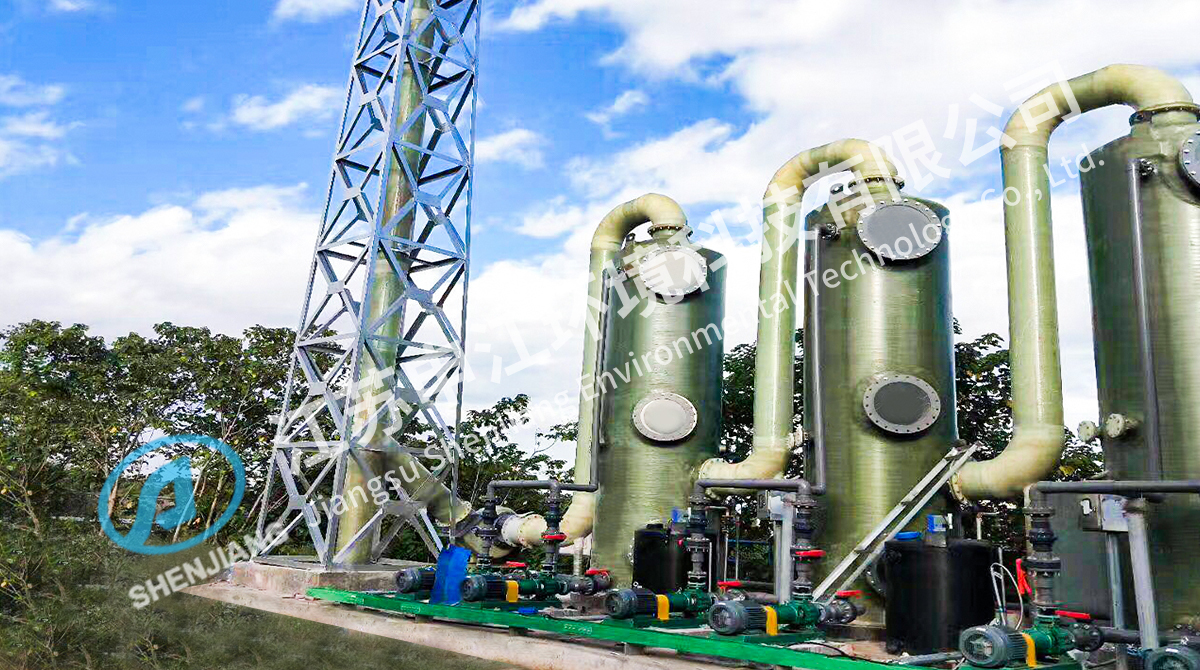
The intended application of an FRP tower influences its vibration and wind load requirements. For example, telecommunications towers may carry antennas that introduce additional mass and wind surface area, requiring higher stiffness and damping. Wind measurement towers or observation platforms must accommodate dynamic forces from both environmental factors and attached instrumentation. Tailoring the tower design to the specific load profile ensures that it can resist vibration and wind effects effectively while maintaining operational functionality.
Monitoring and performance evaluation
Advanced monitoring techniques, such as strain gauges, accelerometers, or remote sensing systems, can assess vibration levels and structural response under wind loads. Continuous or periodic monitoring provides data that can be used to adjust maintenance schedules, detect early signs of fatigue, and validate design assumptions. Such evaluation helps ensure that FRP towers continue to meet performance requirements throughout their service life.
vibration and wind load resistance
FRP towers possess a combination of material strength, elasticity, and structural design features that provide resistance to vibration and wind loads. The composite nature of FRP, coupled with aerodynamic design, appropriate foundation engineering, and careful maintenance, allows these towers to perform reliably under dynamic environmental conditions. Through proper design, testing, and monitoring, FRP towers can sustain operational stability, ensuring safety and long-term functionality in diverse applications.




 English
  中文简体
中文简体 Español
 عربى
عربى русский
 ไทย
ไทย Indonesia
 Tiếng Việt