
Clarify the purpose of the evaluation and the standards
After the waste gas treatment project is completed and put into operation, the first task of the operation effect evaluation is to determine the purpose of the evaluation, including environmental compliance verification, equipment operation status confirmation, pollutant removal efficiency analysis, etc. The evaluation work is usually carried out based on national or local environmental protection laws and regulations, industry emission standards and technical indicators set in the project contract. For example, commonly used reference standards include "Comprehensive Emission Standards for Air Pollutants" and "Emission Standards for Malodorous Pollutants".
Actual measurement of emission indicators is the core means
The most direct way to evaluate the operation effect is to sample and test the gas at the emission port. The test is usually performed by a third-party qualified testing agency, covering conventional parameters (such as particulate matter, sulfur dioxide, nitrogen oxides) and industry-specific pollutants (such as VOCs, organic solvents, acid mist, etc.). The measured data can be used to determine whether the pollutants have reached the emission limit. The test cycle can be set to several consecutive days or intervals according to the project requirements to ensure that the fluctuation of the working conditions is reflected.
Stability evaluation of equipment operation status
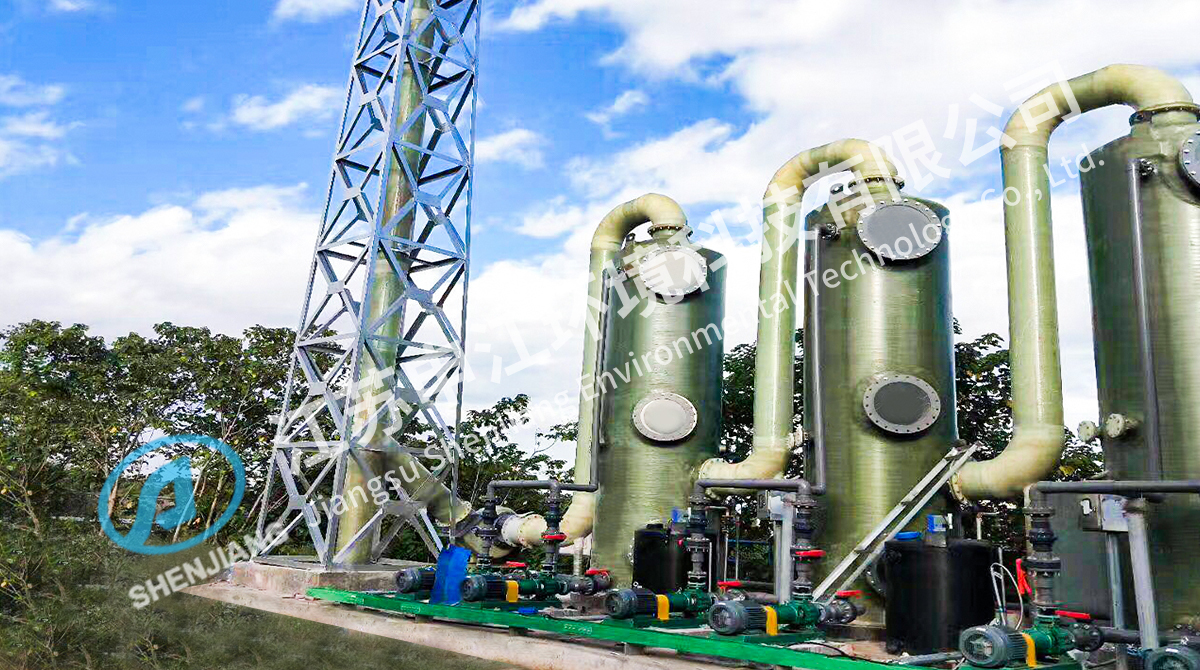
The equipment operation status is an important factor affecting the effect of waste gas treatment. The assessment needs to check whether the core units such as fans, pumps, valves, reaction towers, and adsorption devices are running smoothly and whether the parameters are within the set range. For example, the spray pressure and flow rate of the spray tower, the temperature control of the catalytic combustion equipment, and the adsorption saturation of activated carbon all need to be recorded and analyzed. Regular data collection can help identify whether there are fluctuations or unstable operations.
Statistical analysis of energy consumption and material consumption
When evaluating the operating effect, it is also necessary to pay attention to the use of energy consumption and consumable materials, including electricity consumption, water consumption, and agent dosage. If the treatment system is accompanied by excessive energy consumption while meeting the emission standards, it means that there is room for energy saving optimization in the system. In addition, the consumption rate of absorbents, catalysts, and adsorbents also reflects the economy and technical adaptability of the system operation.
Recording and analysis of abnormal situations
During the assessment process, attention should be paid to the equipment start-up and shutdown process, abnormal operation records, alarm information, emergency handling, etc. This information helps to determine whether the system has the ability to cope with changes in operating conditions and sudden emissions. Especially in batch production enterprises, the exhaust gas fluctuates greatly, and the requirements for system response speed and adjustment capabilities are also higher. Operation logs, operation records, and maintenance records should be fully archived.
Environmental impact assessment of noise, odor, leakage, etc.
In addition to emission data, attention should also be paid to the impact of the exhaust gas treatment system on the surrounding environment during operation. This includes equipment noise, odor gas control, liquid leakage, etc. Environmental impact surveys can be carried out through on-site inspections, residents' feedback, odor detection instrument testing, etc., especially in industrial parks close to residential areas or on the edge of the city.
Operation effect evaluation report and follow-up suggestions
The evaluation work should form a systematic operation effect evaluation report, including test results, equipment conditions, environmental performance, operating costs, problem diagnosis and improvement suggestions. If it is found that the emission standards are not met or there are hidden dangers in the equipment, technical improvement directions or operation strategy adjustment suggestions should be proposed. At the same time, the evaluation content should also be updated regularly, such as re-testing once a quarter or half a year, to form a dynamic evaluation mechanism.
Establish a long-term supervision mechanism
The evaluation should not be a one-time engineering finishing work, but should be integrated into the entire operation cycle. Enterprises can form a long-term operation supervision system through automatic monitoring equipment (CEMS), operation and maintenance system (SCADA) and third-party inspection services to ensure the continuous compliance and operation efficiency of the exhaust gas treatment system.