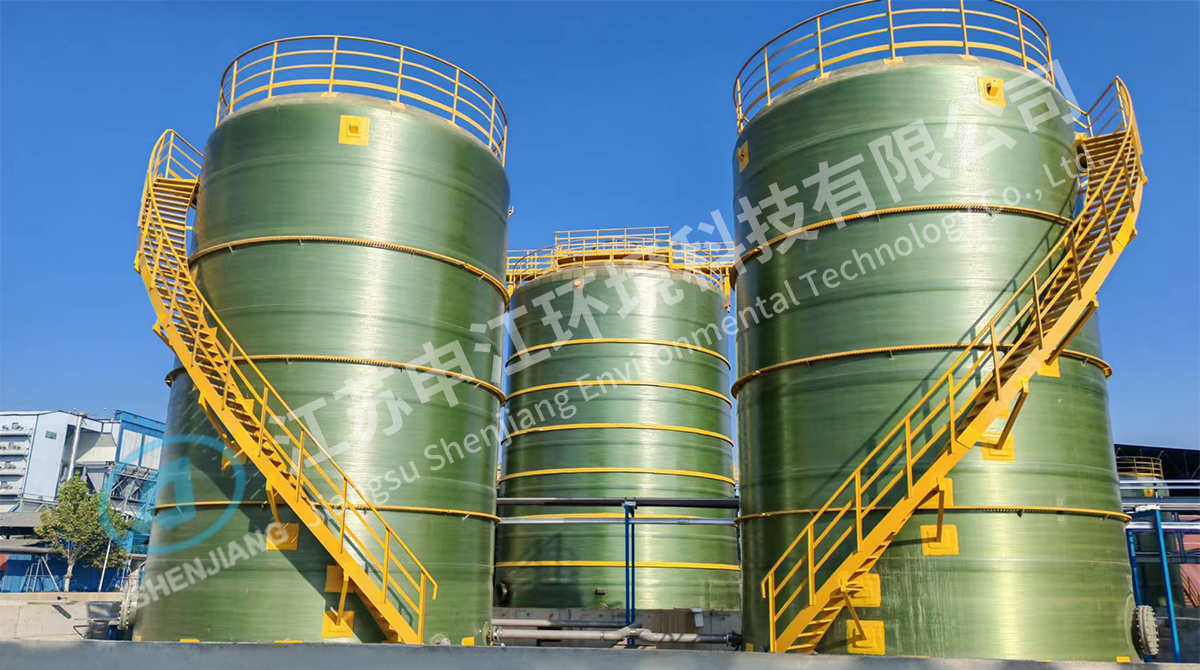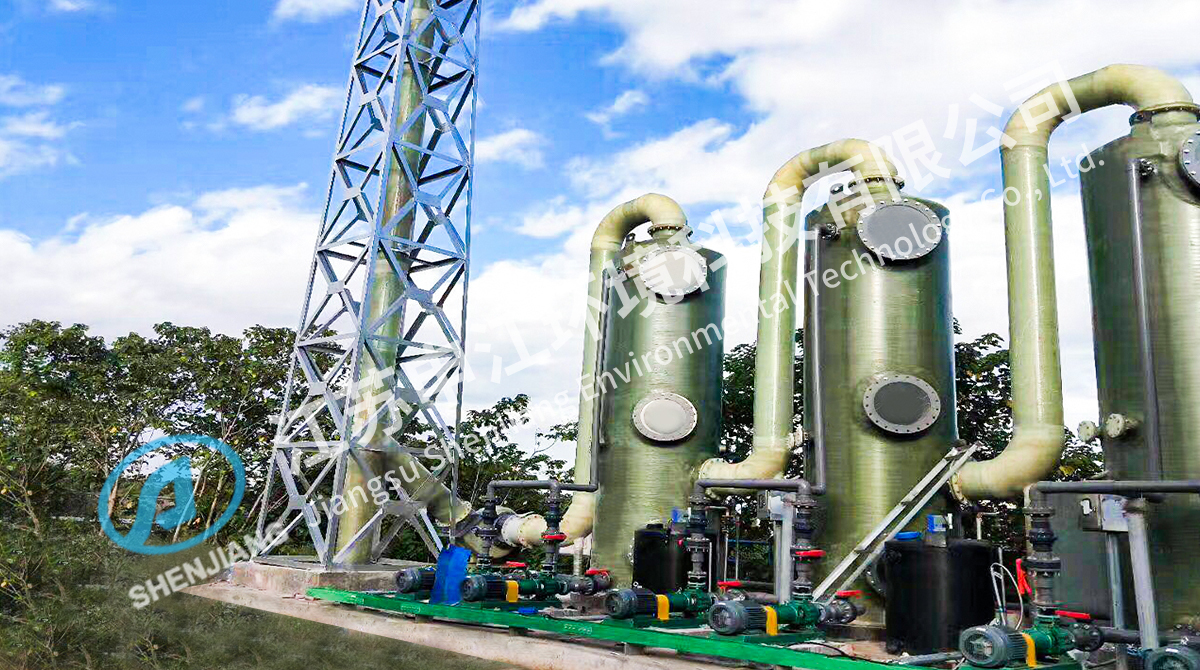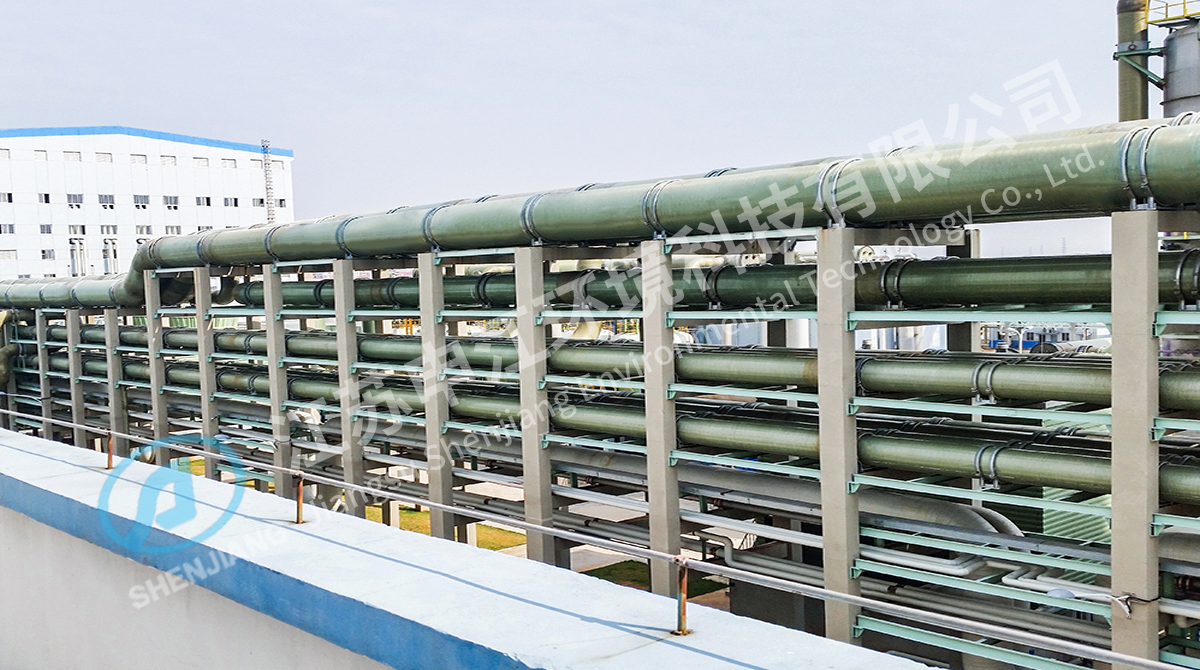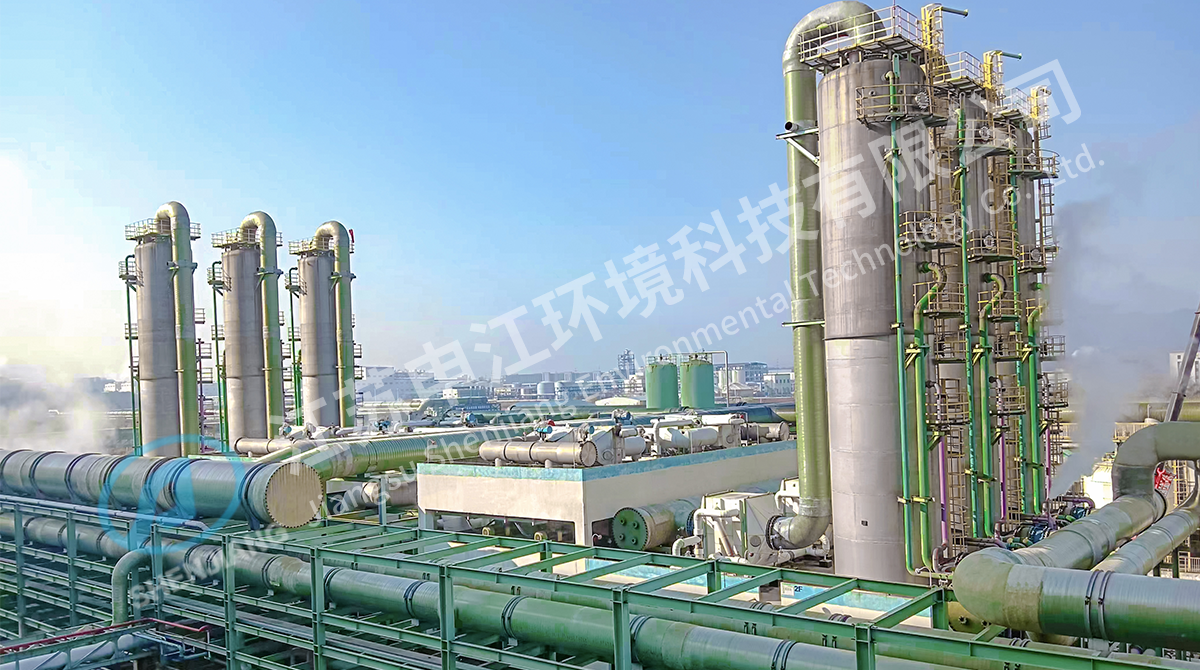

In the process of industrial waste gas treatment, FRP adsorption tanks are widely used to treat volatile organic compounds, odorous gases and toxic and harmful gases due to their corrosion resistance, light structure and strong adaptability. In order to ensure the treatment effect and the economy of the equipment, it is very important to reasonably match the treatment air volume with the pollutant concentration during the selection stage.
The treatment air volume refers to the volume flow of waste gas per unit time, which directly determines the size, tank structure and filler amount of the adsorption tank. If the treatment air volume is small, the equipment volume can be controlled within a relatively compact range, and the operating resistance and energy consumption are relatively low; when the air volume is large, in order to ensure that the gas has sufficient contact time in the adsorption layer, the diameter and height of the adsorption tank need to be increased accordingly, and the internal adsorbent loading amount also needs to be increased, so as to ensure that the harmful components in the waste gas can be fully intercepted or adsorbed.
In addition to air volume, pollutant concentration is also one of the important parameters for selection. The higher the concentration, the heavier the load borne by the adsorbent, and the faster the saturation rate during the adsorption process. If the effect of concentration on the saturation cycle of the adsorbent is not considered during the design, it may lead to a decrease in adsorption efficiency, excessive emissions, and even safety hazards. It is usually necessary to estimate the effective working time and replacement cycle of the adsorption tank based on the nature and concentration of the pollutants, combined with the type and saturation capacity of the adsorbent, so as to determine the capacity and number of layers of the equipment.
In order to improve the adsorption efficiency and extend the service life of the adsorbent, the residence time of the gas in the tank should be comprehensively considered during the selection. If the gas flow rate is too fast, the adsorbent cannot fully contact the pollutants, resulting in a decrease in treatment efficiency; if the flow rate is too slow, it will affect the operating efficiency of the entire system. The equipment design should calculate the reasonable gas channel cross-sectional area and packing layer height based on the air volume and concentration to ensure that the gas can fully contact and react with the adsorbent when passing through the adsorption tank.
In the actual selection process, the physical and chemical properties of the pollutants, such as whether they are flammable, toxic, and whether they contain particulate matter or oil mist, etc., need to be considered. These factors will affect the selection of adsorbents and protection design. For example, activated carbon is suitable for a variety of organic matter, but for oil-containing gas, a pretreatment device is required to prevent the activated carbon pores from being blocked and ineffective. Some pollutants are highly corrosive to adsorbents, and it may be necessary to add lining or coating to the inner wall of FRP to improve the overall durability of the equipment.
The operation mode of the equipment is also one of the factors affecting the selection. If continuous adsorption is used, the equipment needs to have stable operation capabilities and facilitate adsorbent replacement or regeneration; if intermittent operation is used, the design load can be appropriately reduced, but the stability during startup and shutdown must be guaranteed. In order to ensure the safe and reliable operation of the system, auxiliary equipment such as fans, filters, and testing instruments are usually used to improve the overall processing capacity.
The reasonable selection of FRP adsorption tanks should start with the two core parameters of processing air volume and pollutant concentration, and conduct a comprehensive evaluation based on multiple factors such as the characteristics of pollutant components, adsorbent capacity, gas flow rate, and operation mode. Only on the basis of fully mastering the parameters of various working conditions can an adsorption equipment configuration plan suitable for the actual production environment be formulated, so as to achieve the dual goals of exhaust gas emission compliance and stable equipment operation.